Instant reflections III by Nina Vurdelja

Instant reflections is a series of notes and remarks by Nina Vurdelja about Moving in November festival 2022. These texts will be published throughout the festival.

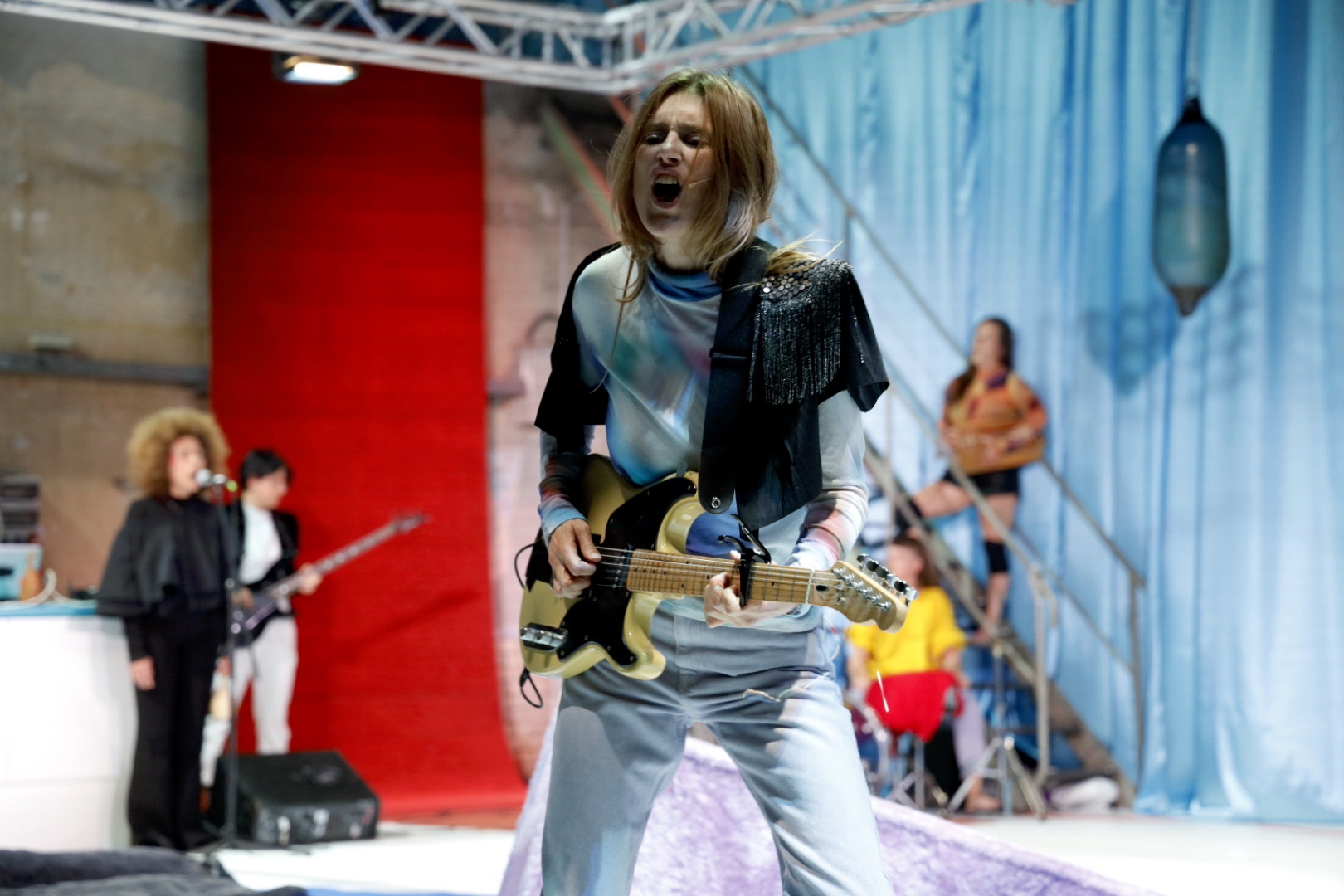
Solos and Duets by Meg Stuart & Damaged Goods, 5.11.2022, Stoa

Solos and Duets shares the general aspiration of the festival to redo the linearity of time, to return to, to revisit and to reflect. The five-part collage invites into joyful and thrilling exploration of almost three decades long creation of dancer and choreographer Meg Stuart and her company Damaged Goods.

Oscillating along the recognizable nuances of absurd, bizarre and anti-norm, the performance un/ folds and turns and twists in an uncanny instant between stage action and the provoking sensation it creates in the body of the spectator. Acrobatics of extraterrestrial drivers, drumming arm-dance trance, playful promenade of gender, punk madness. Multidirectional radiations of on minimalistic stage are versatile and enchanting as much as they are odd and uneasy: slapping, blowing, climbing, hair and nipple-pulling, twisted body parts and loud tunes exhibit genuine vulnerability and intimacy. Sweaty, sounding bodies, perfectly unperfect, falling and failing, and glowing through their sensuous nonsense.  An hour of interventions into patterns of cultured, unreserved hacks of normalcy, upside-down exposure of (non-)consensual. On this ride everything is possible, all and nothing happens for a reason. One gets tricked, and comes back for more. To our luck, there is more: one can get the glimpse of curious world of Meg Stuart and Damaged Goods in video works showed the lobby of cultural center Stoa throughout the festival.

Solos and Duets are by all means an experience that slips away of category, of logic. It sneaks out of expected, calculated, certain. It’s a loud shout to be together with else, with nonhabitual, to change perspective, to become otherwise, to face your own gaze staring back at you.

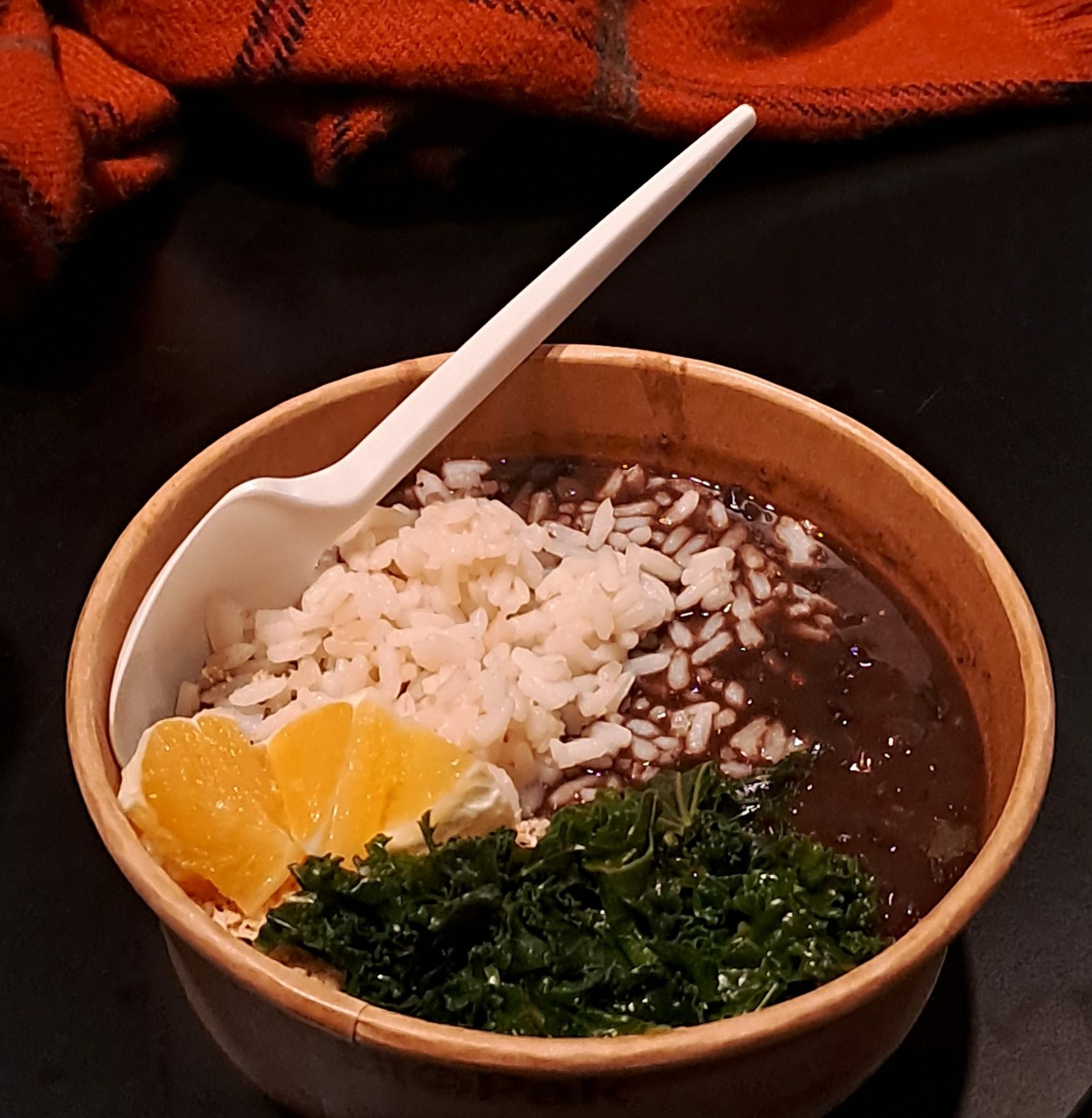
Feijoada by Calixto Neto, 6.11.2022, Caisa

Feijoada continues the celebration of what cannot be grasped. The iconic dish of Brazilian slavery and poverty is a starting point of political resistance, storytelling and being together in this dynamic, multilayered and polyphonic work of Calixto Neto and collaborating artists. Feijoada stands for complexity and controversy of historical struggle, collective memory and identities grown from it.

The stage is a dance podium, a kitchen, a shared space for communal and generational encounter. The performative format of the fiest accommodates the affective, sensuous experience to evolve through dancing together, playing the traditional samba beats and aromatic steaming of the beans and meat in preparation. The hunger, desire and pride compose personal and collective living archives of displacement, hybridity, rootlessness, and liberty.
Feijoada is a comfort of home and freedom of an open road. In all its lightness and joy of living, the piece throws a bold critical thought and sharp-as -knife statement of self-determination.

Who dares to write histories, to set symbols, to own heritage? How can a storying of peoples and places be reduced to ready-made identities and boxes of belonging? Who sets the labels of meat, the price-tags of human and nonhuman life?

At the end of the evening, the food is served. The act of ingesting, taking in and receiving takes place in gentle, warm and resting ripples spreading through and outgrowing the room. The performance is over, but revolution carries on.

– Nina


Nina Vurdelja

Nina Vurdelja is a performance researcher and cultural worker of international background, based in Tampere. Her interests reside around more-than-human sensuous encounters and ecologies of being together. She has been doing Ph.D. studies at Tampere University, dwelling in meeting spaces between culture, art, and philosophy.
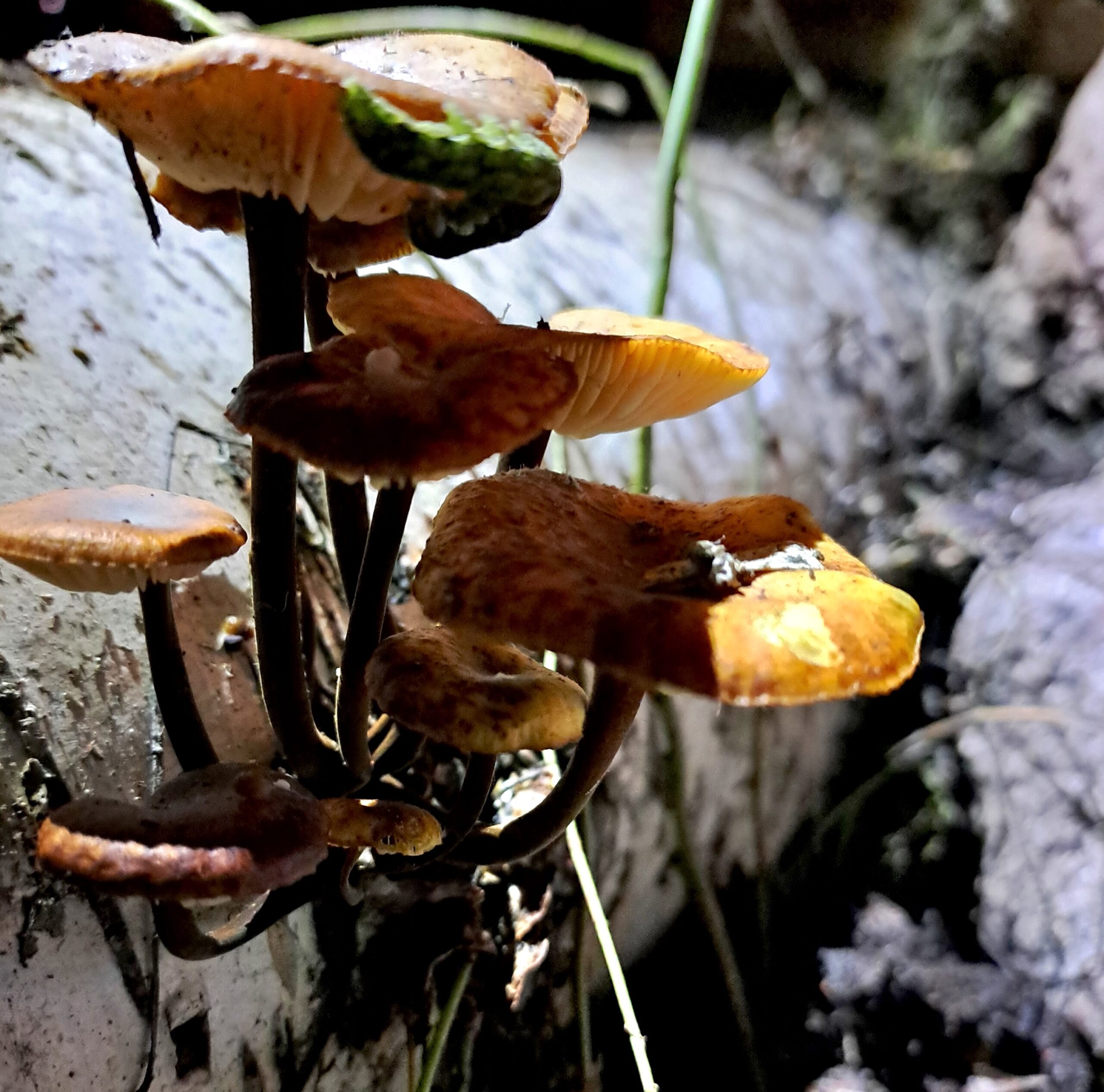
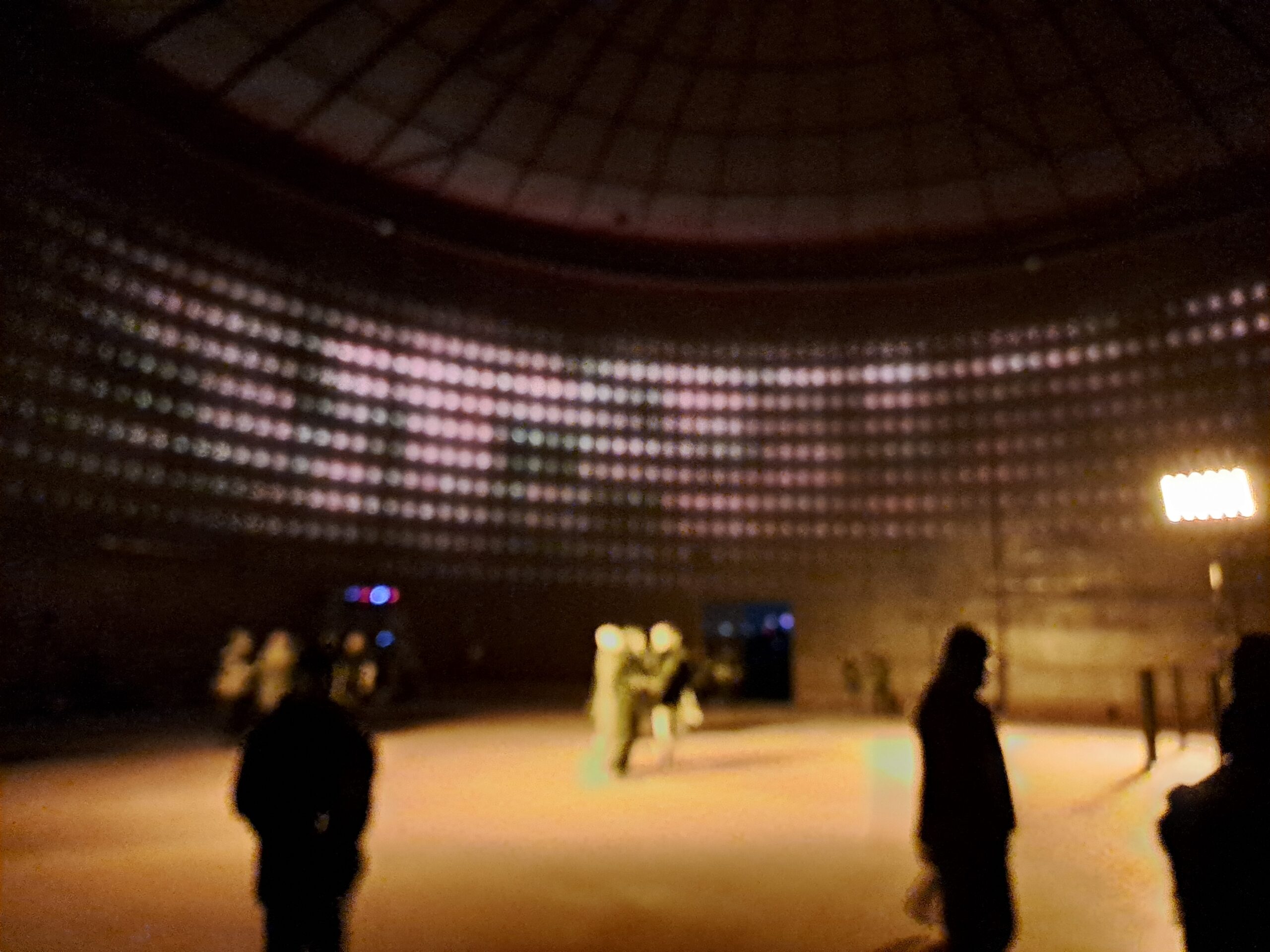
Photo: Nina Vurdelja

Instant reflections II by Nina Vurdelja

Instant reflections is a series of notes and remarks by Nina Vurdelja about Moving in November festival 2022. These texts will be published throughout the festival.

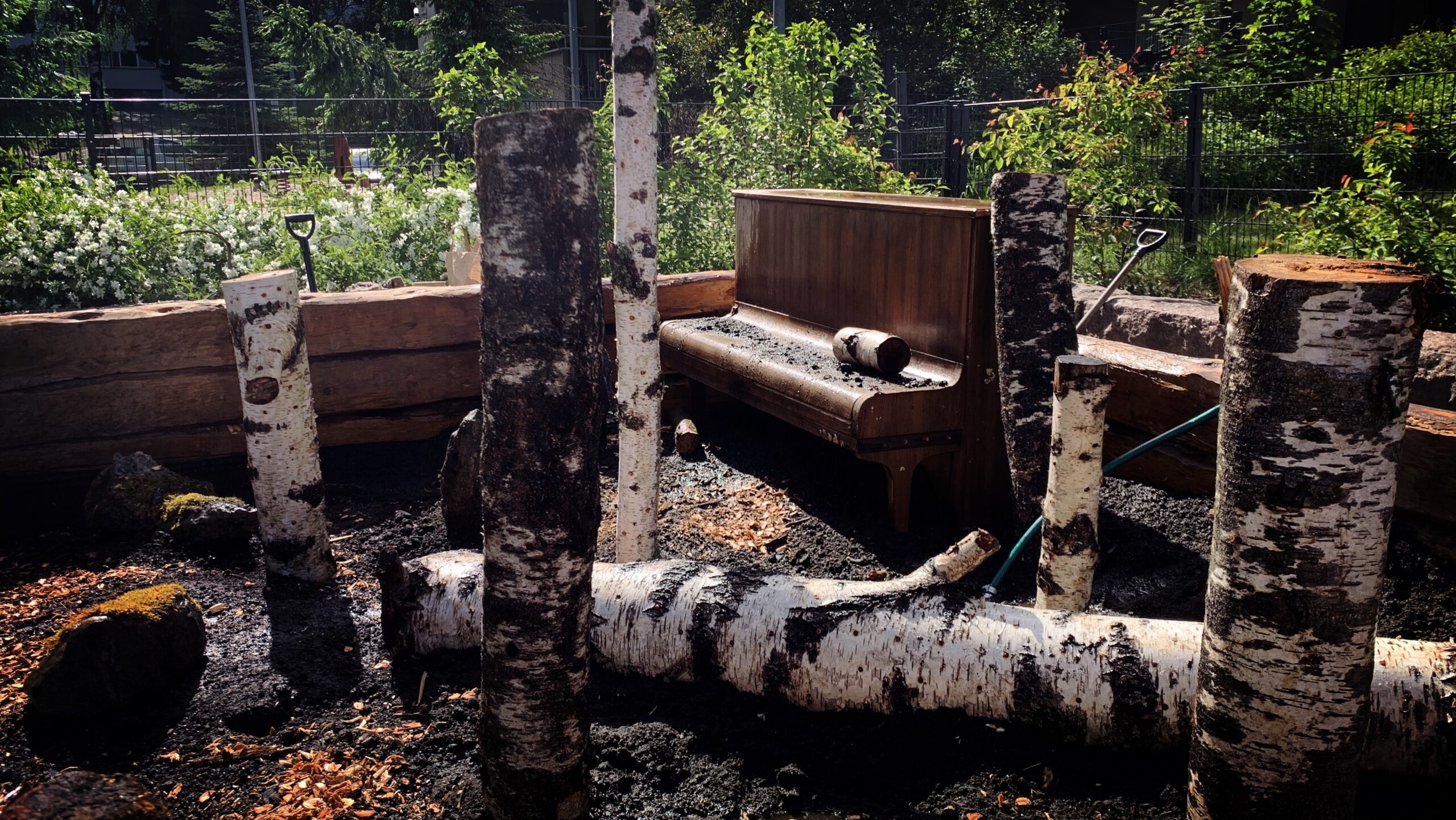
The Hut by Jared Gradinger, Angela Schubot, Stefan Rusconi, Alm Gnista & Shelley Etkin, 4.11.2022, Stoa Square

“… all places that never were visited
…all explanations that never were given
…all the encounters that never we had…”

(The Hut podcast text, by Shelley Etkin)

The eyes are getting used to darkness, the smell of tar and moist is entering the nostrils. A felt sense of the ambiguous familiar-unknown, breath is held in infantile anticipation of wonder. I was longing for this place, the generosity of uncomprehended, the vastness of the unspoken; a potentiality of what only exists in brief moments in-between.

The Hut is deep time, entangled being, bodies suspended in trust. The Hut is a shelter; a refuge from tyranny of reason, transparency and control. The Hut is a microcosmos, a multiverse: we, many, intertwined, growing, blooming and decaying in this shared soil. A silent communion and an ongoing encounter.

This space is made of infinite human and nonhuman forces, mixing and mingling in a tangible manifestation of speculative, sensuous and sacred. Uncountable forms of life are composted and composing in slow movement, wrestling intimacy, and secret transmission.

Initiated by Jared Gradinger, Angela Schubot, Stefan Rusconi, and Alm Gnista, this multispecies plenum is hosting and being hosted by fungi.

Their sprouting, luminescent bodies; their being in the uncertain, unpredictable; their modest omnipresence; their otherworldly, yet grounded wisdom. Their ability to sustain and be sustained by relationships: clusters, networks, threads, webs, spreading, referencing, re-connecting, re-visiting…

Fungi make and re-make this temporary structure, yet they have been here forever. In cracks, in shadows, under the ground; on edges of thinkable, at margins of visible, in traces of all life.

– Nina


Nina Vurdelja

Nina Vurdelja is a performance researcher and cultural worker of international background, based in Tampere. Her interests reside around more-than-human sensuous encounters and ecologies of being together. She has been doing Ph.D. studies at Tampere University, dwelling in meeting spaces between culture, art, and philosophy.
Photo: Nina Vurdelja

Instant reflections I by Nina Vurdelja

Instant reflections is a series of notes and remarks by Nina Vurdelja about Moving in November festival 2022. These texts will be published throughout the festival.

Nature Untitled – Movement I by Veli Lehtovaara, Eija-Liisa Ahtila & Jani Hietanen, 30.10.2022, Oil Silo 468

(Cool-warm contemplation on post-fossil futures)

“Short days and a sudden need for warmer headwear always get me by surprise”, I am thinking as I embark on the shuttle bus that brings us to the opening performance of this year’s Moving in November festival.  Arriving just enough before the start to greet familiar faces and grab a blanket to keep warm in the chill almost-November evening.

Dance piece “Nature Untitled: Movement I” by choreographer Veli Lehtovaara, visual artist Eija-Liisa Ahtila and sound designer Jani Hietanen takes place in Silo 468 at Kruunuvuorenranta suburbs in Helsinki. This repurposed oil tank, a remain of a fossil culture and history of the neighborhood, sets tuning-in to the piece on multiple levels. The group performance has been developed from Veli Lehtovaara’s solo piece “Katkelma/Passage 468”, premiered in the same space in 2019.

In general terms, the performance deals with complexities of (post)-fossil society, through corporeal exploration of energy, consumption, exhaustion. It is the first in the series of performances within “Nature: Untitled” project, a triptych-piece premiered this autumn at Moving in November.

The video installation of the forest on the walls of the tank suggests contemplative presence of merging materialities and scales of life. Moving blanket-wrapped appearances, alone or in smaller groups, spread around the edges of the silo in semi-darkness between the entrance and the parallel gates opening to the sea, and flickering city lights in distance.  Six dancers enter the central space.

Human and nonhuman movement, both physical and virtual, subtly encounter each other, exploring states of creation, flow, radiance, circulation, destruction.  Juxtaposed video and embodied images evoke, breaking linear patters of mimesis, fire flames, freezing water, burning woods, glowing chalk, et cetera. Hybrid immersion on site-specific steel stage reaches towards beyond-human embodiment: at instances, one could feel the cold wind entering the space from the sea, or the warm smoke approaching from the stove installed on the stage. The overall performativity of materials and objects (four large plastic rolls) accompanying human movement carry an association to oil-based cultural entanglements and the original purpose of the location. Costumes of performers, mainly black, with wool or plastic pieces, bring a delicate touch to already established dramaturgies of energy accumulation and loss.

Over half an hour, the choreographed space holds an ongoing transformation from inner to outer corporeal spaces, or natures. Powerful vibrations in-between bodies keep on building up and spreading to the point where one could imagine dance taking in the sea outside the tank in all its vastness.

Movement is at times complemented by abstract vocal expression of dancers, that not only give powerful sounding effects due to reverb, but also emphasize the breath. Breath carries the passage of energy from inside-out, breath works as presence, a connecting tissue in-between bodies.

After the performance, the warm soup awaits us in front of the Silo. The smooth texture recovers the body temperature, the pleasant taste excites gut bacteria, the shared meal brings joy. The soup, and blankets, feel almost as a ritual of a kind: and act of togetherness, connection, recognition.

This is how we parted last November, this is how we meet again.

– Nina


Nina Vurdelja

Nina Vurdelja is a performance researcher and cultural worker of international background, based in Tampere. Her interests reside around more-than-human sensuous encounters and ecologies of being together. She has been doing Ph.D. studies at Tampere University, dwelling in meeting spaces between culture, art, and philosophy.
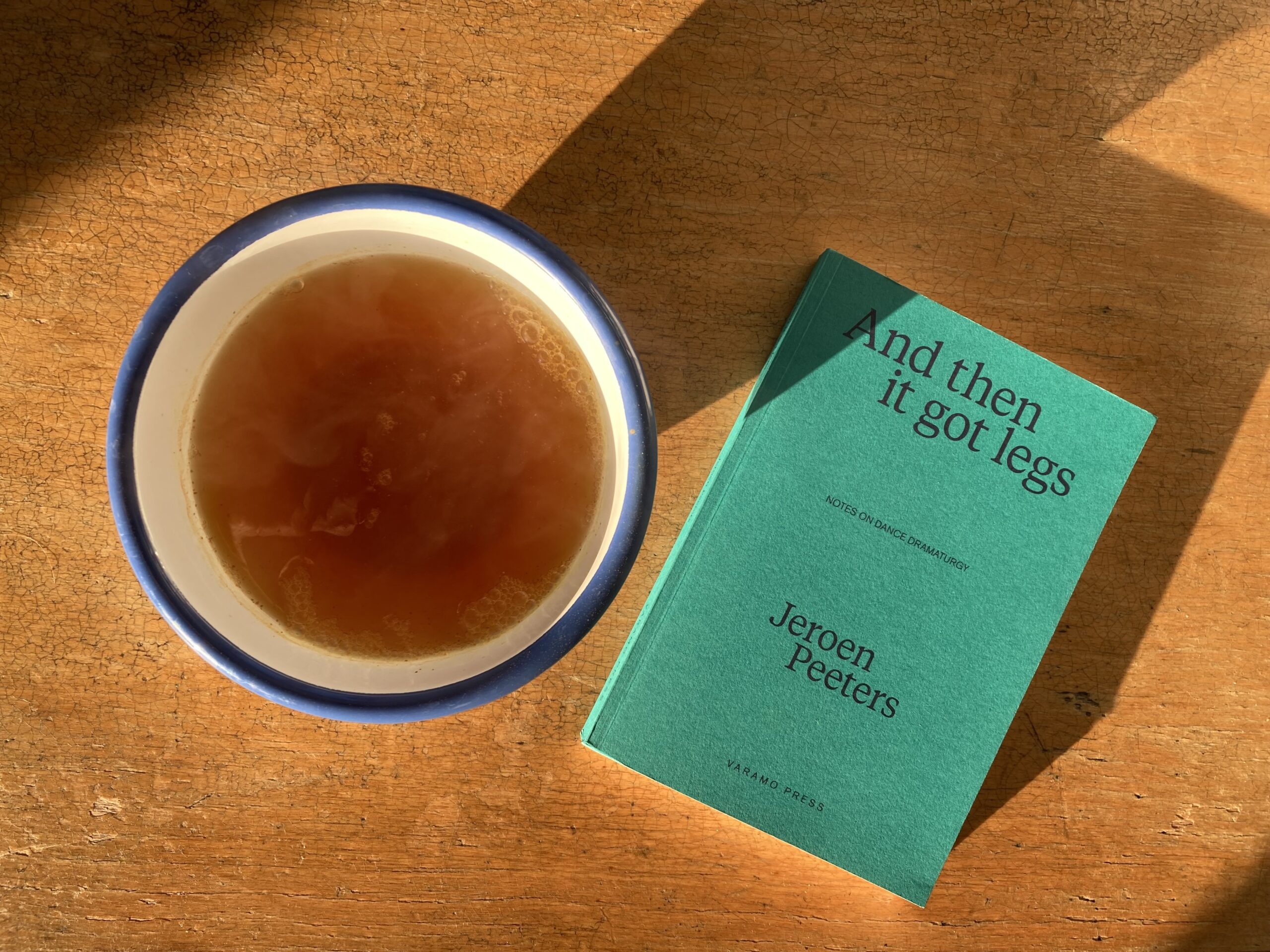
Photo: Nina Vurdelja

Tune into the festival mood. We count down. Soon Moving in November begins.

The festival starts this week with a pre-opening on Sun 30th and Mon 31st of October. From there we will continue into the festival from the 3rd to the 13th of November. A warm welcome!

Make sure you have reserved your seats. Only a few festival passes are left. So, if you are planning on getting the full festival experience, get your pass now!

Tune into the festival mood with this year’s trailers. Celebrating the already 3rd year under a new artistic directorship, we go fancy releasing multiple trailers.

Also, as a reminder, we warmly invite you on Mon 31st of October at noon to Villa Eläintarha for our Pre-Soup Talk. A conversation about this year’s program between journalist Sara Nyberg and our artistic director Kerstin Schroth.

Looking forward to seeing you next week!
Moving in November team

You find the last three parts of the trailer here

Direction: Mariangela Pluchino
Cinematography: Simo Pukkinen
Props Master: Juha Hilpas
Art Direction: Helena Aleksandrova
Starring: Oscar Eemeli, Saima Dolores & Isaac Aleksi
DogStar: Viljo
Editing: Jerem Tonteri & Mariangela Pluchino
Music & Sound design: Marloes van Son
Super mega thanks: Aada Huonekalut & Sisustus, Helsingin Kaupunginmuseo, Academy of Moving People and Images
B Roll images: Surabhi Nadig, Khánh Ngô, Teresa Siltanen, Mariia Solodiankina
Film processing and scanning: Mutascan

Book launch. Soup Talks. Conversation series.

We have a fine extra for you. Moving in November presents the freshly launched book by essayist, dramaturg and performer Jeroen Peeters And then it got legs: Notes on dance dramaturgy. In the book, Jeroen discusses principles, methods and practices that contribute to an understanding of dramaturgy as an experimental, collaborative practice and a material form of thinking. The book is written from practice and reflects a particular history of collaboration and conversation with various dance-makers. 
 
With this, we continue our line of inviting dramaturgs to share their specific way of working and understanding of dramaturgy with the local artist community.
 
The event takes place on November 5th at 3 pm in Kiasma and is free of charge, pre-registration is preferred. Artists Maria F. Scaroni and Tuomas Laitinen will be in conversation with Jeroen around the book and their own artistic practices.
 
Also, a reminder and a warm welcome to sign up for our discursive series Soup Talks.
 
Soup Talks are an invitation to come together and discuss. We invite you for a bowl of soup and to engage in informal discussions with the artists presenting in Moving in November around their works. You are also more than welcome to lean back and just listen in.
 
The talks are taking place each day during the festival between 12-1:30 pm @Caisa and are hosted by an artist from the Helsinki area. 
 
With one exception: we are extremely happy about this year’s collaboration with Publics. Inviting us for the Soup Talk with artist Mette Edvardsen on November 7th to their facilities.

Last but not least, as last year, we start the conversation series with a Pre-Soup Talk on the 31st of October 12-1:30 pm. At Villa Eläintarha, journalist Sara Nyberg and our artistic director Kerstin Schroth discusses this year’s program. Welcome to listen and join in, while enjoying soup!
 
4.11.2022
Guests: Calixto Neto & working group
Host: Antonia Atarah
 
5.11.2022
Guest: Meg Stuart
Host: Karolina Ginman
 
6.11.2022
Guests: Angela Schubot & Jared Gradinger & working group
Host: Anna Talasniemi
 
7.11.2022 NB! @Publics
Guests: Mette Edvardsen & working group
Host: Paul O’Neill
 
9.11.2022
Guest: Eisa Jocson
Host: Vincent Roumagnac
 
10.11.2022
Guests: Sheena McGrandles & working group
Host: Maija Mustonen

11.11.2022
Guest: Tuomas Laitinen
Host: Anna Kozonina
 
12.11.2022
Guest: Cherish Menzo
Host: River Lin
 
13.11.2022 
Guests: Veli Lehtovaara & working group
Host: Otso Lähdeoja

See you in November!
Moving in November team

Photo: Kerstin Schroth

Moving in November 3rd to 13th of November. Festival program release.

Moving in November’s festival program is out! There are various works to discover in this year’s edition. Let us give you a short summary of the 10 days of the festival. In case you have not yet read the pre-note to the festival program, the thoughts behind, you find it here.

As a unique exception, Moving in November starts this year with a pre-opening in October. On the 30th and 31st, we present the premiere of Nature Untitled, a work in the form of a triptych, by choreographer Veli Lehtovaara, visual artist Eija-Liisa Ahtila and sound designer Jani Hietanen. All three parts are situated in different venues and presented throughout the festival. The first part takes place in an old oil silo, accessible for public events only until the end of October.

We are thrilled to open the festival on 3rd of November with Feijoada by choreographer Calixto Neto in Caisa. Back in Moving in November, this time with his own work, Calixto Neto invites us to witness the preparation of a feijoada, the symbolic but controversial dish of Brazilian gastronomy. A roda de samba sets the rhythm of the evening. Songs, dance, personal and political stories intertwine with the cooking process and the ingredients of the feijoada. Local performers take part in this work.

As also in DAWN by Sheena McGrandles, a musical on reproduction. Combining concert, spoken word and performance into a multi-layered and humorous artistic work about reproduction, parenthood, and the power of a child as a symbol of hope. Which bodies may and can reproduce, how and where? The choir of the childless people is formed by local performers.

A long-time promise becomes finally realized, we show Solos and Duets by choreographer and dancer Meg Stuart. Alongside, her latest video works can be seen, free of charge, throughout the whole festival. Responding to the current state of the world, these works were created as part of the project CC: World, by HKW in Berlin. Making the most out of the company’s visit, we have the pleasure to show Meg Stuart’s recent duo All the way around. An intimate concert setting, where she meets jazz musician Doug Weiss.

Just in front of Stoa, you will find an original Finnish wooden hut. The Hut a project by Jared Gradinger, Angela Schubot, Alm Gnista, Shelley Etkin and Stefan Rusconi, developed specifically for Moving in November, is a co-created living being, dedicated to the queendom of fungi which now resides in its’ wooden structures. During the course of the festival, The Hut will host various offers from the team of human and nonhuman collaborators. The project has a small audience capacity. Reservations are free of charge.

Connected to The Hut, but zooming in on another plant, Angela Schubot with Suvi Kemppainen premieres a movement study emerging from a long-term, deep dedication to encounters with moss.

Proudly we present choreographers’ Cherish Menzo and Eisa Jocson strong and significant solo works this year. In their performances (Jezebel and Macho Dancer) they both examine phenomena, turning around and playing with reinforced stereotypes and gender codes.

Last but not least there are two performances this year that create rather intimate encounters with the audience. Firstly, Mette Edvardsen’s project Time has fallen asleep in the afternoon sunshine, where a group of performers memorize a book of their choice by heart. Together they form a library collection consisting of living books. A performance based on Ray Bradbury’s novel Fahrenheit 451, which is set in a future society where books are forbidden. For Helsinki, we have added two Finnish titles and another Swedish title to the growing library.

Secondly Audience Body by Tuomas Laitinen, a performance without performers, like a book misplaced into the space and time of theatre. There is a codex. A scroll. A love letter. Place. Time. Immersion. Destruction. Order. Mess. Practice. Theory.

Welcome to Moving in November!

Kerstin Schroth and Moving in November team

Photo from DAWN by Sheena McGrandles: Michiel Keuper

More Soups to share. Pre-note Moving in November. Program release September 15th.

This year’s program meanders between various subjects, formats and spaces. Alongside very political and poetic reflections on our world, on our way of being together and forming societies, there is a focus on the plant beings we share this planet with. Music, text and stories are like the glue between the different works of this year’s edition. Filling the gaps in between.

Working on this year’s program I chose for a slightly ironic/playful/funny working title: big shots. Playing around with the idea of only inviting large-scale works and with this opening the question of what is considered a large-scale work nowadays. Not referring to big names, but to artists that dare to create works in these times of insecurity, maybe small in their appearance, but large in their engagement and way of working. Choreographers taking the space and putting front subjects and ways of producing that are daring, urgent, and specific, that go far in format, concept, realization, and commitment.

Looking at the finished program, I could also change the title to burning or urgent matters. Thinking back at the conversations I had, the performances and rehearsals I saw, I have a strong feeling, that the invited works make no compromises, they burn in different ways on the fingertips of the artists and will hopefully inspire you, as much as they have inspired me.

How to choose, is always a central question. How do I choose which performance will be presented during Moving in November and also what parcours will you choose within the festival program, what works will you come to see.

My choices are often made at the very moment when I see a performance. Based on content and atmosphere, what they trigger in me. What bodies, what generations do I see on stage. What stories are told and especially also who tells them? Secondly, I think about the context, Helsinki. I try to imagine, how a work I would like to present would be received within Moving in November.

The way you will choose to look at the program will be an individual one. With the choices you make, you will construct your very own festival experience. My secret wish of course is, that you see the whole program. That you take the time for this year’s ride, this year’s experience, this year’s edition. That you stay with us and the artists after the performances for a bowl of Soup. That you listen in and converse with the presenting artists during our daily informal conversation series Soup Talks.

It’s only a matter of your time, as our ticket policy will allow you to see a lot. There is the festival pass bringing front one of our biggest concerns to keep the ticket prices reasonable, so that everybody can afford them.

What will be your choices? What will be your parcours through this year’s festival program? I am curious.

Watch out for the program release on September 15th.

Kerstin Schroth, with the Moving in November team

Feijoada

The feijoada is a symbol of Brazilian gastronomy, but its origin is at the heart of a controversy. Popular knowledge attributes its creation to slavery in Brazil, where enslaved people put together the scraps of leftover beans and meat thrown away from the houses of the masters. Some researchers contest this theory, but one can ask: is history linear and does it present only one version?

Calixto Neto, together with Ana Laura Nascimento, Yure Romão and transdisciplinary group of artists, invites the audience to witness the preparation of a feijoada in real time, with the cooking time being the duration of the performance. A roda de samba sets the pace of the evening, in which songs, dances, interventions of texts, political discussions, and stages of preparation of the dish are put into dialogue. Linked to the cooking process and the ingredients, various questions are addressed and interpreted: What are the cheapest meats and flesh on the market? Which bodies are most affected by the inequalities generated by Brazil’s place in the global order? The feijoada is prepared as a choreo-gastronomic work. At the end, everyone enjoys the feijoada together with the artistic team.

Feijoada is an artistic answer to a generational encounter. In 2019, Calixto Neto was invited to reenact the iconic piece O Samba do Crioulo Doido (2004) by the Brazilian choreographer Luiz de Abreu. The piece was seen in Helsinki at Moving in November in 2020. In a scene of the piece, Luiz (and since 2020, Calixto) dances a Bossa Nova in which the lyrics is a feijoada recipe sung in French. The dancer offers himself to the public’s gaze as if he were the dish of the day. Feijoada comes as a will to dig into the violence and joy of this scene. A group of performers invite the audience to take part in the party, a creative reflection of a national gastronomic symbol and the sharing of stories about struggles, power, legacy, ‘saudade’, and love.

Calixto Neto

Calixto Neto is a Brazilian dance artist. He began his path by studying theater at the Federal University of Pernambuco, and later entered the master’s ex.e.r.ce of choreographic studies at the Centre Chorégraphique National de Montpellier. He was a member of the Lia Rodrigues company from 2007 to 2013 and has collaborated with Mette Ingvartsen, Anne Collod, and Luiz de Abreu, among others. Calixto Neto likes to think about the choreographic field as a place of intersection between notions of identity, representations of the (black) body, and decolonization.

The Hut (PREMIERE)

The Hut is part of Herbarium.

During the course of the festival, the fungi hut will host various offers from the team of human and nonhuman collaborators. Together they will experiment with ways of living in the symbiocene infused with life; fungi, human presences, and regenerative practices. Bodies will share a moment of falling into the sky. A piano will be played by mushrooms. A shelf will be inhabited by a friend of the fungi, and multilingual voices will echo from the four directions.

The fungi hut is a co-created living being, dedicated to the queendom of fungi which now resides in the wooden structures of the hut, the logs, the piano as well as the soil. The hut has traveled from Pomarkku to Tenhola, during a process of regenerative practices. The fungi are both invited and inoculated, as well as wild-grown. In June 2022 the hut was placed in the Stoa square, and a mushroom garden was grown with the intention to offer the fungi a space to thrive. The garden installation will be transformed into a space that will be open to the public for various forms of encounters. The Hut is an invitation to witness life forms unfolding in ways that we stand alongside, acknowledging unseen processes happening on other timescales.

Jared Gradinger and Angela Schubot offer a durational performance of embodied and musical mushroom encounters in collaboration with Stefan Rusconi who plays the hut as a hybrid instrument, together with fungi, soil, robot arms, human listening, and prepared piano. They are also joined by long-term ally Shelley Etkin, who leans towards the voices beyond language, tracking articulations that have emerged through communicative processes.

Angela Schubot & Jared Gradinger

Angela Schubot is a dancer, artist, choreographer, researcher and bodyworker-healer based in Berlin with roots in Peru and Canada. Jared Gradinger is a choreographer, artist, performer and gardener born in the USA and based in Berlin since 2002. As a duo, Schubot/Gradinger’s desire is to acknowledge and interact with non-human beings and open up their unconditional togetherness to the non-human realm. The artist’s work towards a “Symbiocene” rather than resigning and settling into the Anthropocene. They want to replicate the symbiotic and mutually reinforcing life-generating forms and processes found in living systems and bring them into artistic, embodied, and regenerative practices. Since 2017, they have been “co-creating” performances with and within Nature, such as Yew: outside (2018) and Yew: kids (2019), which were seen in the Traces from November program in May 2022. These works are a sensitive plea for the dissolution of the human-nature dichotomy. They are an attempt of a hierarchy-free co-existence through reciprocal encounters and radical experimentation with plant nature.

Stefan Rusconi

Starting off as a composer and pianist in the fields of improvised/experimental music and Jazz, Stefan Rusconi toured for many years throughout the world with his band RUSCONI, played major festivals, and collaborated with musicians and artists such as Fred Frith, Dieter Meier, Pipilotti Rist, Roman Signer, Thomas Wydler, Thom Luz, Norma Winston, Tobias Preisig, Doug Weiss and many others. From 2015 onwards he started to create interdisciplinary work in the fields of music, nature, architecture, and movement, which became his core interest and resulted in pieces and collaborations with Meg Stuart, Jared Gradinger, and Angela Schubot among others. Stefan is Swiss-born, living now in Berlin.

Alm Gnista

Alm Gnista is based in Hangist, South-west Finland. With an aim of creating space for collaboration within the beauty of it all, Alm has worked in a mixed career of performance, teaching, working with nature and construction. Alm holds a BA and specialist vocational qualification in environmental and natural resource management.

Shelley Etkin

Shelley Etkin is a transdisciplinary artist, educator, gardener, and writer. Her work engages with relations among bodies and lands through the intersections of pedagogy, somatics, plant medicines, and place-based knowledge. She is based in Berlin with roots in the U.S./Turtle Island and Israel/Palestine. Shelley comes from a background in dance and holds an MA in Ecology and Contemporary Performance (Finland), a BA in Gender Studies (USA), as well as a permaculture design certificate and is a student of homeopathy.