Solos and Duets

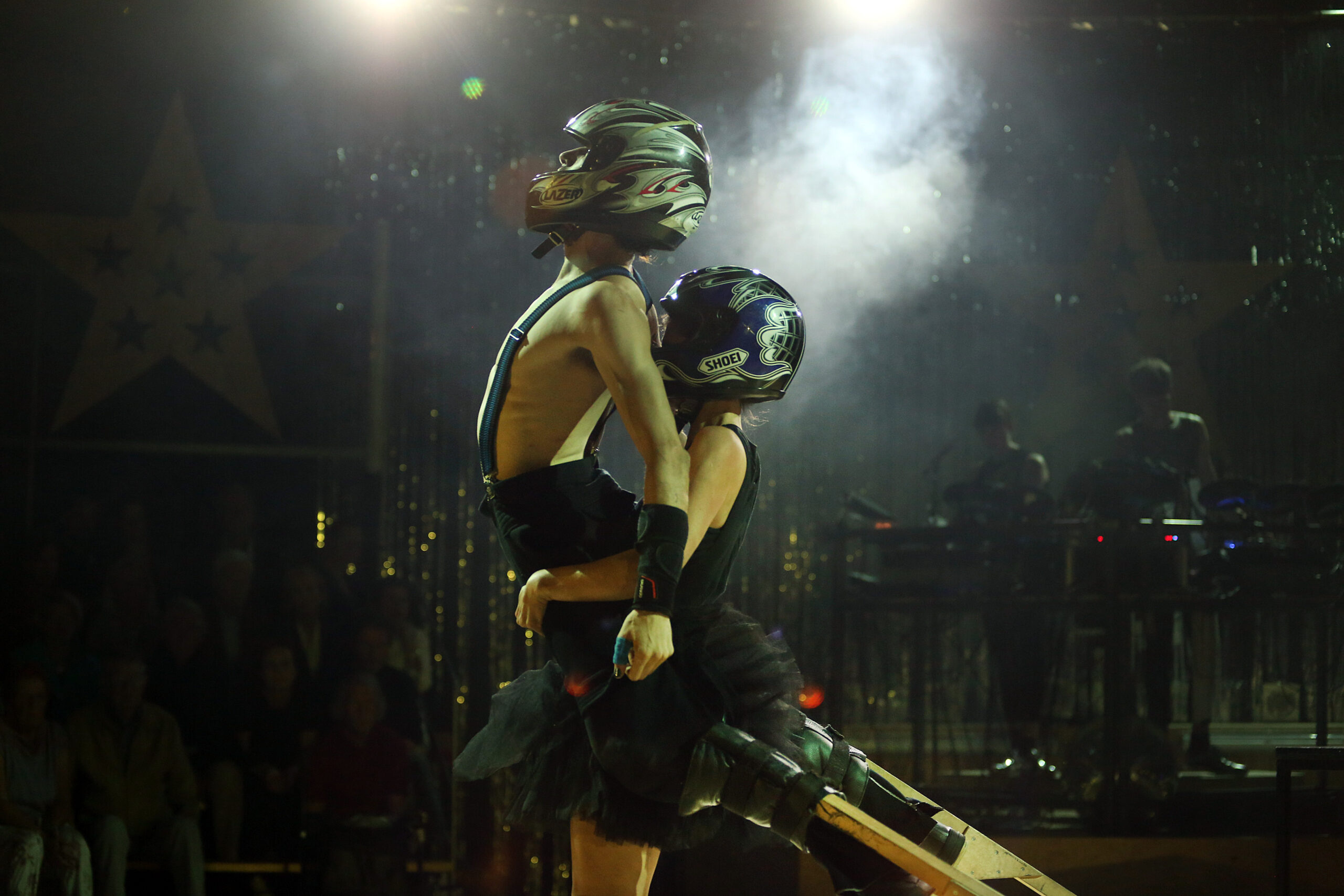
With Solos and Duets, choreographer and dancer Meg Stuart and her company Damaged Goods add a new chapter to their repertoire. The program combines a selection of solo works and duets* with excerpts from evening-length pieces** creating a new performance. Performed by dancers and musicians who have been part of Damaged Goods for several years, Solos and Duets offers a glimpse into an oeuvre that continues to live, grow and transform. Meg Stuart founded her company Damaged Goods in Brussels in 1994. Together they have worked on over thirty productions, ranging from solos to large-scale choreographies and from improvisation projects to site-specific installations. Meg Stuart’s VIOLET was presented in Moving in November 2013 edition.

* Signs of Affection, Inflamável
** No One is Watching, Built to Last, UNTIL OUR HEARTS STOP

Meg Stuart

Meg Stuart was born in New Orleans, USA. She studied dance at New York University and continued her studies at the Movement Research laboratory, where she explored release techniques and contact improvisation and was actively involved in the downtown New York dance scene. Stuart’s work moves freely between the genres of dance, theater, and visual arts, driven by an ongoing dialogue with artists from different disciplines. Through fiction and shifting narrative layers, she explores dance as a source of healing and a way to transform the social fabric. Improvisation is an important part of her creative and teaching practice. The work of Meg Stuart and Damaged Goods has traveled the international dance and theatre circuit and has been presented at Documenta X in Kassel (1997), at Manifesta7 in Bolzano (2008), and at PERFORMA09 in New York. She has received various awards for her oeuvre and practice, among which the Golden Lion for Lifetime Achievement in the category of dance at the Biennale de Venezia 2018. She currently lives and works in Brussels, Belgium, and Berlin, Germany. Meg Stuart’s VIOLET was presented in Moving in November 2013 edition.
The Lobby, Intermission, Overtime, The Clock

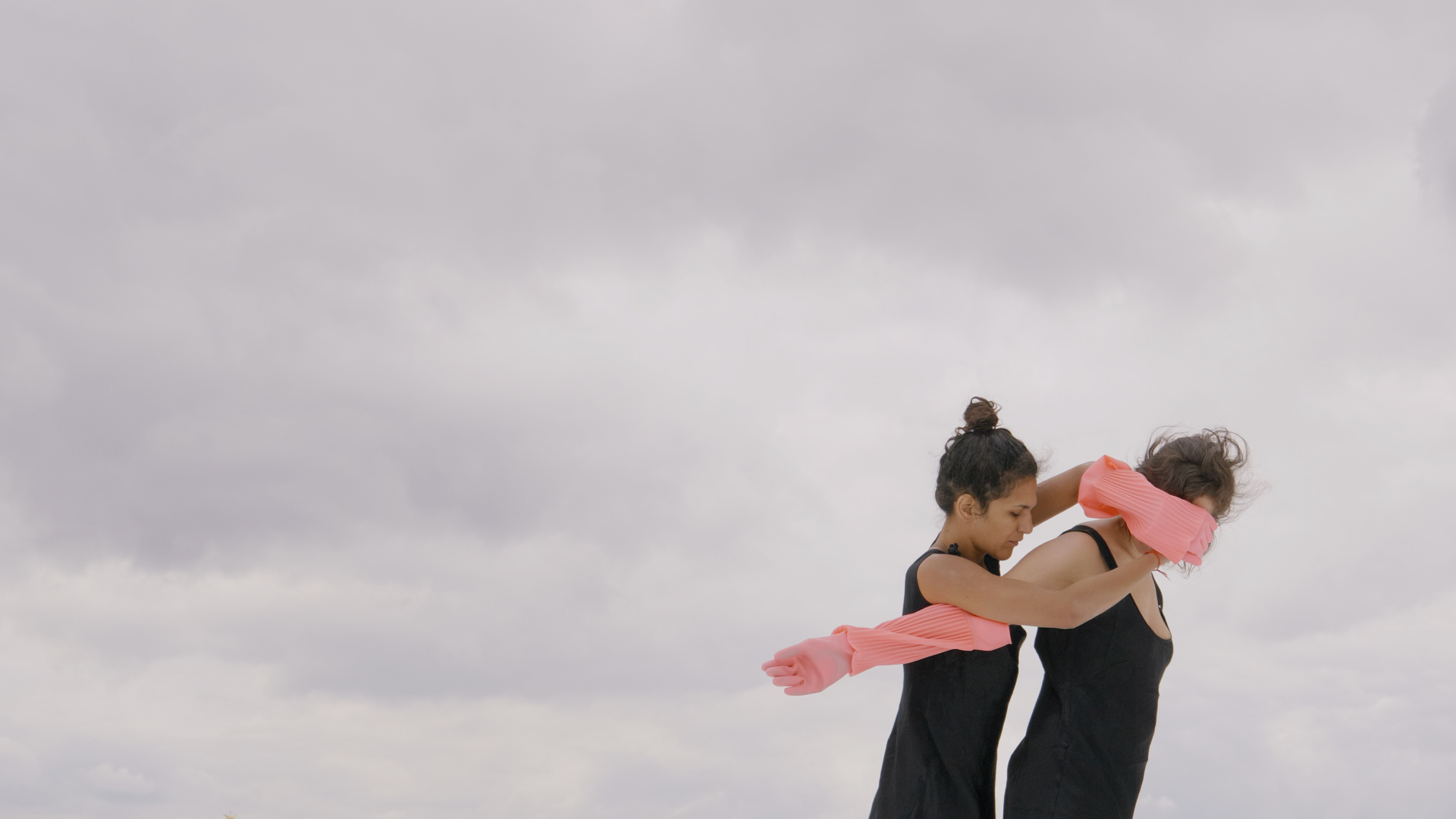
In the spring of 2020, Meg Stuart was invited by the Haus der Kulturen der Welt in Berlin to participate in the CC: World project. Various artists and researchers contributed personal letters, in the form of videos or essays, responding to the current state of the world. Stuart created four videos exploring our changing relationship to time, in dialogue with the retro-futurist architecture of the iconic HKW building.

The four videos – The Lobby, Intermission, Overtime and The Clock – are set in various parts of the modernist masterpiece built in the 1950s, eerily deserted during COVID-19 lockdown. With its vast rooms and stylized interiors, and a remarkable rooftop, the building becomes a scene where five bodies join, resist, become disjointed, reach towards the clouds and fall backwards into the sky. Each video leaves a unique trace, while the city of Berlin hovers at the edge of the horizon.

These video letters are on daily display at Stoa’s lobby in Helsinki during the whole length of Moving in November 2022. The work is free of admission and can be seen during the opening hours of Stoa.

The Lobby

The Lobby is set in the foyer of the HKW building. Five people engage with its vast rooms and stylized interiors, normally crowded with eager anticipation, now eerily deserted. A different kind of tension is installed, a wait that is stretched indefinitely. Flirting with the solidity of walls and pillars, with angles and perspectives, they leave traces of presence and absence in this in-between space. Looking for connection, yet never quite meeting.

Intermission

Intermission moves the HKW to an otherworldly setting, shaped by its remarkable rooftop. Against an undulating white landscape, bodies join, resist and become disjointed in jagged pieces and broken lines. Playing with elements of science-fiction, melodrama and myth, Intermission is a fictional reflection of what it means to wait for the unknown. The city of Berlin hovers at the edge of the horizon, adding to the sense of drama about to unfold.

Overtime

Set to the tune of David Lynch’s electro-pop fantasy Good Day Today, Overtime playfully skirts the territories of music video and travelogue. We see a gang of people hanging out and messing around on a white expanse, part celestial playground and part wasteland. Shot during golden hour, the video draws us in through the warmth of their camaraderie and its humorous edge but leaves a wry aftertaste. Are these people free, or are they somehow displaced in time? Are they playing games, or looking for shelter?

The Clock

The Clock is an extended meditation on time and loss, a slow erasing. Movement is developed at length until it acquires a stillness and an elegiac quality. Wide-angle drone footage paints a dizzying view of the building’s curved rooftop underneath an ever-changing canopy of clouds. Five bodies are set into motion by a penetrating sound score. Reaching towards the clouds, they seem to be falling backwards into the sky. Reaching for all those that have disappeared from our world this year, unseen, they seem to be falling backwards in time.

Meg Stuart

Meg Stuart was born in New Orleans, USA. She studied dance at New York University and continued her studies at the Movement Research laboratory, where she explored release techniques and contact improvisation and was actively involved in the downtown New York dance scene. Stuart’s work moves freely between the genres of dance, theater, and visual arts, driven by an ongoing dialogue with artists from different disciplines. Through fiction and shifting narrative layers, she explores dance as a source of healing and a way to transform the social fabric. Improvisation is an important part of her creative and teaching practice. The work of Meg Stuart and Damaged Goods has traveled the international dance and theatre circuit and has been presented at Documenta X in Kassel (1997), at Manifesta7 in Bolzano (2008), and at PERFORMA09 in New York. She has received various awards for her oeuvre and practice, among which the Golden Lion for Lifetime Achievement in the category of dance at the Biennale de Venezia 2018. She currently lives and works in Brussels, Belgium, and Berlin, Germany. Meg Stuart’s VIOLET was presented in Moving in November 2013 edition.
Time has fallen asleep in the afternoon sunshine

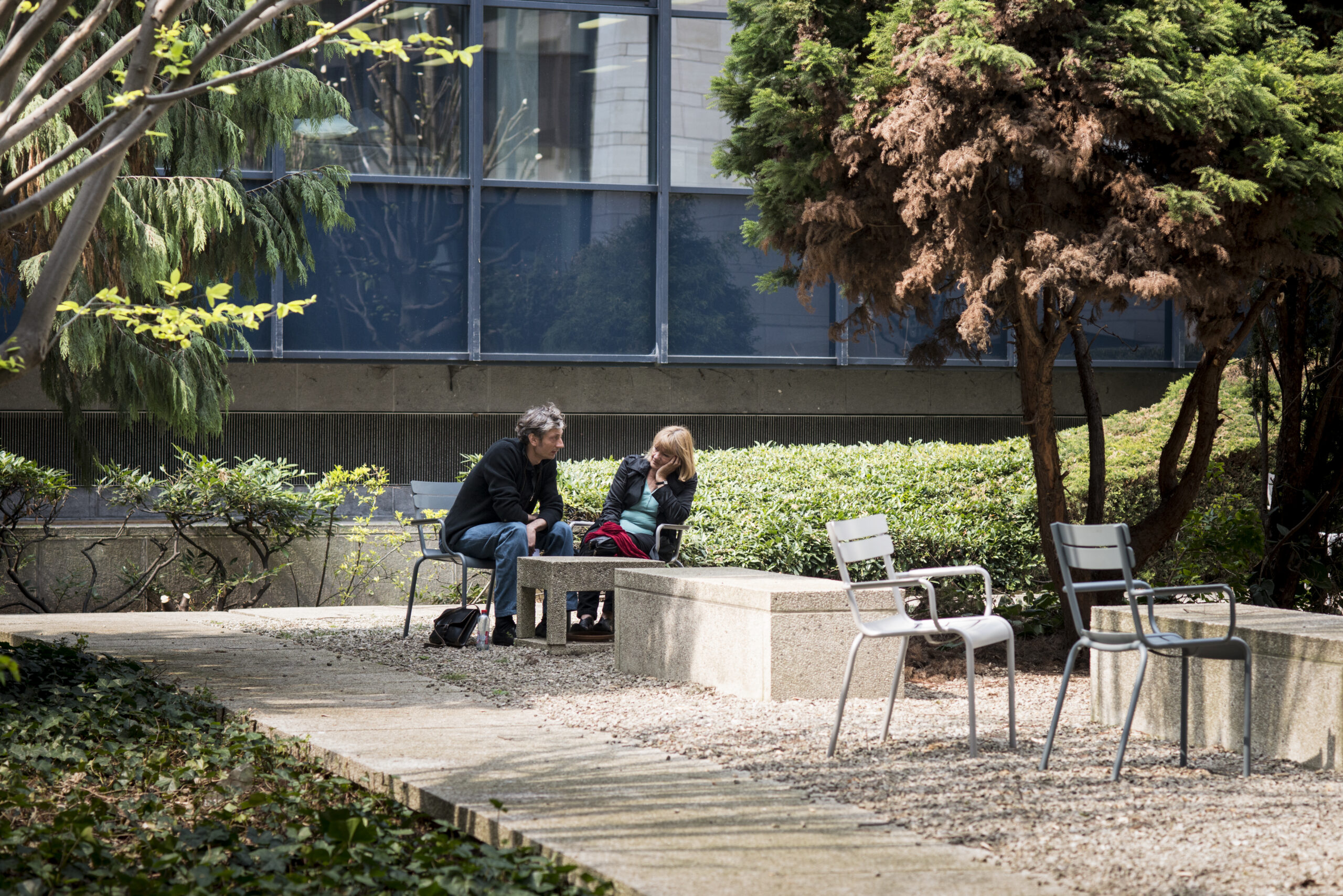
For Time has fallen asleep in the afternoon sunshine a group of performers memorize a book of their choice. Together they form a library collection consisting of living books. The books are passing their time, walking around, talking together, reading in paper-books, ready to be consulted by a visitor. The visitors choose a book they would like to read, and the book brings its reader to a place or for a walk outside, while reciting its content – and possibly valid interpretations.

The idea for this library of living books comes from Ray Bradbury’s novel Fahrenheit 451, which is set in a future society where books are forbidden because they are considered dangerous, and happiness must be obtained through an absence of knowledge and individual thought. The number 451 refers to the temperature at which book paper starts to burn. In the novel, an underground community of people learn books by heart in order to preserve them for the future.

Books are read to remember and written to forget. To memorize a book, or more poetically ‘to learn a book by heart’, is in a way a rewriting of that book. In the process of memorizing, the reader steps for a moment into the place of the writer, or rather becomes the book. The practice of learning a book by heart is an ongoing activity in time, a continuous process of remembering and forgetting. There is nothing final to achieve.

This project by Mette Edvardsen aspires nothing material. Since its inception in 2010, the project has been presented in over fifty bookshops and libraries in different cities, with a growing number of living books in various languages. In Helsinki the project will be presented in Helsinki Kunsthalle in the midst of an ongoing exhibition. The visitor can choose between two Finnish, two Swedish and two English titles.

Mette Edvardsen

The work of Mette Edvardsen is situated within the performing arts field as a choreographer and performer. Although some of her works explore other media or other formats, such as video, books and writing, her interest is always in their relationship to the performing arts as a practice and a situation. Since 1996, Edvardsen has her home base in Brussels, where she started working as a dancer and performer for choreographers Hans Van den Broeck and Christine De Smedt. She has developed her own work since 2002. She presents her works internationally and continues to develop projects with other artists, both as a collaborator and as a performer. Now Edvardsen lives in Oslo.

Nature Untitled | Movements I-III (PREMIERE)

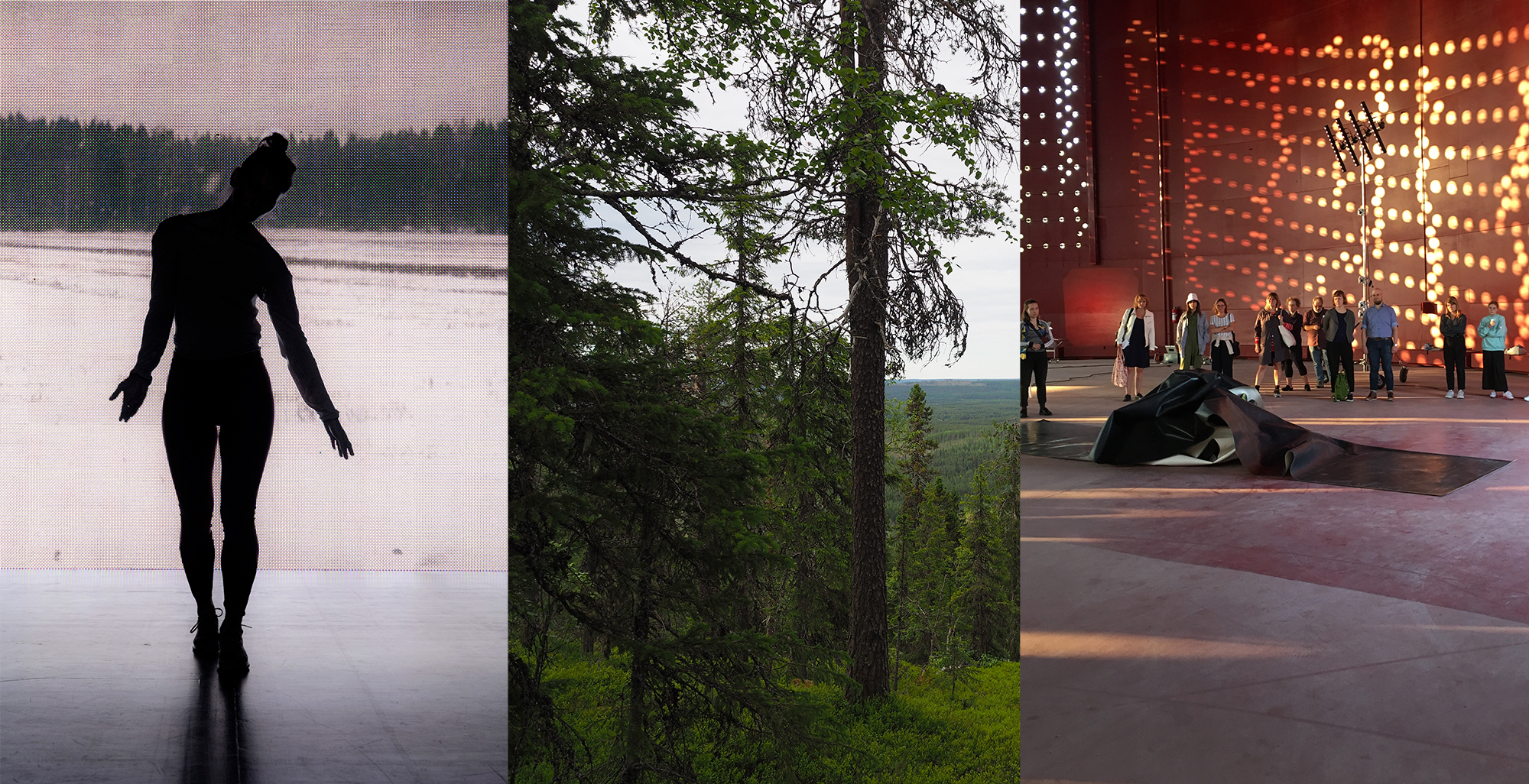
How do ecological poetics perform between dance, site and image? Nature Untitled is a new work by choreographer Veli Lehtovaara, visual artist Eija-Liisa Ahtila and sound designer Jani Hietanen with an international group of artists. The work is presented in the form of a triptych – each of the three movements discharges on stage in a particular mode.

The first movement, inside an empty oil silo, dances out the ghosts of exhaustion and energies consumed. The bodies fold and crackle, the steel structure purrs, the phantasms of the oil era burn only to vanish.

In the second movement, we traverse on a field road and in interstellar space. The stage is both enveloping and infinitely extending vacuum, space and ship at the same time, governed by the sound of artificial intuition. Dance wobbles and weaves, recalls and regrets the earth and its beings.

The third movement juxtaposes a primeval forest with a shopping mall. The human-made technological environment plunges into the restful depths of the old growth forests. Dancing bodies graph the divergence of forms and minds emerging within this border zone.

One can see all three parts or decide to just experience a single one. The second part is a choreographic installation organized in loops of 45min each, starting at every full hour: 15h/16h/17h on the 6th and 18h/19h/20h on the 7th. One can enter and exit the performance whenever one likes.

The work is part of Veli Lehtovaara’s artistic research (PhD) at the Theatre Academy Helsinki.

Veli Lehtovaara

Veli Lehtovaara is a choreographer and performer working in the international field of dance and experimental theatre. He lived and worked in Brussels in 2010-2018 after graduating from P.A.R.T.S. Lehtovaara’s stage works and choreographic installations have been seen in central venues and festivals around Europe, as well as in North and South America. For the last five years his work has been focused on the interstices of choreography, ecological thinking, and diversity of corporealities. Lehtovaara conducts his artistic doctoral thesis at CfAR in University of the Arts, Helsinki. He also works as a visiting teacher, mentor and expert at Theatre Academy Helsinki.

Eija-Liisa Ahtila

Visual artist and filmmaker Eija-Liisa Ahtila experiments with narration and form in her works that address the gendered, colonial and anthropocentric structures haunting the everyday and its representations. During the last decade she has explored what an ecology of drama could be, that includes also more-than-human actors and their perspectives: how to allow another animal than human, or a tree or the wind, to take the centre stage in cinematic narratives? Works such as Horizontal (2011) and Studies on the Ecology of Drama (2014) experiment with expanding representation and narration towards these coexisting diverse temporal rhythms and spatial scales of lived experience. Ahtila’s current work is concerned with how to depict and make sense of reality at the time of urgent ecological crises. How can art and moving image adapt to the changing world? What kind of shifts in perspectives and perceptions could align with the ongoing transformations in worldviews and in our interdependent relations?

Jani Hietanen

Jani Hietanen is a sound designer, musician and media artist who’s practice extends to different fields of sound art and performance; to dance, installation works, cinema, radio, contents of extended- and virtual reality as well as the interfaces of auditive and visual media. His interest in immersive strategies, self-generating systems in sound computing and interplay with sound and other media is valuable for this creation.

All the Way Around

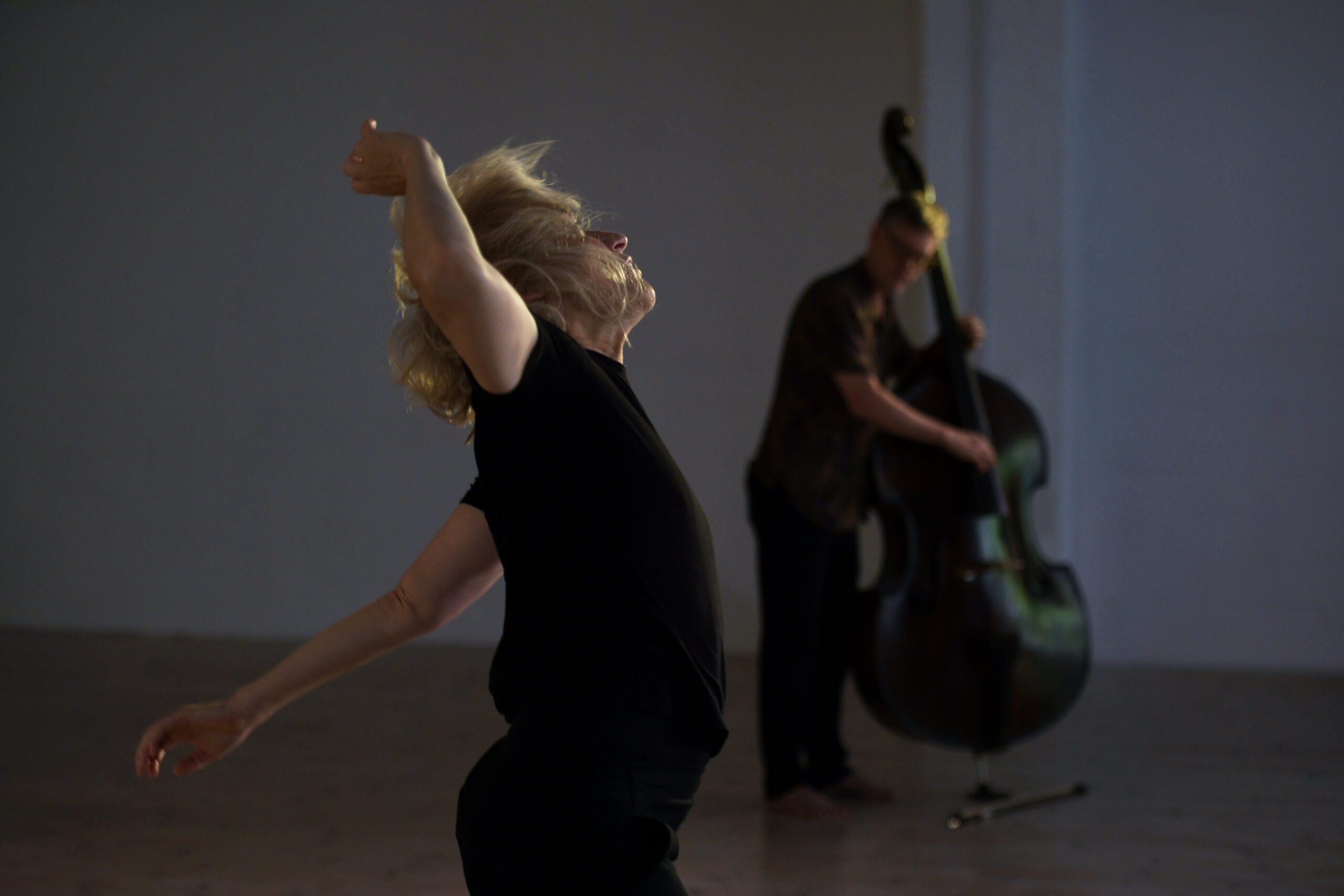
In an intimate concert setting, choreographer and dancer Meg Stuart meets jazz musician Doug Weiss. Together, they go on an uncharted journey into movement and sound. All the Way Around takes the ballad, a song of longing and defiance, and breaks it down into small but meaningful gestures. Tracing and unfurling spirals of memory, All the way around opens a door to return our collective experience to the level of the personal. Taking a deep dive into what was, riding the waves between the almost remembered and the unknown.

All the Way Around is a concept by Meg Stuart and Doug Weiss, performed in different contexts and settings all over the world, together with guest performers or as a candid duet.

Meg Stuart

Meg Stuart was born in New Orleans, USA. She studied dance at New York University and continued her studies at the Movement Research laboratory, where she explored release techniques and contact improvisation and was actively involved in the downtown New York dance scene. Stuart’s work moves freely between the genres of dance, theater, and visual arts, driven by an ongoing dialogue with artists from different disciplines. Through fiction and shifting narrative layers, she explores dance as a source of healing and a way to transform the social fabric. Improvisation is an important part of her creative and teaching practice. The work of Meg Stuart and Damaged Goods has traveled the international dance and theatre circuit and has been presented at Documenta X in Kassel (1997), at Manifesta7 in Bolzano (2008), and at PERFORMA09 in New York. She has received various awards for her oeuvre and practice, among which the Golden Lion for Lifetime Achievement in the category of dance at the Biennale de Venezia 2018. She currently lives and works in Brussels, Belgium, and Berlin, Germany. Meg Stuart’s VIOLET was presented in Moving in November 2013 edition.
Doug Weiss

Based in Berlin and New York, acoustic bassist Doug Weiss has held it down and helped it swing for 30 years. Since 1996 he has been bassist and musical director of The Al Foster quartet. He is a member of Brian Blade’s “Lifecycles” and “Fellowship” bands, the Peter Bernstein Quartet, and the Seamus Blake group. His band “The Berlin Quartet” features Weiss as a composer, arranger, and bandleader.  Weiss is currently on Faculty of the New School University and SUNY Purchase College.

Macho Dancer

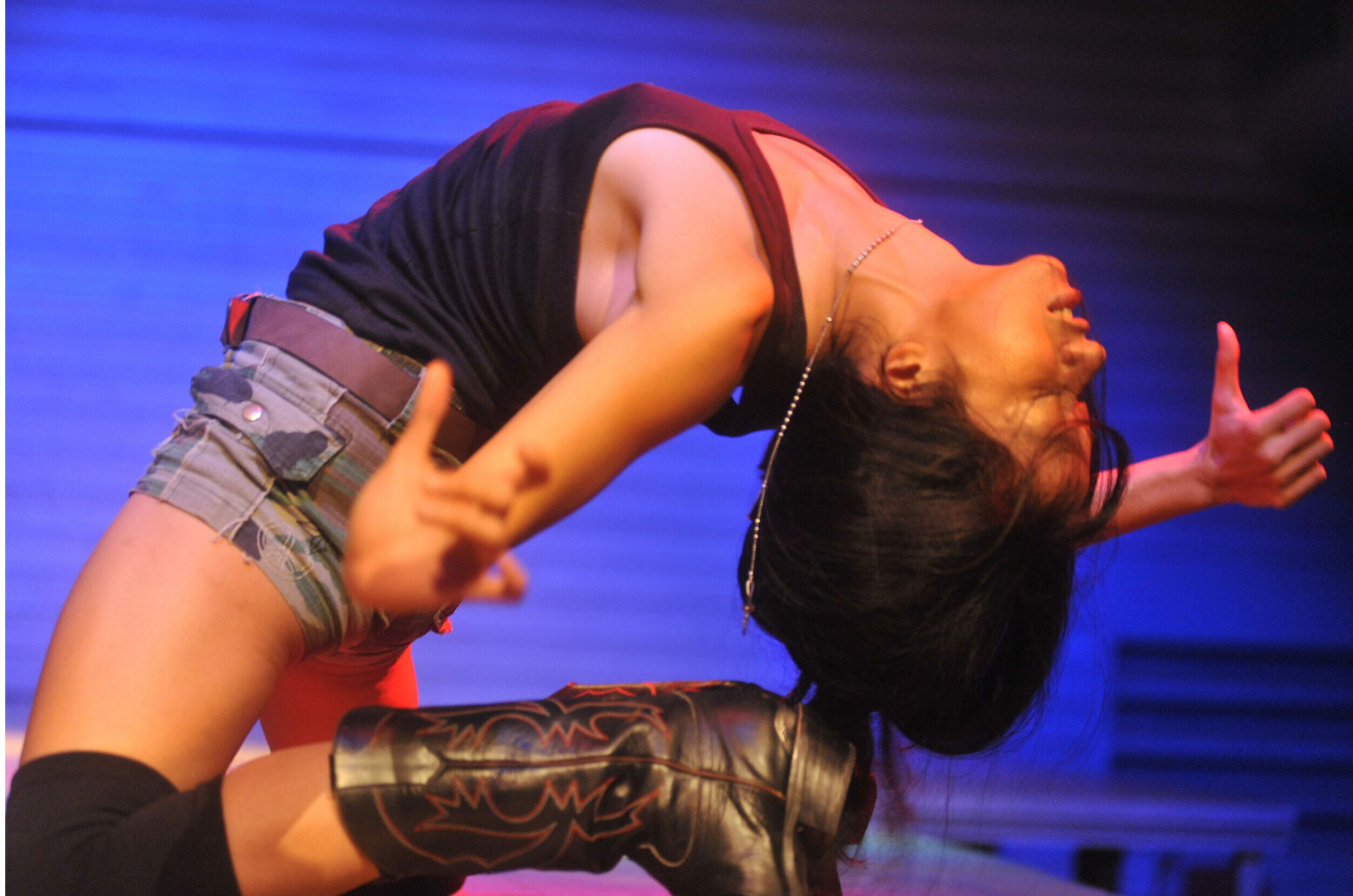
In the Philippines, erotic clubs and bars have their own form of dance, a unique phenomenon: Macho dancers, who perform for both men and women. Their performances are based on a specific movement vocabulary and physicality. In the piece Macho Dancer, Filipina dancer and choreographer Eisa Jocson explores this economically motivated language of seduction, using notions of masculinity as body capital, and proposes a version that transgresses gender codes. Challenging by this our perception of sexuality. Alone on stage, she recreates the muscular tension and compact undulations of this dance to a nostalgic musical repertoire from the 1980s and 1990s. Premiered in 2013, Macho Dancer is part of a trilogy focusing on the eroticisation of the dancing body and its socio-economic dimension, in the course of which Jocson has also explored pole dancing (Death of the Pole Dancer, 2011) and the work of Filipino hostesses in Japanese clubs (Host, 2015). Eisa Jocson’s Princess, examining the interrelations of emotional labour and the construction of racial and gender identities, was presented in Moving in November’s edition 2018.

Eisa Jocson

Eisa Jocson is a contemporary dancer and choreographer from the Philippines. Having trained in classical ballet and visual arts, her work has focused on the intersection between body movement languages and the socio-economic conditions of mobility. Her work exposes body politics in the service and entertainment industry as seen through the unique socio-economic lens of the Philippines. She has toured extensively in major contemporary festivals with her solo triptych, and with her new works under the Happyland series, she continues to investigate Filipino labour, performance of happiness and production of fantasy within the happiness empire. Macho Dancer received the prestigious prize of the Züricher Kantonalbank at Theater Spektakel Zürich in 2013.

DAWN

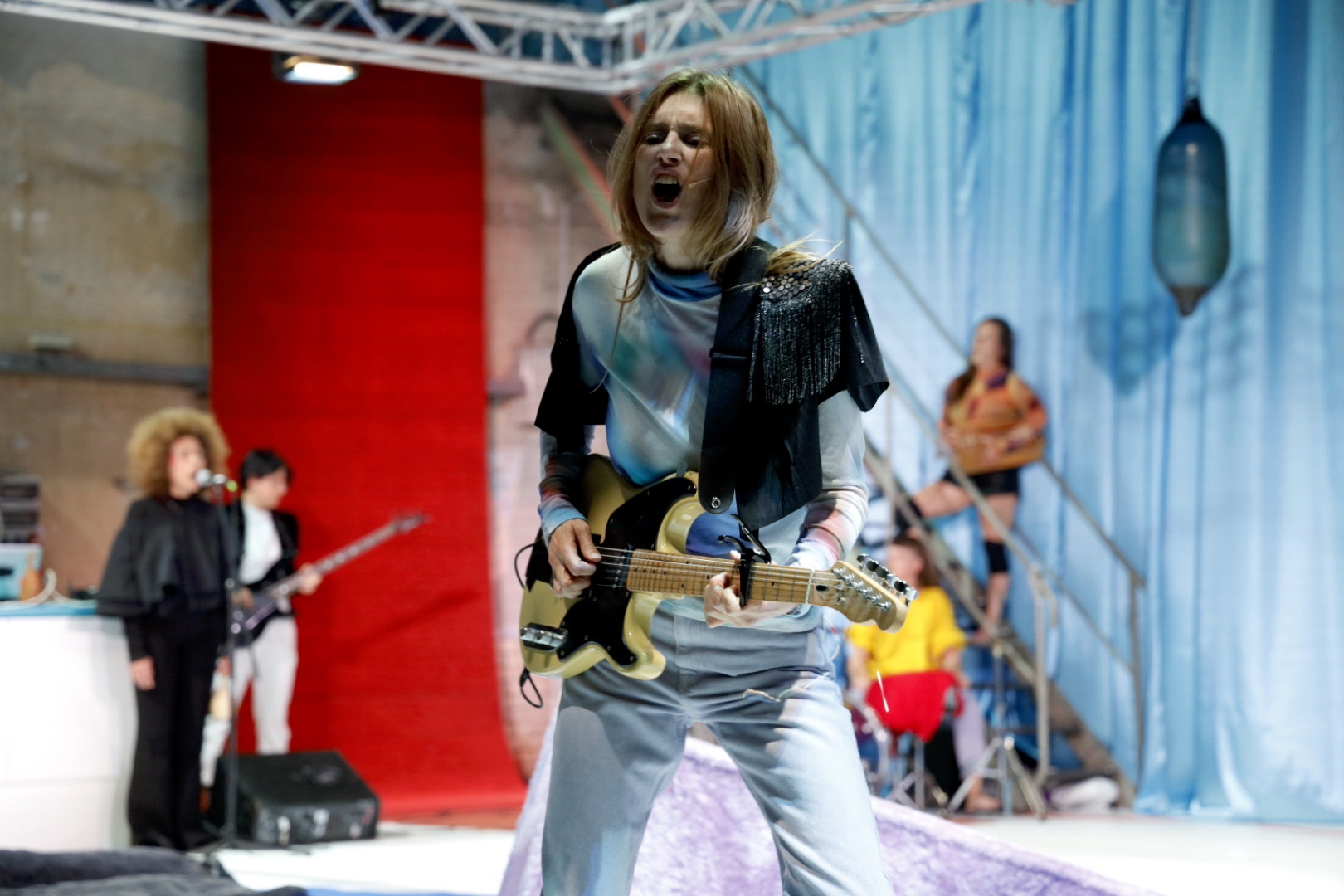
In an autofictional musical, Sheena McGrandles interweaves personal experiences with myths and narrations from ancient and contemporary times, in order to speculate about our possible futures and the role of reproduction. Together with a temporary collective of Berlin artists, DAWN explores different perspectives on parenthood and the power of the child as a symbol of hope. Where does the human need to create a family come from? Which bodies may and can reproduce, how and where? What wishes we project onto a child who, as part of a new generation, could permanently change our current society with classic family constructs and role distributions?

Four bodies on the edge of fertility enter into a dialogue with Dawn, a Goddess with rosy fingers, that opens the gates of heaven for the Sun-God to rise. At sundown, this Goddess dies, only to be reborn again the next morning. Together with a small choir of childless people, they create an experimental musical that combines concert, spoken word and performance into a multi-layered and humorous artistic work. Sheena McGrandles’ Figured, was presented in Moving in November’s Traces from November edition 2021.

Sheena McGrandles

Sheena McGrandles is a dancer and choreographer living in Berlin. She works in different contexts such as theatre/stage, education and independent art and culture projects. Her current group of works explores illogical intimacies and radical temporalities as a means of detailed exploration and exaggeration of movement. Her works create hyper-real, multi-narrative and humorous moving landscapes. Sheena presents her works nationally and internationally, including London (The Place), Amsterdam (something raw), Berlin (Sophiensaele), Mexico City (Museo Universitario Del Chopo), Los Angeles (PSSST). She completed her BA at the Laban Centre London and later studied at the HZT/UdK Berlin, where she finished her MA in Solo Dance Authorship. In addition to her work as an artist, Sheena is one of the founding members of neuehäute, where she works on the development of new interdisciplinary platforms and formats for the independent scene in Berlin. In parallel she is part of the collective PSR (performance situation room) who currently curate the new Heizhaus at Uferstudios Berlin.

Audience Body (PREMIERE)

There is a duality inhabiting theatres across Europe: the division between the audience and the makers of art. For art to appear, the artist has to enter the stage and do something. This doing attracts attention; thus an audience body is born. But how is this body formed and conditioned?

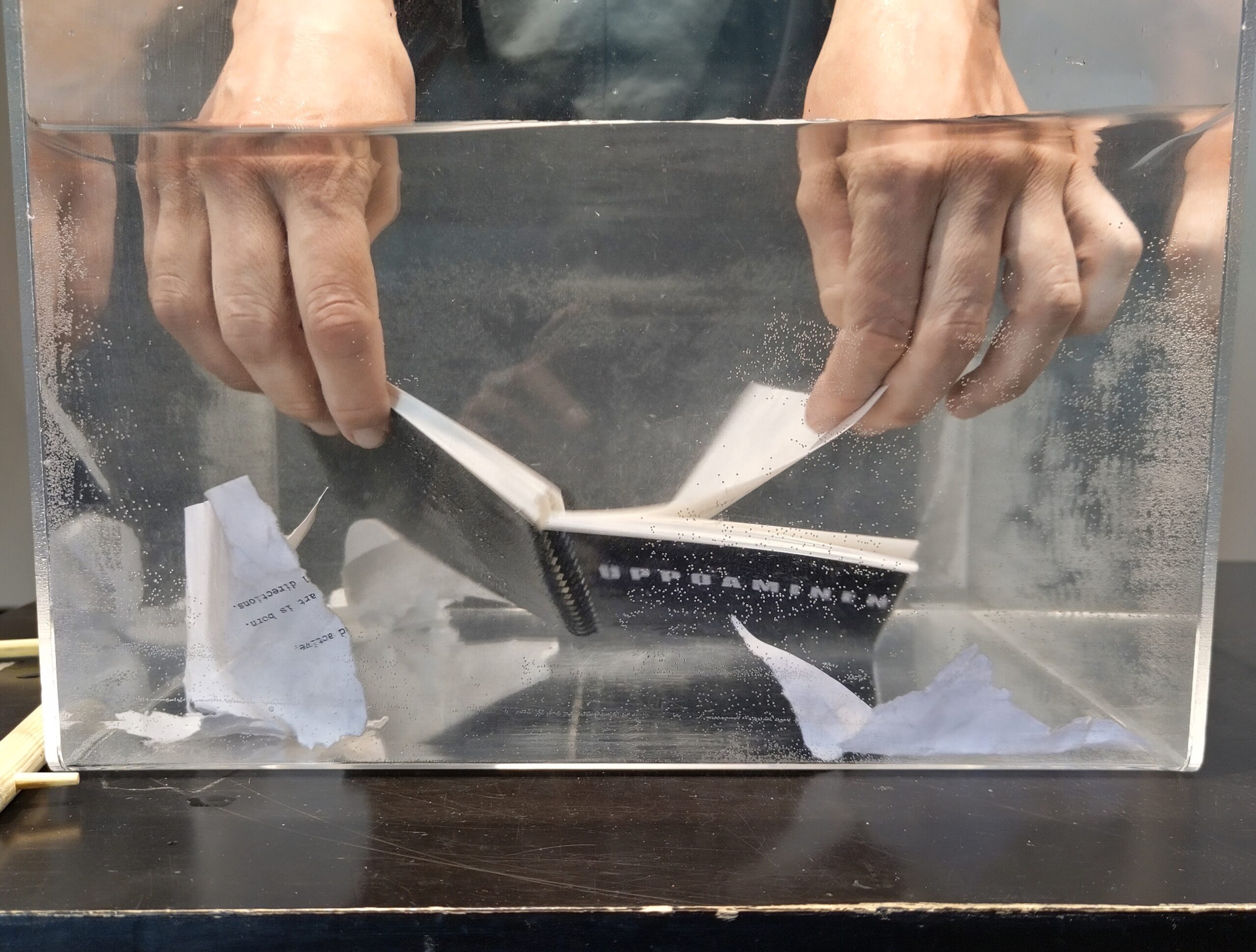
Audience Body is a performance without performers, like a book misplaced into the space and time of theatre. There is a codex. A scroll. A love letter. Place. Time. Immersion. Destruction. Order. Mess. Practice. Theory.

The work is an examined artistic part of Tuomas Laitinen‘s artistic doctorate at the Performing Arts Research Center Tutke, Uniarts Helsinki’s Theatre Academy. It has been developed in a long series of public experiments since 2018. The performance is available both in English and in Finnish.

Tuomas Laitinen

Tuomas Laitinen works as a director, performance artist, writer and curator. His artistic practice has revolved around experimenting with the audience position and questioning the nature of spectatorship. His works have taken the forms of retreats, family gathering, rituals of encounter, 7-day mystery plays, pole dances in living rooms, and practices of immortality.

SAMMAL/MOSS (PREMIERE)

SAMMAL/MOSS is part of Herbarium.

A solo body, a singular body, with moss the multiple body speaking through it. A horizontal polyphony in the body with no center, just rhythms. Choreographer Angela Schubot and dancer Suvi Kemppainen embrace an impossible challenge of a human tapping into the dance of moss. Where can the body take place if not in our human flesh and bones? On what plane is the bodily happening? This solo is a movement study emerging from a long-term, deep dedication to encounters with moss.

Angela Schubot

Angela Schubot is a dancer, artist, choreographer, practice-led researcher and bodyworker-healer based in Berlin with roots in Canada and Peru. Since 2012 her artistic practice has been researching and developing methods and possibilities to acknowledge non-human principles and beings and interact with them. Starting from 2009 she has worked with Jared Gradinger, developing pieces about the debordering of the body. Schubot teaches at ImpulsTanz Wien, Hochschulübergreifendes Zentrum Tanz HZT-Berlin, Toronto Dance Community Love-in, Duke University Durham, HfS Ernst Busch Berlin and University of the Arts Helsinki and accompanies artists and rehearsal processes through her body- and healing work.

Suvi Kemppainen

Suvi Kemppainen is an artist working in the field of choreography, dance and performance. Suvi’s artistic practice explores somatic psychodrama anchored in consent and poetics of grief and comedy. Suvi is excited about formulating feminist pedagogies for more transparent working environments in the performing arts field.