Conversation between Isabel Lewis and Kerstin Schroth

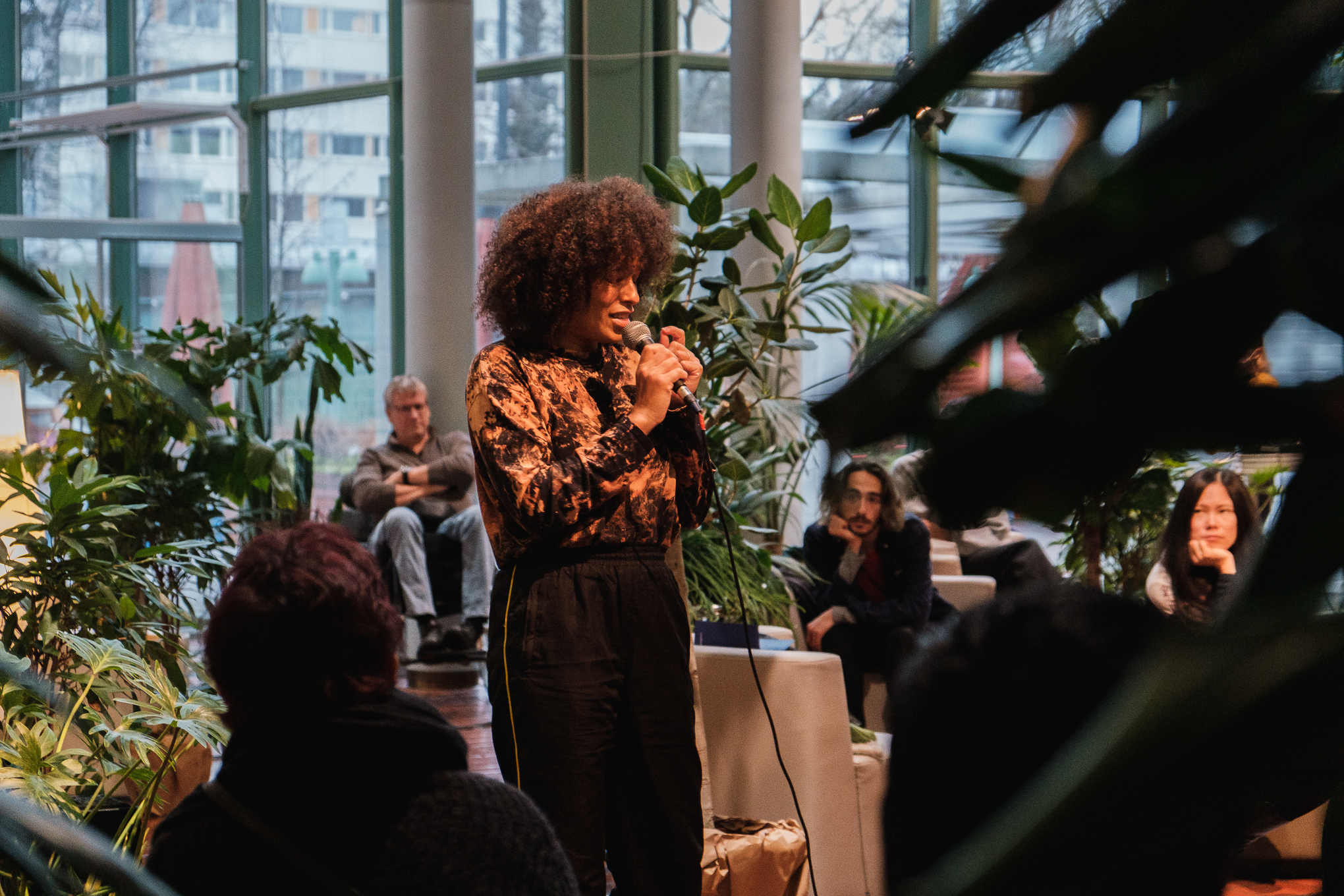
Occasions is a format you are working on and have been presenting for several years. Could you tell about the starting point of this project and the continuous development during the past years?

In 2012 I began working on what I would come to name hosted occasions by 2014. They have no clear starting point but are perhaps more of an emergence out of a digestive process of all my varied experiences in relation to dance and performance. Club culture, contemporary dance, experimental theater, improvisation, experimental music and noise, philosophy and sociology have all been influences on the development of this format. As much as my studies of classical ballet at the age of 11. In 2012 I got very interested in the composition of gardens, seeing them as complex and beautiful examples of Foucault’s articulation of heterotopic space. The notion of heterotopia – worlds within worlds and the multiplicity of modalities of relation within them producing often discordant, confusing, disturbing but also maybe transformative effects – resonated with my lived experience of contemporary life. I wanted to make dances that could be heterotopic.

Gardens became the main reference point for my understanding of the occasion as an artistic format. The garden is hospitable to differing forms of engagement simultaneously, while retaining a readability as a garden. The design and layout of the garden suggests but does not determine forms of engagement. The garden seems to encourage a sense of slowing down and lingering. It evokes the quality of strolling, of leisure, of enjoyment, of reflection. The occasions share the quiet ambition with the garden to be the kind of situation that invites bodily engagement of varying kinds and degrees and with no single privileged perspective or point of view from which to experience it.

The French salons of the 17th century (but far less mannered and much more embodied) held to amuse, entertain, and to develop knowledge of guests through conversations, have also been reference for the development of the occasions. This development follows an important shift in my way of thinking about myself as a performer to thinking of myself as a host. I started to work with storytelling and other spoken content off script, freely spoken, offering stimulus to evoke and encourage socializing among guests. As the host figure, I felt compelled to create a multisensorial space for my guests. I began to gather content, my “set” so to speak, of dances, music, stories, and smells to address my guests with topics of my interest and put them into the space to be reflected upon and discussed.

Occasions invites us to a space, in which all our senses are addressed. We encounter plants, smells, sounds. How do you work with the sensorial aspects in your work, also regarding your notion of choreography?

I work with an expanded sense of the choreographic. I come from a lineage in dance history and in political theory that resists the representational. With the occasions I did not want to make a work “about” alternative forms of sociability, rather I wanted to make work that enacted and made salient different forms of sociability. This became concretely for me a question of format, and creating a format in which I could put into practice my theoretical, philosophical and ethical concerns in regards to modern theatrical and visual art presentation formats. Different from the exhibition and theater formats that create spaces of distanced observation and analysis, the occasions work towards creating the conditions for a heightened awareness of one’s own bodily situatedness (where are you? with whom or what do I inhabit this situation and how?) by addressing all the senses. Attention to the light, the placement of furniture elements, the visual and textural qualities of the installation, the music, the smells and how they are diffused in the space, the offer of food and drink and what they propose to the palate and the attitudes and physicalities of the dances are key to generating the vibe. I see all these aspects as intertwined parts of the choreography of the occasions, that includes a dramaturgy of gently drawing out the participation of the guests.

You describe Occasions as a 21st century ritual, creating a social space, a shared experience. How do you look at the role of performing arts during a global pandemic, that demanded us to physically distance ourselves from each other, and socially isolate?

I’d like to avoid overly optimistic claims about the role of art in contemporary society and not lose sight of how our human lives and other lives are caught up (in discrepant ways) in the complex webs of ecology, politics, and economy. But I think art can be a space of experimentation and practice towards new ways of being together. The performing arts, because it tends to require presence and the gathering of subjectivities, has a potential of generating relevant approaches to how we humans are embedded in our biosocial surroundings, modeling formats for alternative expression of sociality between living and nonliving things. I think it can be a site to develop new kinds of conceptual and bodily tools to navigate the present from within the strange entanglements human societies create. The current necessity for “social distancing” and the new heightened awareness of how vulnerable we are to each other, requires us to develop new approaches to sociality that nonetheless address proximity and intimacy and find ways of generating meaning, intensity, and lasting memories. It is imperative that we find new ways to gather in a real space and time to take the new conditions of our lives into account. I think the performing arts can be a laboratory to address these challenges.
Conversation between Ingri Fiksdal and Kerstin Schroth

In Diorama you are both working with natural and urban landscapes. You are also placing human and non-human bodies alongside each other. Could you tell more about your interest and the starting point regarding this for Diorama?

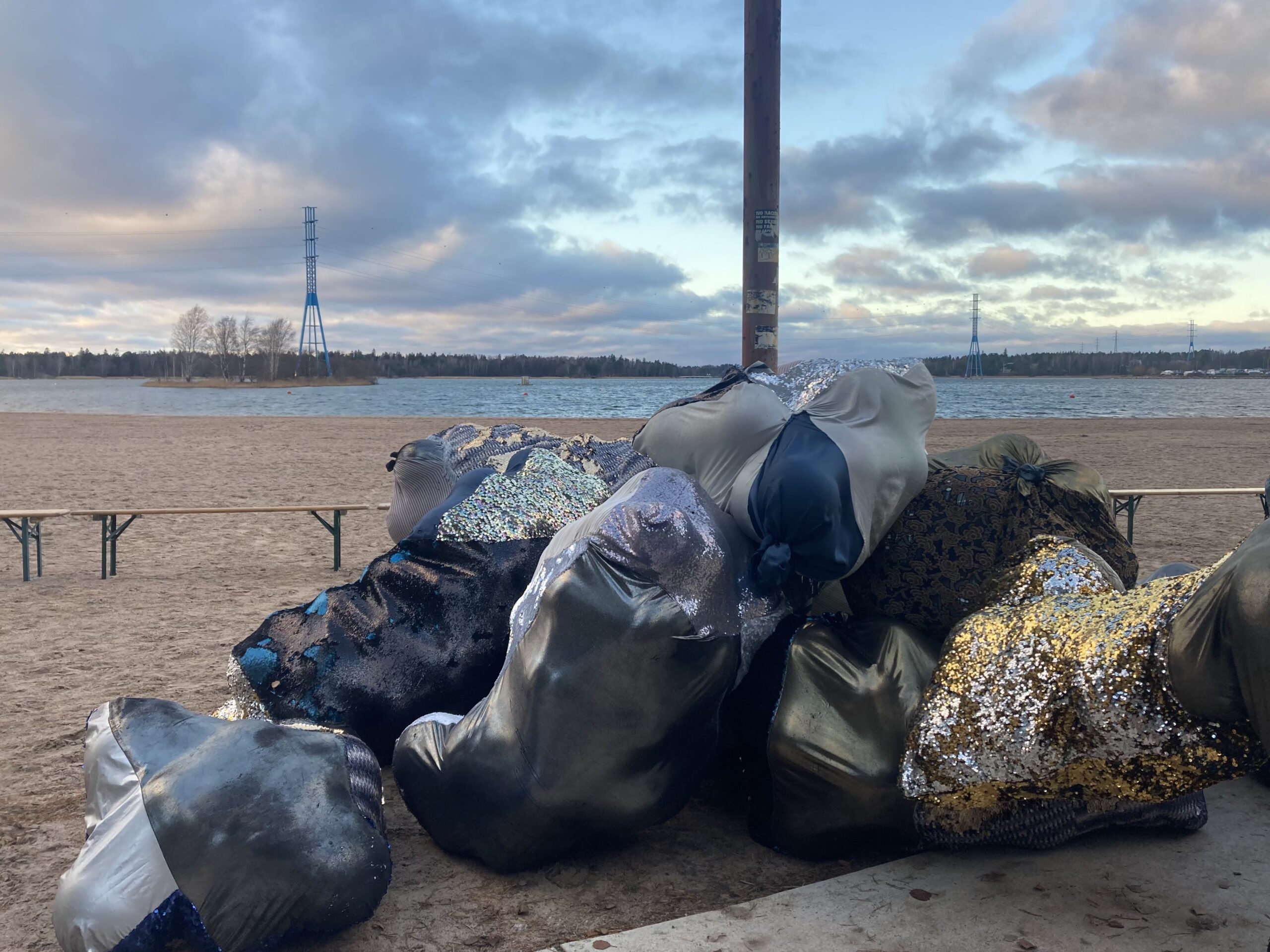
With the Diorama performance series, particular views of natural and urban landscapes in various cities and contexts are “staged”. The word diorama means through that which is seen, from the Greek di- (through) + orama (that which is seen, a sight). Diorama often refers to a three-dimensional model of a landscape, such as those displayed in museums of natural history. Another use of the word is for the French diorama theatre invented by Louis Daguerre in 1822, where the audience were sat watching large landscape paintings transform through skilfully manipulated light. Later, sound effects and live performers were added to the images.[1]

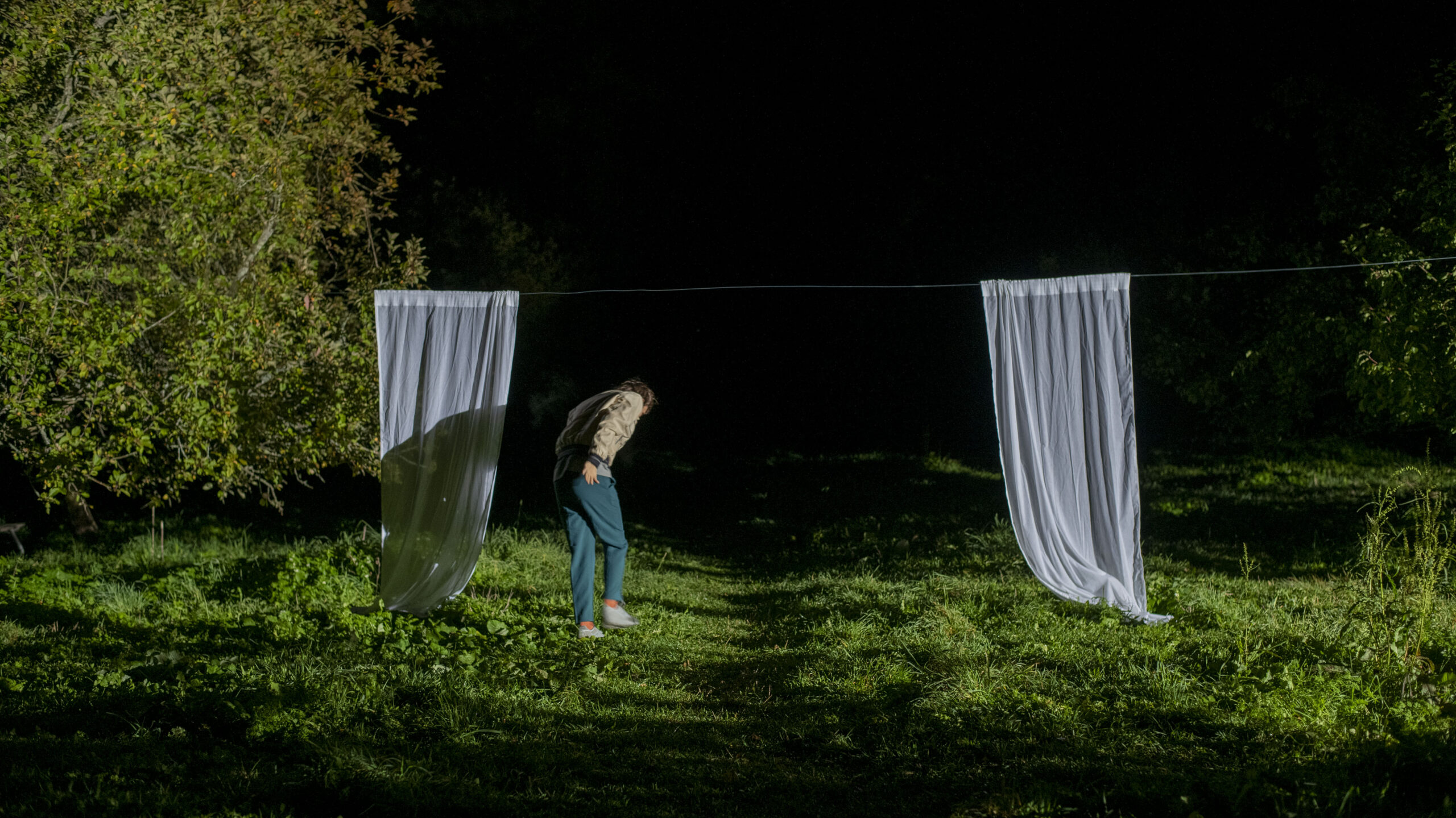
Diorama invites a meditation on well-established dichotomies such as dead/living, human/non-human and culture/nature. The audience spends time in a given landscape and observes the gradual changes that take place there. The choreography is slow and minimal. It tries to become part of the landscape, whilst simultaneously drawing attention to it.

Relating to how the total performance was a mix of performers, sound and surroundings, we worked with the elements’ influence on the bodies of the human performers to generate movement material. The landscape becomes a total “body”, and the bodies become landscapes. This fusion between environment and corporality became new object that merged aquatic movement with mineral stillness. The idea is to (with a wink to Jane Bennett) revisit and become temporally infected by superstition, animism, vitalism and anthropomorphism; a childhood sense of the world as filled with all sorts of animated beings, as a tactic to treat non-humans such as animals, plants, and earth as well as commodities more carefully, strategically and ecologically.[2]

Thinking of your work in general, slowness, slow movements appear in several. Would you like to speak about your notion of time regarding your work?

An audience that has come to see a performance generally expects something to happen. Approaching these expectations with very slow, minimal, repetitive and/or monotonous movement themes is an attempt to attune the audience. My experience is often that the approach makes people give up on expectation, and at best, find another mode of watching/hearing/feeling new details or small variations within what was at first glance just one thing. I believe that there is potentiality for affect to occur within this slight alteration of temporality and the consequential shift of attention.

For instance, with Diorama, which is often staged by the seaside, the piece is so minimal that the audience (feet in sand, or sometimes snow) will spend time looking at how the waves hit the shore and feeling the wind on their faces, as much as looking at the performers. This links to your third question – see below.

You finished your PhD in artistic research at Oslo National Academy of the Arts, with the title “Affective Choreographies”. Could you elaborate about your notion of choreography?

The performances created within my PhD project are structured in a way where the light design, sound, dance, movement, costume, scenography, performers, props, audience, audience set-up and site are equally important, although weighted differently from one piece to another. The performances could be seen as systems of interaction between both human and non-human lifeforms. The performer is connected to her costume, the costume is connected to the air of the space, the air of the space is connected to the stage lamps, the stage lamps are connected to the grid, the grid is connected to the ceiling, etc. This goes on forever and is what philosopher Timothy Morton calls a context explosion. With this potentially infinite “web of life” we can never reduce something formed by its interconnections to the sum of its parts. And similarly, we cannot reduce the whole to its parts either.[3] I see this as a way to describe how I attempt to create choreographies of all elements within my work. Everything is interconnected and interdependent.

In Diorama, the co-existence of performers, costumes, rocks, snow, seagulls, waves, boats, sunlight, speakers, beach and wind creates a choreographic assemblage. Hence, the potentiality for affect lies with all matters present in the choreography, human and non-human alike. I see this as a doing as much as a horizon of thought. One can always apply this set of thinking to a given performance; however, I believe that for the audience to have the experience of distribution of affective potentiality within a piece, one has to work with this explicitly through giving the different bodies time and space.

Thank you for the shared time!

Thank you for the shared time! Thank you for your fidelity! Thank you for attending Moving in November. It was a truly special moment to present this year’s program with artists from aboard and from Helsinki to you. Engage into conversations and build further connections.

We are content and proud about the way Moving in November is spreading more and more over the Helsinki area. Finding the right location for each work we like to present. Contrary to some concerns that have reached us, we will continue like this. We are not moving into Tanssin Talo with our program. We simply can’t afford the rent.

But will continue to extend our partnerships and collaborations with different venues, beaches and forests all over the city. We hope that in the future we have the means to also add Tanssin Talo as one of our venues.

For now, a warm and big thank you to the artists and their lovely teams, that presented their works during this year’s festival! Namely: Dominique Brun & François Chaignaud & Sibelius-Academy piano music department, Isabel Lewis, Michiel Vandevelde, Maria Saivosalmi & Vytautas Puidokas & Vytautas Katkus, Mikko Niemistö & Sanna Blennow & Teo Lanerva & Olli Lautiola & Justus Kantakoski, Ofelia Jarl Ortega, Ingri Fiksdal & Sibelius High School, Boglárka Börcsök & Andreas Bolm, Stefan Kaegi & Judith Zagury & Nathalie Küttel, Chiara Bersani & Ilaria Lemmo, Bart Van den Eynde, Elsa Tölli & Veera Milja, Tuomas Laitinen, Jared Gradinger and also the hosts of the Soup Talks: Mammu Rankanen, Sanna Myllylahti, Karolina Kucia, Freja Bäckman, Essi Rossi, Sonja Jokiniemi, Anne Naukkarinen, Tom Rejström, Tuomas Laitinen, Annika Tudeer and Matilda Aaltonen.

And to our partner venues for hosting us and thinking along, to our funders for your support.

See you in May for Traces from November!

Your Moving in November -team

Tune in. Warm up. Soon Moving in November begins.

The festival starts this week: 4.-14.11. A warm welcome!

To sprinkle some festival mood, we warmly invite you on November 2nd at 12pm @Villa Eläintarha to our Pre-Soup Talk. A conversation between critic Maria Säkö and our artistic director Kerstin Schroth, about curating a festival, writing about contemporary dance, Moving in November and this year’s program. The talk is in collaboration with The Finnish Critics’ Association.

We also have a surprise for you!

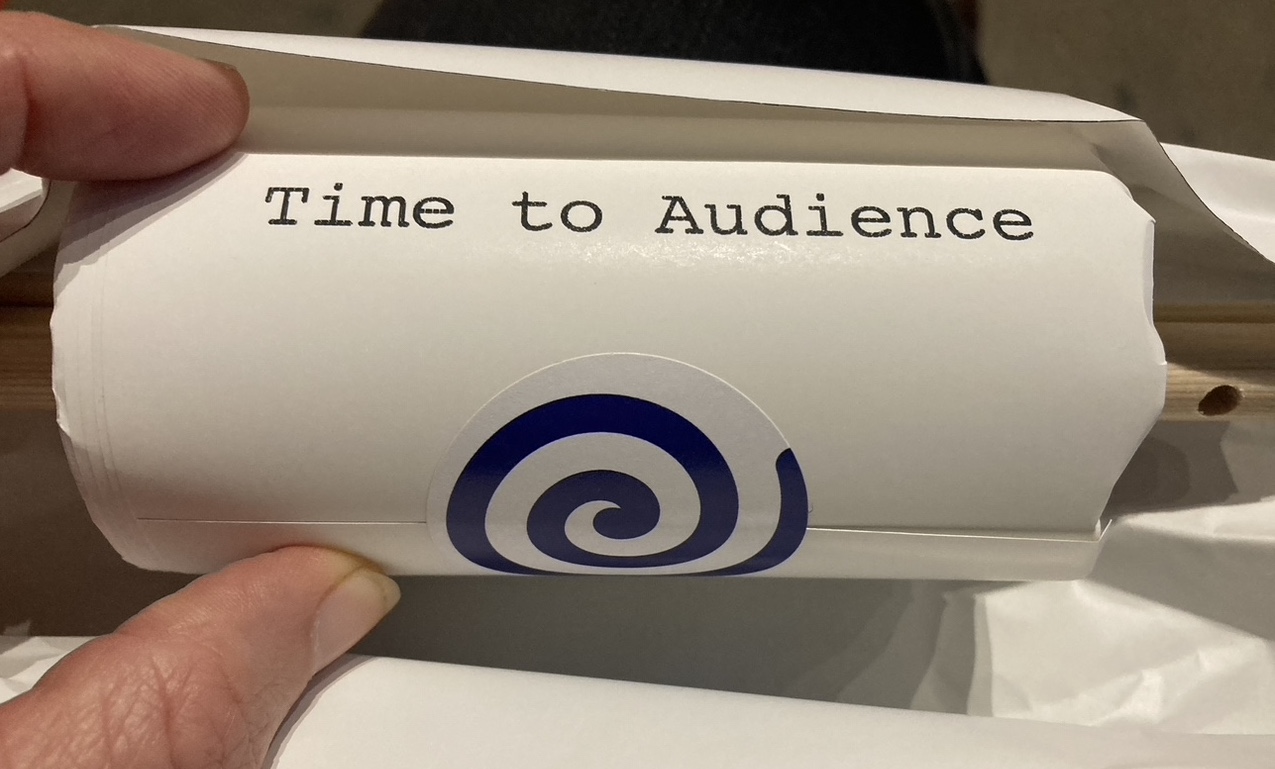
Time to Audience by Tuomas Laitinen is a reading event and a play in two acts. It is time handed to us when we appear as an audience. The first act is available as a limited edition of reading objects at the second week of Moving in November 2021. The event of reading will commence at 7pm on Saturday the 13th of November. Time to Audience is an episode in a series of experiments which compose the Audience Body, premiering in 2022 in collaboration Reality Research Center and Moving in November. Link for more details and tickets below.

The festival passes are sold out, but single tickets are still available for some performances. Make sure you have your tickets booked.

Don’t miss out on the conversations with our invited artist: Soup Talks, starting on the 5th and continuing to happen every day during the festival between 12-1.30pm @Caisa.

Time to Audience

Time to Audience is a reading event in two acts. It is a piece of time handed to us when we appear as an audience. Both acts are available as a limited edition of reading objects. The first act is performed at the second festival week. The objects can be received an hour before the show from three festival venues (Stoa/Caisa/Zodiak). Each participant will read the text independently, but at the same time. Time to Audience is an episode in a series of experiments which compose the Audience Body, premiering in 2022. It is a part of Tuomas Laitinen’s artistic doctorate at the Performing Arts Research Center Tutke, Theater Academy in Uniarts. The research is funded by TTOR & Tutke (Uniarts Helsinki), Jenny and Antti Wihuri Foundation (in 2022) and Kone Foundation (in 2022). Time to Audience is also supported by Brother Finland.

Audience Body

There is a peculiar duality haunting theaters across Europe: the division between the audience and the makers of art. For art to appear, the artist has to enter the stage and do something. This doing attracts attention; thus audience is born. The artist is the object of attention, the audience are the ones who attend. To draw attention to the audience would dispose of it as we know it. They too would start to perform, they too would enter the stage. So how to learn something about the audience? How to focus on the audience while letting it remain beyond the sphere of attention? Since 2018 Tuomas Laitinen has conducted a series of experiments, which address this puzzling mystery. This series has been realized as more than 20 events of reading, in which the readers are invited to contemplate the phenomenon of audience while at the same time becoming its body. The series spans from the time before the outbreak of Covid-19 into to the time after the reopening of theaters. It thus documents a process of searching for the meaning of audience in exceptional conditions. The 2022 program of Reality Research Center and Moving in November feature Audience Body, which restages this series of readings and invites the audience to think about and feel itself as an emergent being. What is an audience now, as we are both closer to and further from each other like never before?

Tuomas Laitinen

Tuomas Laitinen works as a director, performance artist, writer and curator. His artistic practice has revolved around experimenting with the audience position and questioning the nature of spectatorship. His works have taken for example the forms of retreats, family gatherings, rituals of encounter, 7-day mystery plays, pole dances in living rooms or practices of immortality. Currently he is working on an artistic doctorate at Performing Arts Research Center Tutke of the Theater Academy in Uniarts Helsinki. His doctoral research is concerning the question what is (an) audience.

How to extend two festivals in time and space?

A special work is brought to Helsinki by two November festivals Baltic Circle and Moving in NovemberFionde by Chiara Bersani & Ilaria Lemmo, a performative artwork delivered by post. After buying your ticket, you will receive a box containing everything you need to experience the performance at home. The content of the box is not revealed beforehand – it is always a surprise, an encounter with the unexpected.

Artistic directors Hanna Parry and Kerstin Schroth both started at the same time, end of year 2019. Now we invite you to read a conversation between the two, regarding the first collaboration of the festivals.

Hanna Parry: What do you wish Baltic Circle could give to Moving in November? What is Moving in November willing to give to Baltic Circle?

Kerstin Schroth: I think both Baltic Circle and Moving in November can give to each other friendship, inspiration, thinking together and support. Through the proximity in time, we can invent special collaborations that can expand/stretch over both festivals. Works that by traveling and meandering through both, can develop a specific dynamic. Having the chance to span over a longer time and creating different encounters with both of our programs.Connecting the festivals, through artistic works gives a special potential and quality to collaborating. Maybe also the impact of certain works and reflections is highlighted by our collaboration.

This year we collaborate around the work of Chiara Bersani and Ilaria Lemmo: Fionde, a performative object and experience delivered in a box to the spectator’s home. A special work to start of our collaboration.

Kerstin: This year, it seems that we both can go ahead with our original plans regarding programs. How do you look at your second edition and what are your wishes regarding this November?

Hanna: I’m extremely grateful and excited about the possibility of going towards a festival that is not constricted by restrictions and compromises. I see my second edition as a clear and purposeful proposal of works and acts that aim to strengthen the feeling of belonging in both ecological and social circulations. My wishes for November are that we can all gather again, enjoy the festive energy and its social and political potential, and strengthen more sustainable practices.

Hanna: You live in the middle of Europe, surrounded by culture, me between a forest and a sea, what could our different surroundings offer to each other’s curatorial work?

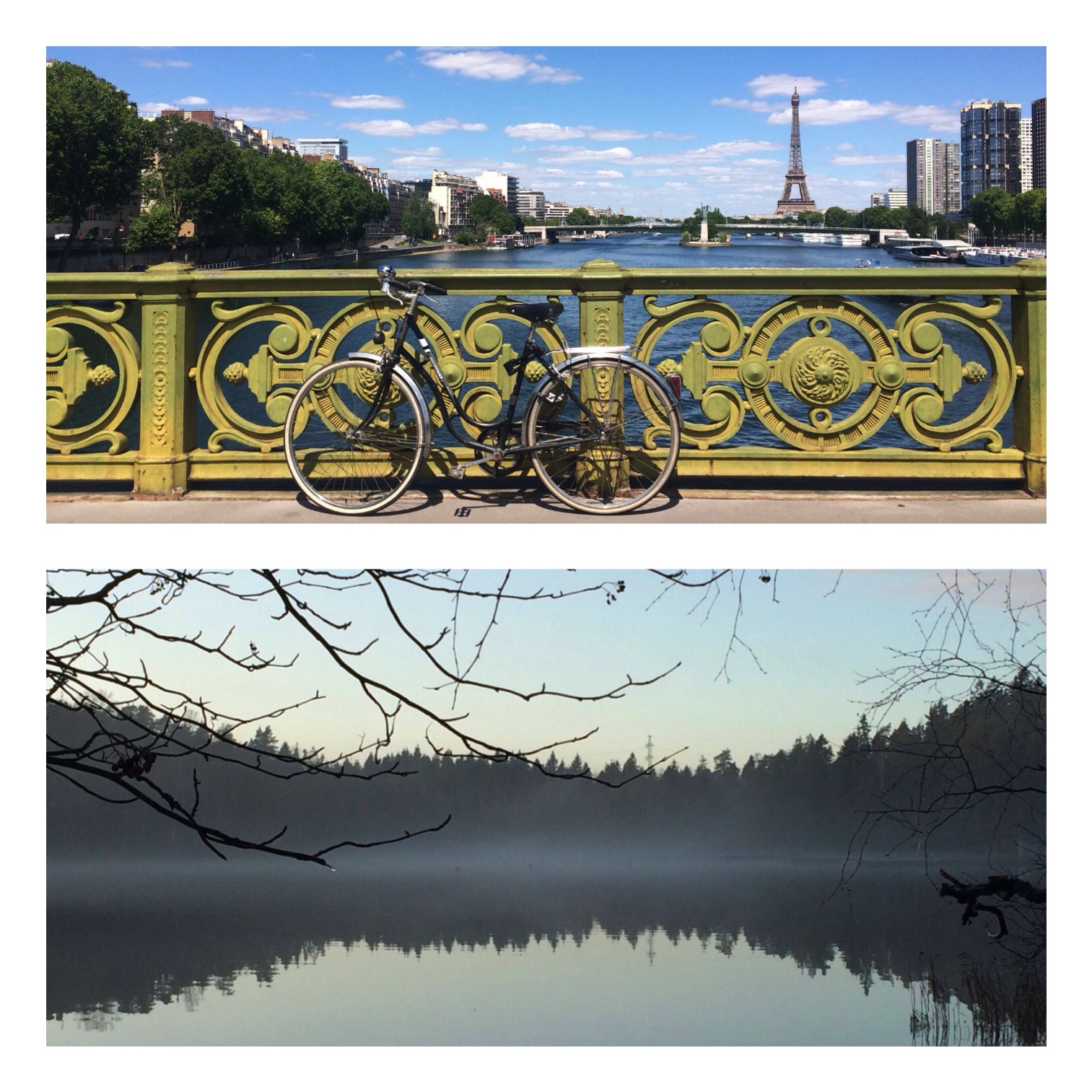
Kerstin: I think we can offer to each other’s curatorial work an outside view and open mind to discuss and share. When I am in Paris, my work life is highly influenced by seeing performances almost on an everyday level, also exhibitions and strolling around a city that seems iconic as such. When I am not in Paris, I cover my lack and urge of being in nature. I enjoy our conversations, as I always sense, that we approach subjects we share from a different angle. That’s enriching!

Kerstin: How is it for you to think about a festival program in the month of November in Helsinki?

Hanna: November in Helsinki is dark, windy and rainy. The black and white landscape is bare, waiting for the snow to cover it. For me thinking about a festival in November gives social shelter. Its intense energy, communal essence and special relation to time can create care and attention – both needed for surviving the harsh month here.

Hanna: If we combine our festivals in time, we cover almost a full month. For what could you use more time?

Kerstin: If I would answer your question in a personal way, my answer would be reading (always). In relation to both of our festivals, I would wish to be able to experience your festival as intensively as Moving in November. Having the time to see all works and encounters you are proposing. Meeting the artists, you have been working with, as much as discussing all the works we have been both inviting in detail with you.

Kerstin: Fionde by Chiara Bersani & Ilaria Lemmo is a performance, delivered in a box to peoples’ homes. I like the thought, that with it, the audience receives one small part of both of our festivals into their living rooms, like an extension of both. Do you have thoughts on this?

Hanna: I enjoy the thought as well! Fionde is a beautiful example of a festival work that takes a surprising form, pops up into one’s life and invites to experience something special. I’m curious to see what it creates in its different surroundings and love the idea that the festivals can also come to people who cannot come to the festivals. I’m happy that our first collaboration makes it possible to bring Chiara Bersani’s and Ilaria Lemmo’s work for the first time to Helsinki.


Tickets to Fionde can be ordered through Tiketti, link below. The deliveries will start today, 21stof October, and continue until 27thof November. Optionally, you can pick up the box from Caisa (Kaikukatu 4b, 00530 Helsinki) during both festivals. However, you choose when you want to take the time to experience the piece.

A written conversation between Chiara Bersani and Kerstin Schroth

You are the first artist to work with Samara Editions on a series of performances that can be sent to the audience by post. How was the working and creation process for you?

FIONDE’s creation process was something completely new for me. My work is normally designed for a team, and it takes place in spaces other than my home. I belong to the generation of artists without roots. I create by moving through cities, small towns, different countries. The world enters in my work all the time. This is how my relationship with the audience is created: I collect gazes from the moment I feel a new work is going to arrive and I start talking about it to everyone I meet.

FIONDE was the exact opposite!

The world was inaccessible. There was only my two-room apartment. The winter seen through the windows. I couldn’t imagine the audience for this work. It was like creating for ghosts. When I met Ilaria Lemmo, I thought in the middle of the fog, solitude, desert, having someone to work with would maybe help me not to drift.

Creating together means being responsible for the other person. It means having to be able to say your thoughts out loud. It means accepting some noes. Being with Ilaria saved me from drifting. And then the Samara Team acted as a levee.

FIONDE was the work by which, after the pandemic had choked everything, new social avenues began to be built. The creative process was all-encompassing. It sucked me in, there was no more intimacy. FIONDE was everywhere. It was beautiful and difficult. FIONDE could only be born in this time. It was necessary.

Your work is basically done by completing the box. The moment the box is send to people’s homes, you give the performance out of your hands. You have no knowledge when and where people open the box. Contrary to a regular presentation in a theater, you cannot experience the reactions of the audience, you might get or not get any feedback. How is this for you?

I find that fascinating. When meeting an audience, I usually love the immediate feedback, the one you get while the energy is running through the people in the room. In the same way I live with discreet embarrassment, the applause or the words immediately following the performance. The distance proposed by Samara is poignant and wonderful precisely because it overwhelms everything.

FIONDE enters an intimacy so deep that when I think about it, I blush a little.

Yes, it’s true, people are not involved in a feedback loop with me, but while they experience FIONDE they interact with the object created for them. They modify it, fill it with nuance and meaning. Losing control of one’s creation is dizzying but also wonderful. In the end, when someone has something urgent to say, they say it anyway. They send a little message. A letter. A little note. And these long-distance feedbacks have a value that’s hard to recount.

What are your thoughts on homes, on private spaces, especially during a time when we have been asked to stay home, to distance from social spaces?

Last winter we talked a lot about this with Ilaria. We were opposite poles of an endless debate. For me everything always passes through the body. My body is so hungry for the world that it feels suffocated if closed between the bedroom and the kitchen. I have a disabled body. The mainstream narrative wanted me embedded in a structured life. Choosing liquid paths, abandoning grids, it has been years in the making. Perhaps the most exhausting thing I’ve ever done.

It meant learning to tame fears and frailties. For me that time without social movement resembled a nightmare. Everything was being taken away and while the rest of the world was talking about the future, I wondered how complex it would be to recover everything. I wondered if it was possible.

This pain for me took on absolute nuances. I extended my way of feeling to the whole world, I was a sort of volcano of ashes.

They reminded me that everything was more complex. They reminded me there were people who could survive without injury at that time. That I was speaking from one point of view but out there in the world, there were others. Different ones. Opposites. Impossible to count.

FIONDE was also born out of the tension of these dialogues. Shifting the angle of your gaze is very difficult when you’re alone. So, I can’t really answer this question. I leave it open-ended and maybe, in 10 years, when we have understood if this year and a half has left consequences in us or not, maybe then I will be able to say something more structured. For now, I only know that I imagine hell to be very similar to a place without public space.

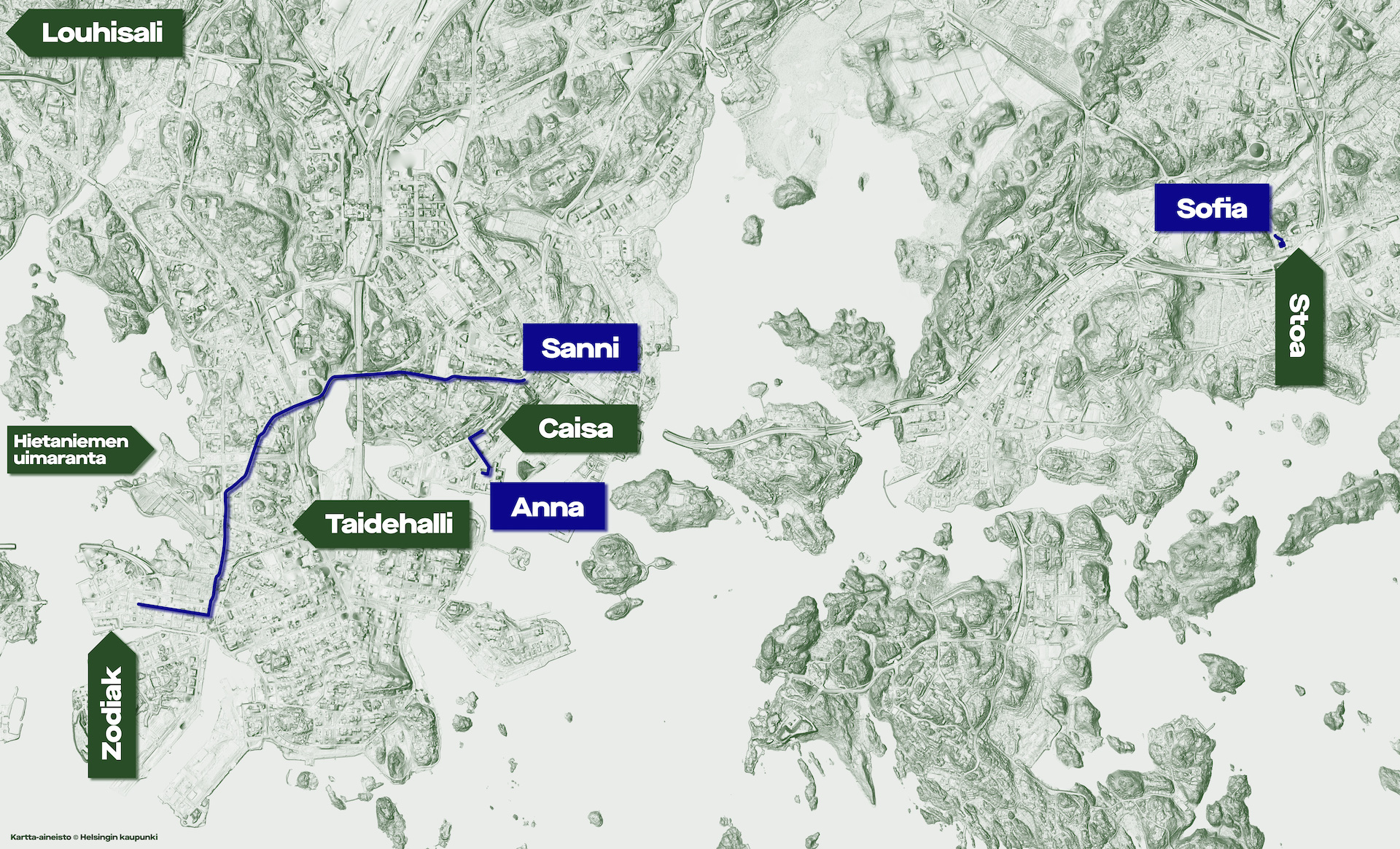
Paths in November

These paths are audiowalks.
Listen whenever wherever.
Use the map to see where the paths were recorded.

Paths in November is a greeting across the lobby.

Moving in November takes place annually at many kinds of venues, especially cultural centers. The festival is one of the many glimpses that touch these lobbies, corridors, black boxes, toilets and trash bins throughout the year. These spaces are already intersections for many different bodies, using the same facilities for different purposes. From a festival-goer’s perspective, it seems that the different users cross spatially, but not necessarily temporally. Often the performances start in the evening when libraries, restaurants, museums, education centers and youth community centers are closing. This year Moving in November is seeking to greet people, whom the festival shares spaces with. Paths in November is a series of audio walks. Each recording is a site-specific portrait of a person inviting the listener for a walk with their voice, following their path. The project consists of two distinct processes: artistic work of Paths in November and workshops. The workshops were organized in collaboration with Stadin AO – Helsinki Vocational College and Adult Institute, and Sibelius High School. At the workshops, facilitated by Pie Kär, students from each collaborating institute were introduced to audio walk as an art form, and how to prepare site-specific recordings. Through these workshops, a group of interested students joined the process of making Paths in November, based on a conceptual proposal by Kär. The musician/sound-designer Nicolas “Leissi” Rehn is also part of the working group. The decisions over choosing and editing audio content to be published have been made by each person whose voice is on the recording. Each person speaking has used their preferred language. Each voice resonates as a representative of one’s age, color, gender, pleasure, faith, class or economic background. The audio walks are for the ears of anyone who visits the cultural centers and other venues used by Moving in November. Paths in November is building connections with and within people who use the same spaces for different purposes.

Pie Kär

Pietari Kärki (they/them), going by the artist name Pie Kär, is a performer and choreographer. Their choreographic work moves around fields of dance, site-specific performance, sound and community art. Since 2020 Kär has worked as the social choreographer for Moving in November. Currently Kär lives in Sipoo and works mainly in Helsinki. Their free time they spend gardening and singing loudly.

Let’s get together this fall. A warm invitation to Moving in November.

What does the month of November culturally represent in Finland? The month when the transition into wintertime happens throughout the northern hemisphere. Not only in Finland, November is understood as the month of death. Leaves fall, plants die, people retreat indoors. Marraskuu, the Finnish word for November, also means death in the old tongue. Translated, Liikkeellä marraskuussa could hence also be: Moving with death.

Around November strong winds, heavy rain, grey days exchange with the first freezing cold days, blue sky and winter-sun. A sun that barely crosses the horizon. The first snow might appear, and the sea surrounding Helsinki changes its appearance and color every day. Days get shorter, nights longer. People move from social spaces into their homes. Moving in November seems to be one of the last social events and possibilities to gather before the winter curtain falls.

A warm invitation to Moving in November! After our festive summer edition, we would like to share some time during this fall. We welcome you to experience works that have been selected for you. To our series of informal encounters, Soup Talks, bringing you in conversation with the invited artists. To workshops and to audio walks.

For eleven days, artists come together in the Helsinki area to share their dreams, their perspectives and analyses of our world, of the time and societies we are living in.

None of the works you will witness, is set in a classical stage setting. Works are placed in a circular structure, split seating, delivered to you by post, come in the form of an installation, have turned into a movie, invite you outside to a well-known city beach, into a museum, or into a hybrid room resemblinga hospital care unit or a ghostly abandoned salon, where you find yourself in a close proximity to the performer.

Together with you, we are happy to welcome: Dominique Brun & François Chaignaud, Isabel Lewis, Michiel Vandevelde, Maria Saivosalmi & Vytautas Puidokas, Mikko Niemistö, Sanna Blennow, Teo Lanerva, Olli Lautiola, Justus Kantakoski, Ofelia Jarl Ortega, Ingri Fiksdal, Boglarka Börcsök & Andreas Bolm, Stefan Kaegiwith Judith Zagury and Nathalie Küttel, Chiara Bersani & Ilaria Lemmo, Bart Van den Eynde, Elsa Tölli & Veera Milja and Jared Gradinger to this year’s festival.

Take a read, dive into this year’s Moving in November program and take time to make your selection.

We also have a surprise for you. We continue to spill out to other seasons of the year. Traces from Novembercontinues in May 2022, with two outdoor performances, by Angela Schubot and Jared Gradinger. One for adults, the other one for kids.

Looking forward meeting you in November!

Warm wishes,
Kerstin Schroth & Moving in November team