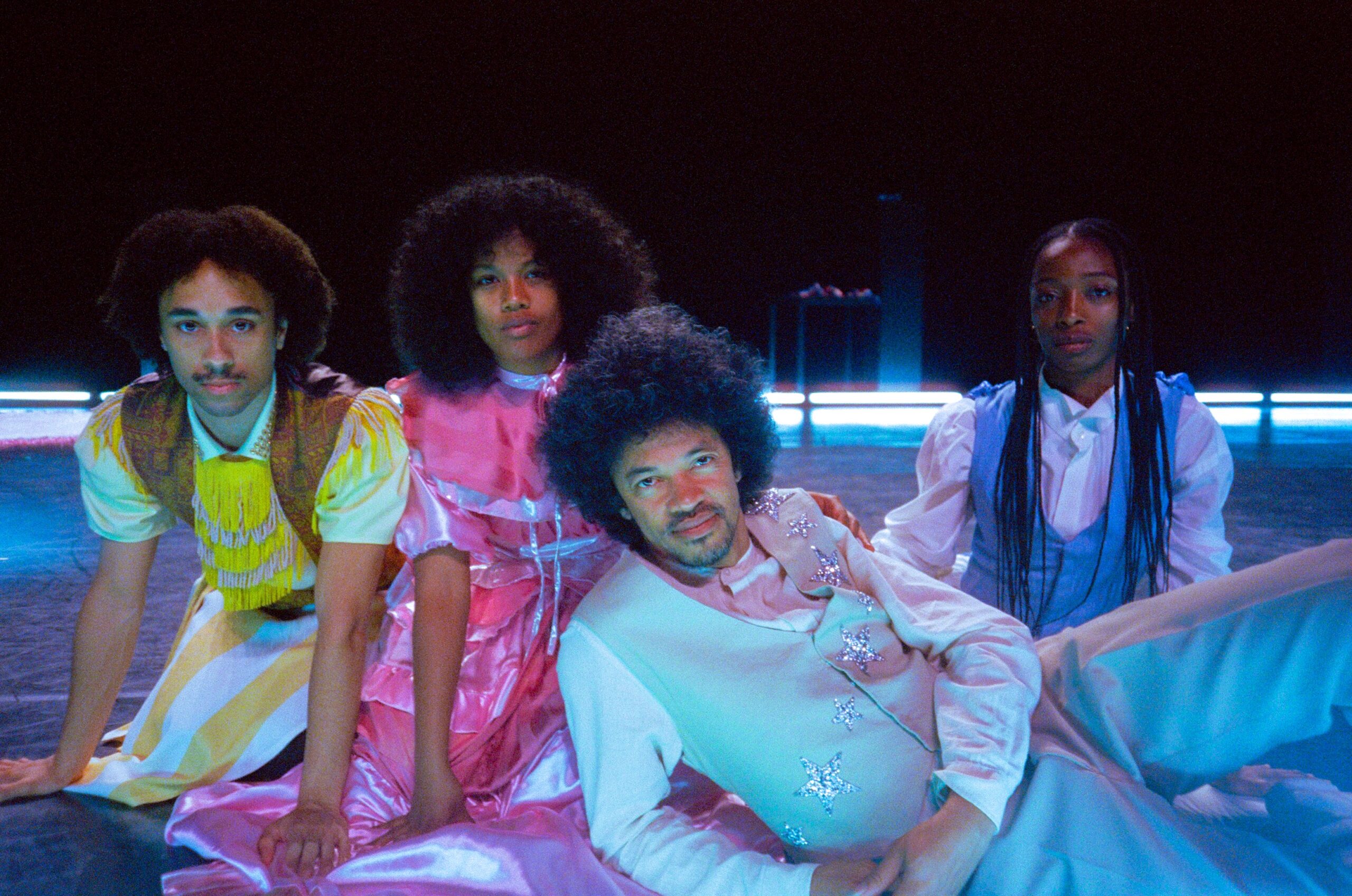
Mother Tongue

Mother Tongue is a solo about my language. A troubled language that mixes the need for survival and the fear of disappearing.

Mother Tongue is a duet of my voice and its echo. A sound that insists on resisting.

Mother Tongue is an in-between being. A fiction that defends multiplicity and transformation as a force of existence.

Lucía García Pullés starts with the idea that identity is a construction made up of stories about ourselves: intimate narratives nourished by our personal experiences, which are in turn overlaid by normativity’s precedence. Repetitive, saturated, and insistent, García Pullés works with vocal and physical gestures from her personal phantasmagorical, fictional, and sensitive archaeology while asking: “How can I give body to the heterogeneities that integrate me?” Understanding the body as a palimpsest, composed of dynamic and fluid narratives that question, distort, affirm, and destroy each other, Mother Tongue seeks to dig into the different temporal and geographical layers of the body. Thus, the body is seen as the territory of a living archive, an active and overflowing memory.

Mother Tongue stems from a memory of feminist protest, a present of immigration and the desire for a future that will allow us to inhabit the edges. As a performance that superimposes personal memory with the present and the desire for a future open to listening, Mother Tongue asks: Which forms and voices are listened to?

Lucía García Pullés lives in Paris, where she continues to develop her career as a dancer and choreographer. She sees her work with dance as a playground for proving the fictions and narratives that help us survive. In her work, there is a dialogue between elements of theater, sound art and poetry, where the body – dance – is always the territory of intersection. Her interest revolves around notions of identity, collective memory and the fictional narratives that construct imaginary identity. She works on a physicality that seeks to multiply these ways of being on stage. She understands the body as a living archive that overflows in layers of time, geography and imagination. She believes in the power of the sensibility of movement, and in its ability to transmute sensations into fiction to transform our relationship with the world. García Pullés holds a degree in choreographic composition from Universidad Nacional de las Artes, Buenos Aires (2013). She is the founder and co-director of the La Montón collective (2013-2018). As a performer she currently collaborates with choreographers Mathilde Monnier and Volmir Cordeiro, and as a teacher with Marcela Santander Corvalán. As a researcher and creator, she has received investigative grants for dance and performance experimentation programs in Europe, Uruguay, Argentina, and France. She has developed her research work Re.Verb, presented in the Festival Solos al Mediodía in Uruguay (2021) and in the Festival Artdanthé, at the Théâtre de Vanves (2022).

MANUAL

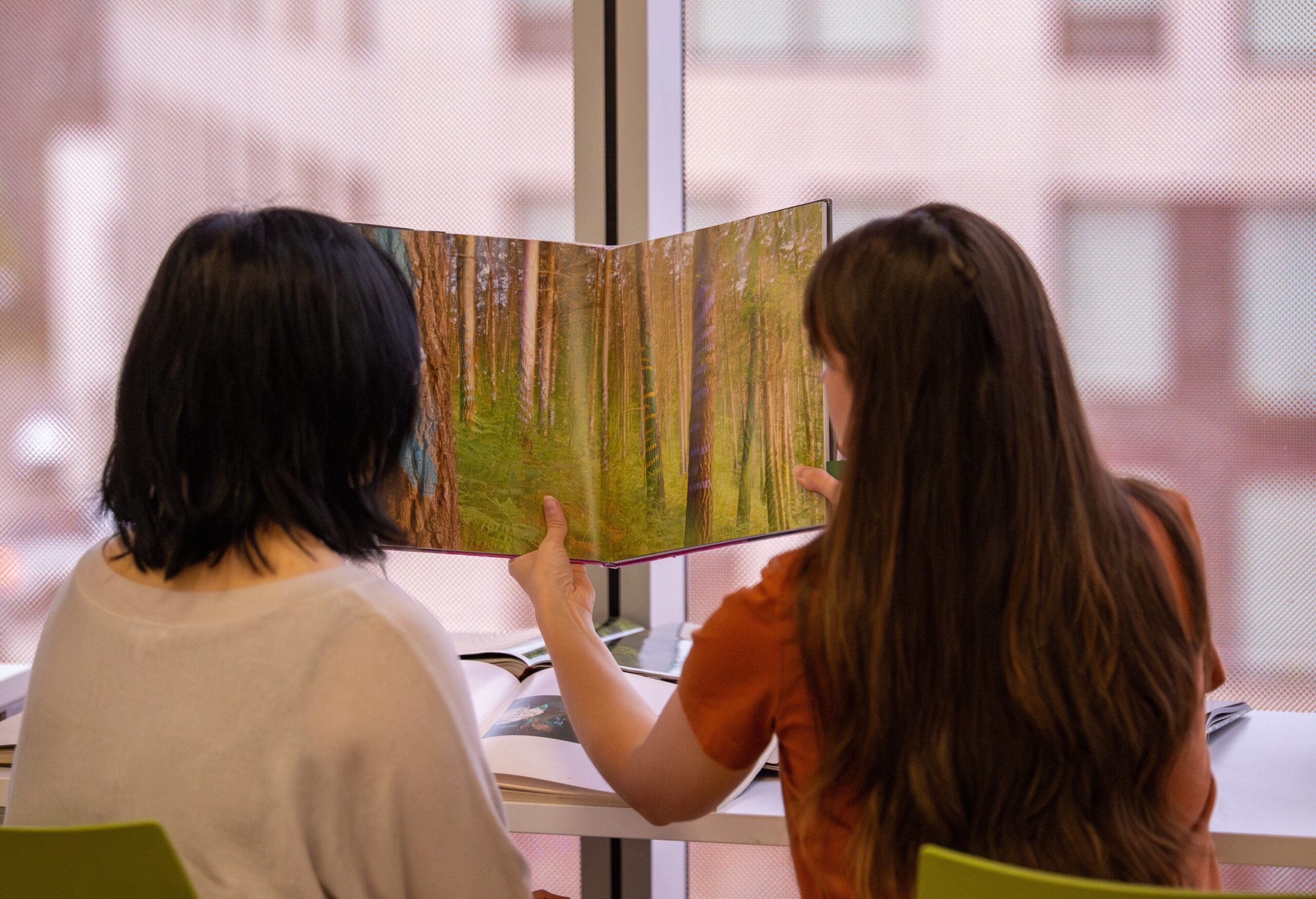
Adam Kinner and Christopher Willes have created a one-on-one performance that turns a public library into a space of sensory encounter and heightened awareness. MANUAL, staged covertly during the public hours of Itäkeskus Library, invites participants to arrive on site with instructions to meet a stranger in a particular place. From there they are silently led through a series of subtle events, following written notes and immersive audio in headphones. They walk through the space and listen together. They look at books and read to each other. Sounds and images found in the library combine and blur. And as the piece progresses the materials come to form a manual for slowing down.

Intermingling with the daily life of the library, MANUAL reflects on the act of listening and the intimacy of reading with another person in a public space. Through a carefully guided participatory experience, the piece invites viewers to engage with the library as a site of deep sensory awareness, and to reflect on the social and technological conditions of shared attention.

Adam Kinner and Christopher Willes will host a workshop on the 8th of November, organised by Tanssille ry as part of Focus on the Local Landscape. More information here.

Adam Kinner and Christopher Willes create performances that explore unusual states of sensory awareness. Their work is often staged in public spaces, and informed by an interest in immersive sound, listening, audience perspective, and the possibilities of participatory art. They created MANUAL in collaboration with Montreal-based dance artist Hanna Sybille Müller.


La Gouineraie

Rébecca Chaillon, a dyke from the city, and Sandra Calderan, a country lesbian, are a couple on- and off-stage. In this joyful, intimate performance, they attempt to deconstruct, dissect, and analyse what it means to ‘form a family’. La Gouineraie invites the audience into their home-in-the-making. While Sandra makes frantic attempts to build as many little homes as possible from scrap wood, city girl Rébecca comes to give the countryside a chance. Surrounded by building materials, wrestling with wallpaper or objects from their daily lives, they think about what each person’s position could be within their new home and family.

In a cheerful, intimate performance, we witness their different attempts to recreate the perfect family, between different moments of celebration, loneliness, fantasies, failure… One by one, they ask each other questions about inherited family, invented family, chosen family. Without really aiming at offering any solutions, but rather encouraging the audience to join in the investigation, they ask what are the ways of forming a family when one is White, lives with her ex, their children, and her ex’s new family, while the other is Black, urban, and spends more time in the theatres of France and Navarra than in her own flat?

Drawing inspiration from TV-series culture, they find pleasure in remixing traditional, patriarchal, White, hetero ‘family models’. With mischief, they revisit the Catholic iconography of the holy family, in a generous scenic mess that reflects their lives. As in a television series that spans several seasons, their reflections can go in a different direction at any time.

Rébecca Chaillon’s powerful Whitewashing was presented in the frame of Moving in November 2024 in Caisa.

Rébecca Chaillon will host a workshop on the 10th of November, organised by Tanssille ry as part of Focus on the Local Landscape. More information here.

Sandra Calderan has been writing poetry for many years—poetry meant to be spoken, heard, and experienced. As an actor and director, she conceives her poetic writing as a physical gesture, a bodily commitment that must be transmitted live. It is on stage that her poems acquire all their strength.

In 2013, she founded La Compagnie des Hauts Parleurs. She created her first show, l’Envol (silent theater and classical music trio), followed by a second in 2021, Just Us (poetry, dance, performance) which premiered at the Scène Nationale d’Orléans. A lighter version, Just Us, Poèmes à Cracher (poetry/music duo) is still touring. Poetry is at the heart of her work, which is engaged, political, and tirelessly retraces the stories of forgotten, wounded and luminous lives. In 2023, she created a show for young audiences inspired by Jacques Prévert’s L’Opéra de la Lune: Défile!

Within the Compagnie des Hauts Parleurs, she is also involved in numerous cultural initiatives for schools, and in partnership with libraries and theaters.

Sandra Calderan has collaborated for several years with Cirque Queer as author and director, Compagnie Monstra and Lucía Soto, Compagnie Eranos and Flor Paichard, stand-up comedian Lou Trotignon and with Rébecca Chaillon and Compagnie Dans Le Ventre.

Rébecca Chaillon is a director, author, performer, member of the collective group RER Q and Scorpio, Ascendant Taurus. Activism, debates and performing naked on stage is a second nature. Her artistic work revolves around theatre, performance, poetry and explores the domination-based relationships and the struggle against discriminations. She loves to work around the desires and the violences that act on bodies, with a lot of love, humor and food.

Founded in 2006, her Compagnie Dans le ventre, seeks to be a platform for artistic exploring of minoritized identities in our society. With a highly personal approach to writing, whose themes are at once intimate and political, she has created works taking various forms, including: L’Estomac dans la peau (2011), a solo show about bulimia; Où la chèvre est attachée, il faut qu’elle broute (2018), an athletic and artistic piece that explores discrimination through women’s football; Carte noire nommée désir (2021), an a performative piece about the construction of desire in black women; Plutôt vomir que faillir (2022), a performance about adolescence to question a world made by and for adults.

Rébecca Chaillon is an associate artist at the TnBA, Théâtre national de Bordeaux en Aquitaine, at the TPM, Théâtre Public Montreuil and is a satellite artist of the Théâtre Sorano – Scène conventionnée in Toulouse.

She is represented by L’Arche, agence théâtrale where Boudin Biguine Best of Banane (2023), Décolonisons les Arts (2018) and Lettres aux jeunes poétesses (2021), collective collections, are published.

Quattro Stagioni

Quattro Stagioni is a four-part theatrical pizza baked by dance artist Elina Pirinen, theatre artist Tom Rejström and dance artist Jenni-Elina von Bagh. It brings together vivacious and refined flavors, the troubling swings of the seasons, pastoral farce, family and nature relations, neoclassism and old modernism, ruthless composition, cheeky characterisations, overflowing speech and austere attitudes, grand beautiful dance, a character named Spring, the rhythm and dislocation of four-part form, the empty pockets of Granny and Grandpa, summer wind, and the craft of expression.

Each author signs a slice of the pizza, haphazardly mashing their creative desires into the vivaldian cycle. The agony of creation helps with the agony of the world. One season is dedicated to 14-year-old Olavi von Bagh and his vision. As these four artists collect their thoughts, knowledges, visions, experiences, practices and politics, and as deeply intertwined artistic currents and chemistries merge with a topographical quadruple perspective, a new, impossible mutation is born. In the ordinary and sublime reception hall of Brage lives a shared dream of the four seasons–something for everyone and nothing for no one.

This performance is a part of the Focus on the Local Landscape within the frame of Moving in November.

Elina Pirinen’s artistic practice and language stem from her love of contemporary choreography and dance, art rock music, poetic writing, and feminist art education. Together with fellow artists invited to participate in her works, she seeks out the magical and intense powers of human, animal, and material natures — autopsies and phantasmal manifestations of subconcious, sexual, emotional-intellectual, terrifying, and vibrant registers. She speaks for a creative libidinal, primal, and maternal reality. At the center are the subject and community’s turmoil, internal and external fantasy, romantic soul, obsessions, nightmares, daydreams, taboos, grief, desire, despair, deep joy, suffering, silence, fear, satisfaction, shame, comfort, and hope. The work is guided by contemporary psychoanalytic insight and an increasingly female-centric vision of the grand stage. Pirinen leads the Libidian Wonders art community. In Finland she has been collaborating with Dance House Helsinki, Zodiak – Center for New Dance, & Espoo Theatre, Kiasma Theatre, Theatre Viirus, and Mad House Helsinki. Internationally she has collaborated with Iceland Dance Company, Carte Blanche, Spring Festival, Arsenic Lausanne, Hellerau Dresden, Buda Kortrjik, Tanz im August, New York Live Arts, Seoul Performing Art Festival, Ice Hot Nordic, and ImPulsTanz among others. Her works include performances Personal Symphonic Moment (2013), Meadow, meadow, meadow (2015), Concerto under Waterlilies (2016/18), Brume de Mer (2018), Rhythm of Poison (2020), Mortal Tropical Dances (2023), and Doves and Bloods (2025). In 2022 she was awarded with the State Prize for the Performing Arts and gave birth to her daughter. Pirinen runs Wild Horses Atelier, a new residency space dedicated to body art in Helsinki. As an artist, she is a part of Plan B, an international performing arts agency.

Tom Rejström is an actor, performance artist, artistic director, former curator, and current educator based in Helsinki. Rejström spends most of his working hours at the University of the Arts Helsinki’s Theater Academy, researching and teaching acting—doing work he loves. He has an endless interest in the performing body at the heart of contemporary acting and its dramaturgical connections, echoes, and reflections on each of one’s own personal history, world history, the impossibility of the present moment, and the uncertainty of everything to come. Rejström believes that transgressive, multifaceted, philosophical art full of collisions and antics can save, or at least bring comfort. Rejström works closely with dramaturg and director Otto Sandqvist. Together they have created works for Teater Viirus, Helsinki Biennial, Mad House Helsinki, Hangö Teaterträff, Konträr (SE), and the Vega Scene (NO), among others. Rejström also brings it on in TV and film, most recently in the television series Boy Next Door (2025) and Last to Brake (2024). He is also the director of the traveling Skärgårdsteatern theater company and a member of Saimaan Teatteri and the Corpus Dramaturgicum research group. From 2016 to 2024, he was involved in the artistic direction of the Hangö Teaterträff festival. His most important and recent stage works have been Doves and Bloods (Libidian Wonders / Teater Viirus, 2024) and Cowboy Försvunnen (Otto Sandqvist / Teater Viirus 2024).

Jenni-Elina von Bagh is a choreographer, dancer and curator. During 2023–2025 she has been the artistic director of Zodiak­–Centre for New Dance. She is inspired by philosophical themes and their resonance in the world. Her main research examines the non-human paradigm in performance art, focusing on the human body’s expressive power as a compositional question. She is interested in the eventfulness of contemporary performance, where the interfaces of humor and tragedy meet, creating their own language in the world. She has created works for Zodiak–Centre for New Dance, Side Step Festival, Caisa, Teater Viirus, Ehkä-production & Contemporary Art Space Kutomo, Finnish National Theatre, New York Living Theatre, Brut Wien, and MDT Stockholm, among others. Her most recent works include Extramaterial (2024), As time goes by (2023), Void – A Psychodrama (2022), A Prologue (2020), Posthuman days (2018), and A Life – a nomadic melodrama (2017). For decades, she has worked internationally as a performer with choreographers such as Kenneth Kvarnström, Deborah Hay, Örjan Andersson, Josef Fruzeck, Linda Kapetanea, Ina Christel Johannesen, Helena Franzén, Ikuyo Kuroda, and Jyrki Karttunen–and, in recent years, Elina Pirinen. She was a member of the Helsinki City Theater dance group Helsinki Dance Company from 2006 to 2015. In 2018, she graduated from the University of the Arts Helsinki’s Theater Academy with a master’s degree in choreography. In 2000, she graduated from the Stockholm University of the Arts’ dance training program. She works through and has founded the multidisciplinary art community Open ended.

Olavi von Bagh is a 14-year-old adolescent from Helsinki. He plays the piano and the cello, dances contemporary dance and hip hop, and plays football as his hobby. Olavi has acted in theatre, film and audio productions. Nature and animals are important to him.
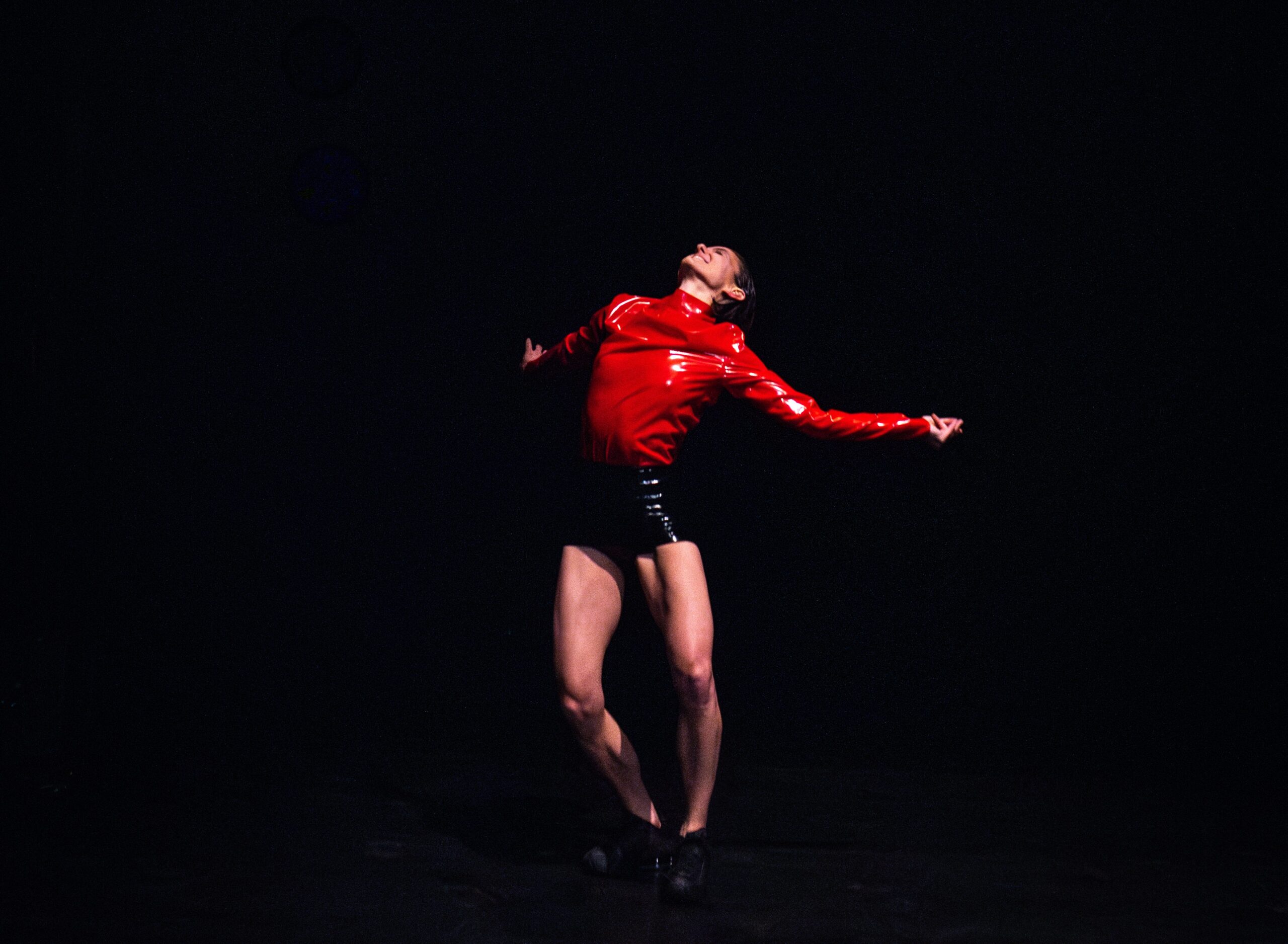
Exercise on empathy [a score for performing a human]

In autumn 2024, Reality Research Center (RRC) explored the relationship between performance, documentation, reality and memory in the frame of Moving in November. RRC members, artists Alina Sakko and Emma Fält were invited to recall two works from the Moving in November in 2022 without having witnessed them: Matilda Aaltonen and Veli Lehtovaara’s Performing Animalities – A Praxis and Tuomas Laitinen’s Audience Body. Is it possible to remember a performance without having experienced it?

In her site-specific performance, Exercise on empathy [a score for performing a human], Alina Sakko continues her work from last year.

“I had the honor of spending time with the archive materials of Performing Animalities – A Praxis and wondering what began to take shape in my own artistic work through the artistic work of Aaltonen and Lehtovaara. Worlds were opening up and I felt it at my core. The performance gesture took place at Sörnäinen metro station 16.11.2024.
This year, I will return to the memories of my thoughts and dances from last autumn. I will ask myself, what do I want to relive and share from the moments at Sörnäinen metro station, what do I want to give more time to, what can remain as memories at the metro station, and what kind of desires and questions does the new space bring up.”
Alina Sakko

Score of being an animal

-I behave according to the social rules the society has made.
-My eyes might be on the sides of my head.
-I have limbs. Some amount.
-I have no limbs.
-I want to be accepted?
-My coccyx might continue as a tail.
-I have names for things.
-Arms might be wings, arms might be arms, there might be no arms. I might want to fly.
-I might know how to jump really high and far.
-I know theories explained by words that explain my existence.
-I want to be loved?
+everything


This performance is a part of the Focus on the Local Landscape within the frame of Moving in November

Alina Sakko is a dance artist interested in researching the accessibility of contemporary dance on experiential and conceptual levels. Through her performance practice she asks and practices what it means to be ‘fully something now’. Her choreographies are dances between the concrete and the abstract, visiting recognisable imagery and poetic landscapes while enjoying casual spectacles. She is interested in kinesthetic empathy as a possibility for dialogue.

This resting, patience

This resting, patience by dancer and choreographer Ewa Dziarnowska harnesses flows of time and attention to cultivate a space of sensuousness and presence. This finely attuned durational performance steps away from the tradition of viewing dance as an alienated spectacle to instead emphasize its immanent sociability. Part ghostly repository of unconsumed sensuality, part kinetic fadeout, part somatic (strip)tease, This resting, patience addresses attraction, voluntary objectification, proximity and the aesthetics of bareness. Employing an experimental format, it upsets the passivity of installation and the time-delineation and dramaturgical resolution of performance. In its devotion to the body, This resting, patience proposes sensuousness and dancing as timeless and democratically available technologies of undoing the world and projecting the continuous present into a future that lasts, quintessentially tender, infatuated, attentive.

Ewa Dziarnowska is a dancer and choreographer based in Berlin and working internationally.   Her choreographic projects, This resting, patience (Tanztage Berlin Festival 2024), https://4677684728466.com (an online archive project) and A Room With a Better View (Display Gallery x Berlin Art Week) engage with the ideologies of improvisatory processes and embodied knowledge in countering the prevailing need for rationality, linearity and sense-making. She is interested in a poetic dimension of dance and its inherent sensuality. Real-time-based, but not devoid of precision and expertise in relation to movement techniques, her practice challenges ways in which dance circulates within the context of bourgeois theatrical conventions and the product-oriented entertainment industry.

Her work has been shown at venues and festivals such as Sophiensaele / Berlin Art Week (DE), Schwere Reiter / International Dance Festival Munich (DE), Tanzquartier Wien / Rakete Festival (AT), MDT / My Wild Flag (SE), Santarcangelo Festival (IT), Mind Eater (NO), Bit Teatergarasjen (NO), What You See Festival (NL), FLAM (NL), Gessnerallee / Backslash (CH), Ephemera Festival (PL), Scena Tańca Studio / Teatr Studio (PL), ms1 / Muzeum Sztuki (PL).

As a performer, most recently Ewa has worked with Alex Baczyński-Jenkins, Michele Rizzo, Ofelia Jarl Ortega and Enad Marouf.

Leah Marojević’s practice spans performance, choreography, teaching, dramaturgy, mentorship and support for other artists. Choreographic commissions include Pre-Professional Year, Sydney Dance Company (2019), London Contemporary Dance School Graduating Season (2020), Mass Hysteria Collective (2020) and Matilde Cerruti Quara, Jupiter Woods (2020).

Leah collaborates regularly and has worked and performed for visual artists, companies and choreographers; Colette Sadler, Ola Maciejewska, Theo Clinkard, Jefta Van Dinther, Megan Rooney, Ewa Dziarnowska, Paulina Olowska, Emmilou Rößling, Sarah Browne, Sam Williams, Holly Blakey, Candoco Dance Company, Joe Moran among others. In 2019 Leah created The Elsewhen Series in collaboration with choreographer Theo Clinkard as well as collaborating on the creations of commissioned works for Tanztheater Wuppertal Pina Bausch (2015), Danza Contemporanea de Cuba (2016) & Candoco Dance Company (2019) among others.

Krzysztof Bagiński is an artist and organizer from Poland. He is a co-curator of W Brzask (At Dawn), a series of experimental music shows in Warsaw. As a sound artist, he works closely with choreography and performance.

Jacqueline Sobiszewski is a visual artist from the Netherlands who works with light, video, film and photography. She studied at the Cinematography Department of the Polish National Film, Television and Theater School in Łódź.

She combines various techniques, always looking for a new visual language in various fields of art, cooperating with directors, musicians, choreographers and individually. Her work has been shown in NYC, Los Angeles, Sydney, London, Paris, Vienna, Madrid, Lisbon, São Paulo. She was awarded at the 15th International Small Scene Theater Festival in Rijeka, Croatia for light direction in Medea by Grzegorz Jarzyna and received a distinction for lighting design at The Divine Comedy International Theater Festival “for creating a coherent landscape in which individuality manifests itself through a powerful emotional charge”.


Sketch evenings

Sketch evenings create a space for performance concepts, thoughts and ideas that are still in the process of developing and have possibly not yet reached a verbal form. The evenings allow for dialogue through practice and experience. The aim is to give the possibility to witness different ways and modes of working, thinking, and sketching, as well as to create conversation about freshly developing artistic ideas. Everybody is invited to the space as equal and reciprocal participants in the artistic process.

You can sign up to share your work in progress in these laboratory-like events with a low threshold. Each time 3 artists will share and test their work. During the evening, the sketches in question are treated as material for practicing artistic dialogue. The conversations will be facilitated by Sonjis Laine and Emmi Max Pennanen. All professionals within the performing arts are welcomed to sign up for sharing their work, or to be spectators in dialogue. The event is a collaboration between Reality Research Centre and Tero Saarinen Company.

We want to create a new collegial space for sharing artistic sketches. We feel that the field of dance and performance lacks a space of trying out performance concepts and practices. The scarcity of residency and performance opportunities lead towards more pressured and more careful choreographic planning already in the context of demos. At the same time, practicing while being watched as well as working with performance-specific questions can lose the sense of trying out, playing and wondering. As organizers, we are not creating any limits for the artistic content of the evenings but instead see ourselves as facilitators for collective work.
Emmi Max Pennanen and Sonjis Laine

This evening is a part of the Focus on the Local Landscape within the frame of Moving in November.

Emmi Max Pennanen is a dance artist based in Helsinki. Pennanen is a dancer and responsible for professional stakeholder relations at Tero Saarinen Company. Additionally, they work as a freelance choreographer and teacher. In their artistic practice Pennanen is intrigued by the metaphor of dance as voice. They are interested in impossible tasks and the analytical and emotional problem-solving process they initiate. Pennanen holds a Master of Arts degree from the Visual Culture, Curating and Contemporary Art MA program at Aalto University.

Sonjis Laine is a dance and performance artist living and working in Helsinki. She works as a dancer, performer, facilitator and choreographer in various working groups and contexts. With a background in anthropology, she approaches dancing as thinking and thinks ethnographically about dance and dancing. In her artistic work, Sonjis deals with embodied knowledges, landscapes, imagination and emotion as openings for dancing.

Fampitaha, fampita, fampitàna

Fampitaha, fampita, fampitàna means “comparison, transmission, rivalry” in Malagasy. On stage, four bodies defy one another, choose each other and purge themselves of the layers of violence that constitute them. Presented as a line of rediscovered dialogue between the children of diasporas and their places of origin, Fampitaha, fampita, fampitána formulates a plural narrative in which the fragmentation of these experiences is as vibrant as their reappropriation. In this quartet, choreographer Soa Ratsifandrihana seeks a vocabulary between bodies and history to better understand what links and separates them. Together with her team, guitarist Joël Rabesolo and performers Audrey Merilus and Stanley Ollivier, Ratsifandrihana constructs a new otherness in which bodies emerge from their muteness, offering themselves the possibility of language. Written out before us is a story of bodies that would never have left their islands and together shape a parade of exiles.

Soa Ratsifandrihana is a Franco-Malagasy dancer and choreographer based in Brussels. After studying at the CNSMD in Paris, Soa worked with James Thierrée, Salia Sanou and Anne Teresa de Keersmaeker. In 2021, she presented her first solo, g r oo v e in Brussels. The show has been performed more than 60 times and continues to tour in Europe, Canada, Asia and soon in Madagascar.  In spring 2024, Soa presented a diptych comprising a radio creation, Rouge cratère, and the performance Fampitaha, fampita, fampitàna. Following on from her first solo, she explores the possible intersections between different media, from radio storytelling to choreographic and musical composition. Her practice reminds us that our bodies, like our words, are the bearers of stories which, however we choose to communicate them, must be told. Soa is artist-in-residence at the Kaaitheater in Belgium.

We’s and Us’s

by n-o-o-n-e

Parasitic Tactics and Monstrous Strategies for the formation of collectivity


Imagine that for some reason you cannot get IN, no worries, no worries, there is a way…

Imagine that you have been swallowed by another body, you hope to make it through in one piece.

Something is starting to smell here…


This is a training session in parasitic tactics for dealing with IN’s and OUT’s. This is an experiment in social mutation and the monstrous strategies of various WE’s and US’s.

The session includes a series of instructive mini-performances, score-led collective exercises, interacting with performing objects, and the screening of the film We Bites Us. It aims to radically rethink ‘access’, ‘trust’, ‘togetherness’ and ‘organisation’. It may be useful for finding personal and collective ways of managing circumstances that have become unrecognisable, hostile, or overly hospitable.

It is a RIDICAMENT. Ridicament is a baffling confusion between place, body (both collective and individual), property and propriety. Ridicament is a blend of ridiculousness and predicament, where hilarity and unruliness intertwine with the careful unfolding of paths. Ridicament emerges between people, places, and systems. It is an experimental form of collective training in understanding and addressing the realities of precarious living and working, revealing power asymmetries and facilitating encounters. Ridicament happens between occurrences, temporary communities, institutional critique, and speculative fiction.

But why?

Artists – what do ‘you’ need ‘us’ for? If ‘we’ cannot organise art production and ourselves to withstand the political and economic changes in the structure of labour, we will become servants, this way or the other. When we do not find a way to build solidarities across the field and with other precarised groups, we will become an embellishment of the unjust social order. What kind of social mutability is necessary to resist the precarisation of working conditions in post-neoliberal art institutions? This ridicament is one possible answer: parasitic tactics for establishing relations and monstrous strategies for the reopening of narratives.

… and who exactly is n_o_o_n_e?

This session is a part of the Focus on the Local Landscape within the frame of Moving in November.

Karolina Kucia (she/they) is a Polish-born/Helsinki-based visual artist working with moving image, object making and performative interventions. Karolina graduated with a Master of Fine Arts in Sculpture and Intermedia from Poznan Academy of Fine Arts in 2004 and earned a Master of Theatre Arts and Drama, in Live Art and Performance Studies from Theatre Academy Helsinki in 2014. She is currently finalizing her doctoral artistic research Monstrous Agencies – Resisting Precarisation: Tools and Models for Collaboration in the Arts at the Performing Arts Research Centre, Uniarts, Helsinki. Her main interests are lapse, glitch, and stutter as well as parasitism and monstrosity in the context of precarisation of labour in post-neoliberal capitalism and the current form of art institutions. Her works were presented in SESC Pinheiros in São Paulo, nGbK in Berlin, Kunsthalle Helsinki and the Museum of Modern Arts in Warsaw among others. She was a fellow at Akademie Schloss Solitude and her work is funded by the Kone Foundation, Finnish Cultural Foundation, Saastamoinen Foundation, and Frame Contemporary Art Finland among others.