Maze

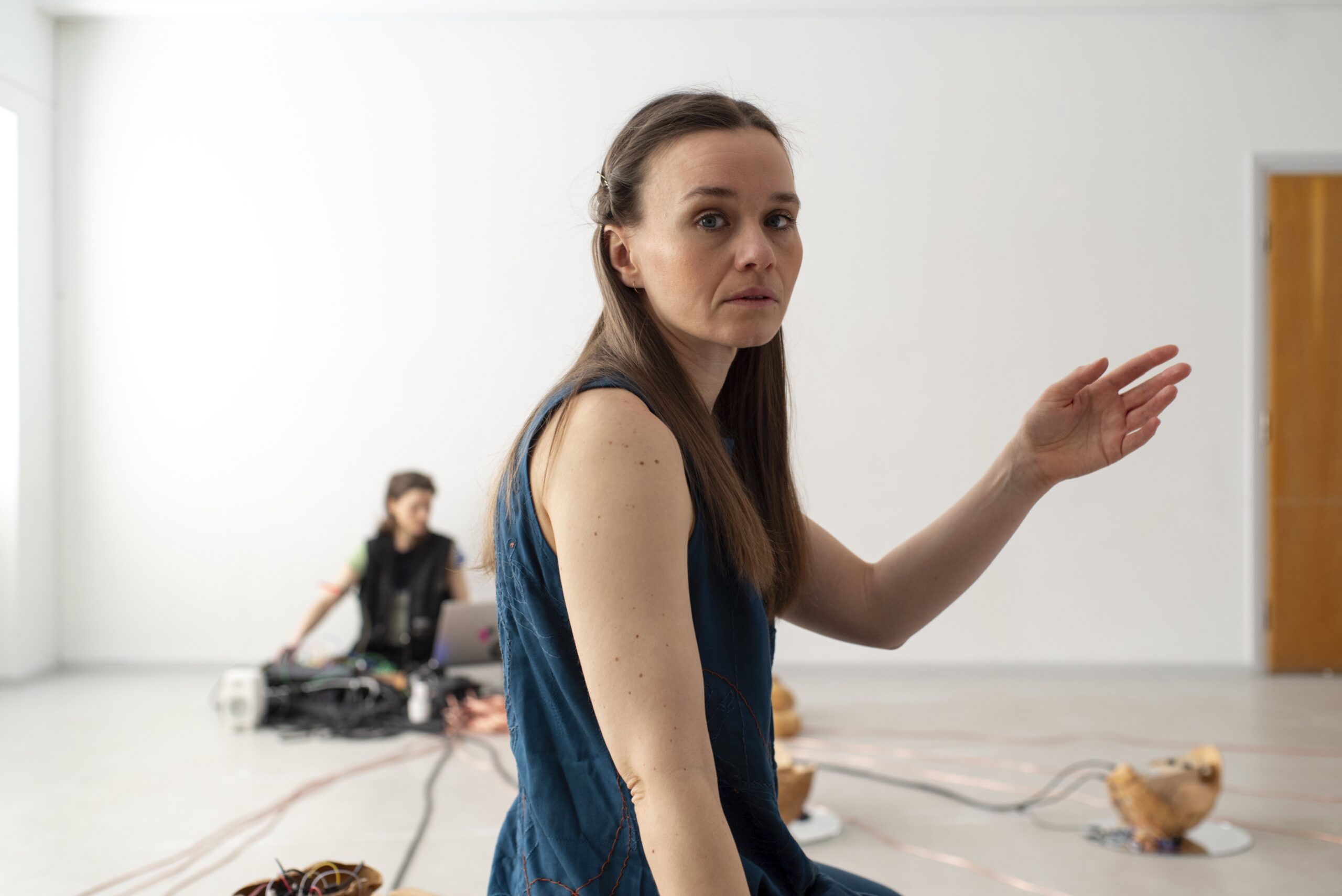
Maze is a work created in the intersection between choreography and sound art, developed and performed by long-term collaborators Julia Giertz and Marie Topp. The installation consists of different resonators, some made of metal, some made of wood, special constructed string instruments, speakers and movement sensors. Invited to sit in the waves of sound, the audience will encounter the archetype of an oracle. Through her gaze we experience time as something recurring, circular, repetitive and non-linear. The installation catches and responds to the movement of both audience and the performer – through this a contemplative, but dynamic sound space emerges.

We have chosen to forget what we think we know about the theatre, dance, collaboration, music, technology, community, storytelling, publicness, situation, event, intimacy, body, presence. 

We left those preconceived notions behind in order to search for their renewal.

So, as it is often the case inside the maze, we keep moving backward in order to move forward in more than one sense:

We are retreating toward death so that we can discover how to live. 

We are joining together so that we can again understand theatre.

We are engaging a resting subject so that we can recover a resonating object. 

We are reclaiming the sculptural volume of the body in order to make it dance. 

We are discovering the origin of music in sound in order to listen deeply.

We are inviting you to be invited by you.

We are seeing you in order to be seen.

Because what was before will come back again, as new

Or at least – that is our hope.

Julia Giertz and Marie Topp have collaborated for over 10 years. Together with various collaborators, they have created a series of choreographies, including performances like:  Oceanic, Hail to the Good Listener, The Labyrinth, and True Random. Since 2019, their shared works have primarily been produced by Visible Effects, a platform for choreography.

Julia Giertz is a sound artist, her practice is based on physical and choreographic aspects of sound where synthesizers, manual and electronic filters and live coding become instruments and sound sculptures. Central to her practice are the long-term, close collaborations she shares with visual artists, sound artists and choreographers such as Marie Topp, Camilla Barratt-Due and Tarek Atoui. She has participated in concerts and works at The Venice Biennale, Sonic Acts, Unsound, Kunsthal Charlottenborg, MDT Stockholm and Norrlands Opera amongst others. Since 2023, Giertz has been working as a studio engineer at Elektronmusikstudion (EMS) in Stockholm.

“To experience a billion years in one hour”, a reviewer wrote in 2021 describing a performance by Marie Topp. Her performances are characterized by their meditative and hypnotic effects on the viewer. By using slowness as a way to create hyper awareness and by building landscape-like scenarios on stage through the movements of dancers, sound and light, Topp is creating performances that hold potential for intense emotional journeys. Through artistic collaborations she makes performances that function as spaces of resonance that support sensorial encounters, embodied thinking, collective concentration and reflection. Topp has collaborated with artists such as Julia Giertz, Mårten K Axelsson, Igor Dobričić, Margrét Dara Guðjónsdóttir and Eric Andersen and others. She is associated artist at Milvus Artistic Research Center and has collaborated with organizations such as Dansehallerne, MDT Stockholm, MARC, Dansk Danseteater, Aaben Dans, Bora Bora, Inkonst, K3 Tanzplan Hamburg, Kampnagel, Inkonst, Atalante, Dansstationen. She was educated at The National School of Performing Arts in Denmark in 2009.

Mabel Revival

A soirée dansante with a woman and her inner divas

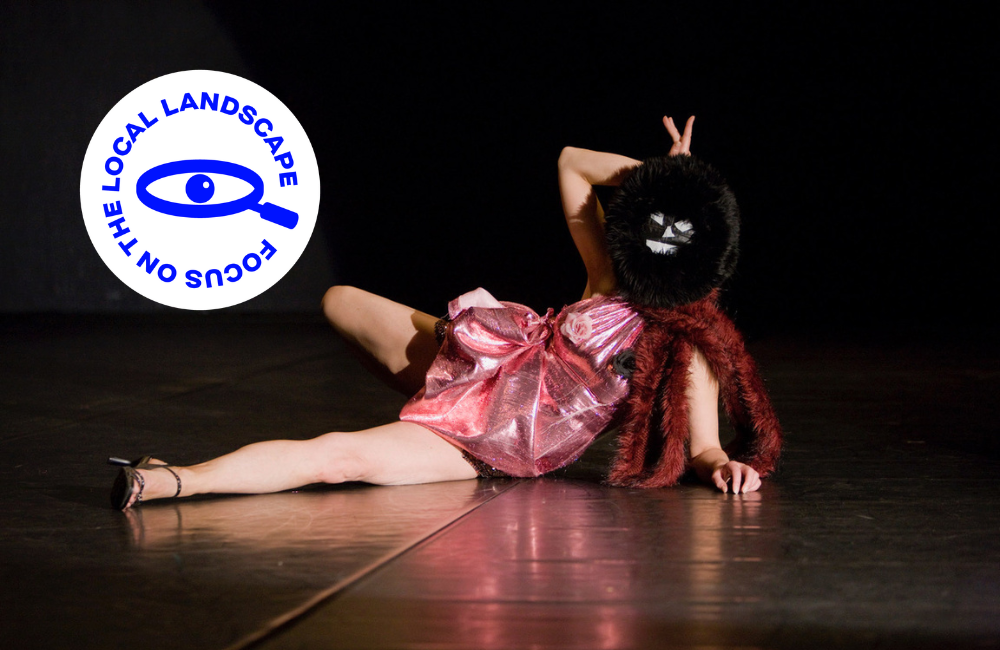
Mabel Revival is a joyous and shameless mixture of dance, performance, and DIY cabaret. Choreographer and dancer Liisa Pentti and actor-musician Robert Kock lead the spectator to the mysterious and enchanted world of divas. Admired and desired, Mabel is a woman with no shame or remorse: she dances, growls and sings, captivates as well as confuses. The work is a tribute to femininity and female performers, whose charisma and sensuality–mediating bodily affect and knowledge–bring the stage to life.

To live fully, we must also talk about death and visit the land of dreams, if only at night…

Liisa Pentti’s classic solo work Mabel or The Queen of Bones premiered at Zodiak – Center for New Dance in 2008. In 2025 the reinvigorated diva has toured extensively around Europe and in November Mabel Revival returns to Helsinki, taking over the stage of Viirus.

This performance is a part of the Focus on the Local Landscape within the frame of Moving in November.

Liisa Pentti is a trailblazer of Finnish dance. She graduated as a dance artist at the Amsterdam Academy of Theatre and Dance’s Modern Dance department (SNDO) in 1986, and was one of the postmodern dance artists shaking the Finnish dance and cultural scenes in the 80’s. Liisa Pentti continuously works as a teacher, dancer and choreographer both in Finland and internationally.

Liisa Pentti +Co is a Helsinki-based dance group founded in 2000.The group’s artistic profile is situated in the field between dance, performance art and contemporary theatre. Experimentation and the search for new forms of expression are central to the company’s works.

MANUAL workshop by Adam Kinner & Christopher Willes

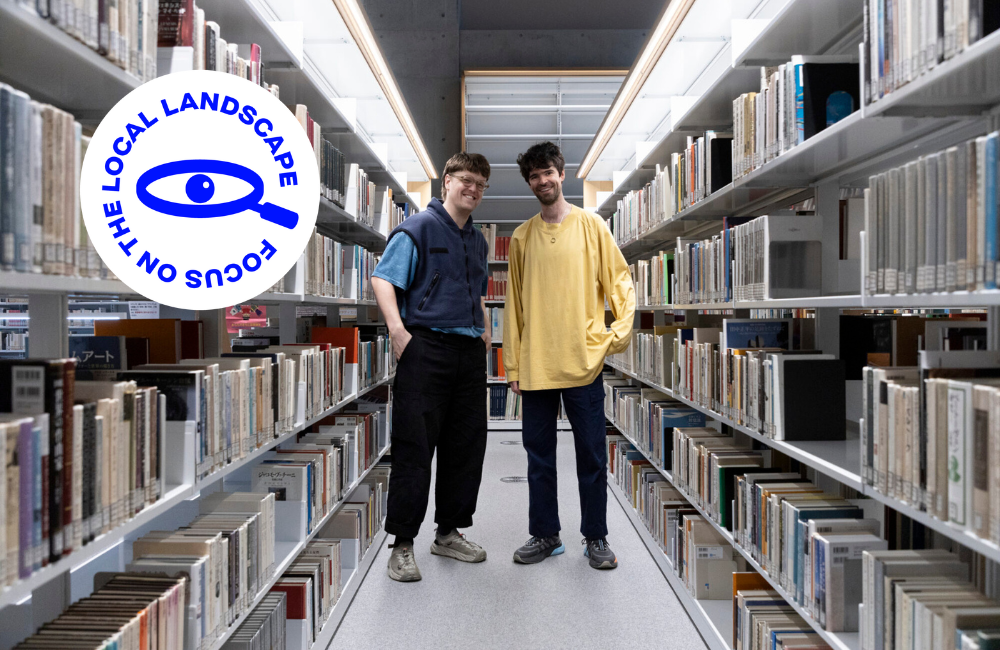
Adam Kinner and Christopher Willes have created a one-on-one performance that turns a public library into a space of sensory encounter and heightened awareness. MANUAL will be presented at Itäkeskus Library 12.-15.11. as part of Moving in November.

In this workshop, participants will be introduced to the content and artistic strategies of MANUAL. Led by the Montreal-based artists Kinner and Willes, the day will involve working in pairs, taking turns devising and experiencing one-on-one guided performance proposals related to the piece. These quiet, experimental exercises draw on somatic practices and on the specific materials of the library: its sounds, books, and spaces.

The format of the workshop will oscillate between subtle activities in the library and moments of collective discussion. It may include walking through the space, one-on-one exchanges (rotating throughout the day), working with hands and objects (possibly including consensual touch), and headphone-based sound. There will be ample time for feedback and reflection, with care, responsibility, and the wellbeing of the group at the center of the facilitation.

The workshop is a part of the Focus on the Local Landscape and organized by Tanssille ry, in collaboration with Moving in November and Stoa.

Adam Kinner and Christopher Willes create performances that explore unusual states of sensory awareness. Their work is often staged in public spaces, and informed by an interest in immersive sound, listening, audience perspective, and the possibilities of participatory art. They created MANUAL in collaboration with Montreal-based dance artist Hanna Sybille Müller.

DOWN BEAT

saliva production beat

acid released but nothing arrives down

direction gets sticky beat down

this chewing mass has no future

repeat until it is dull down beat

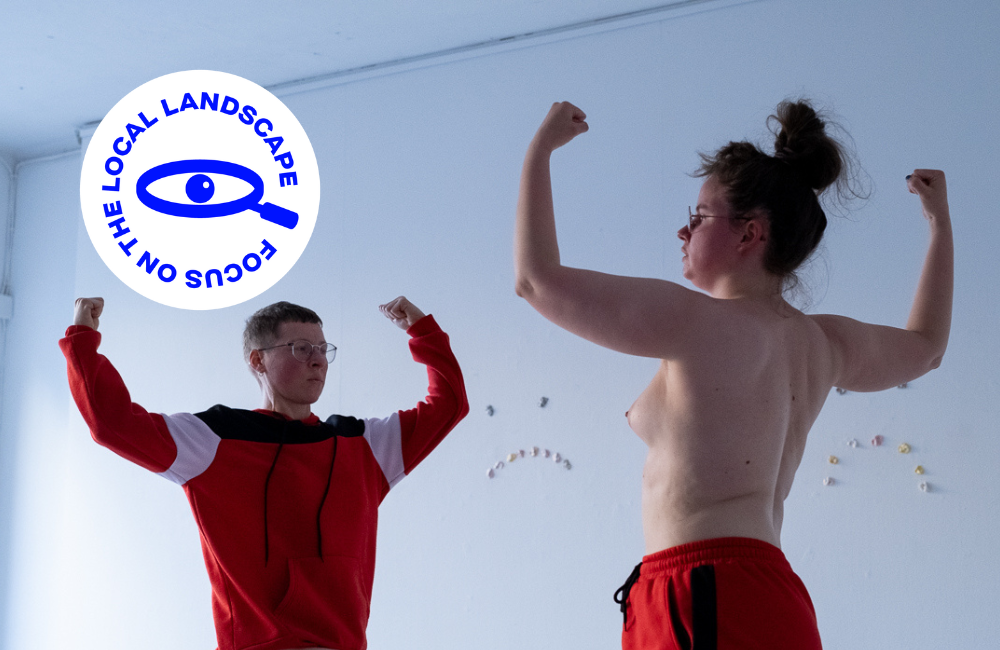
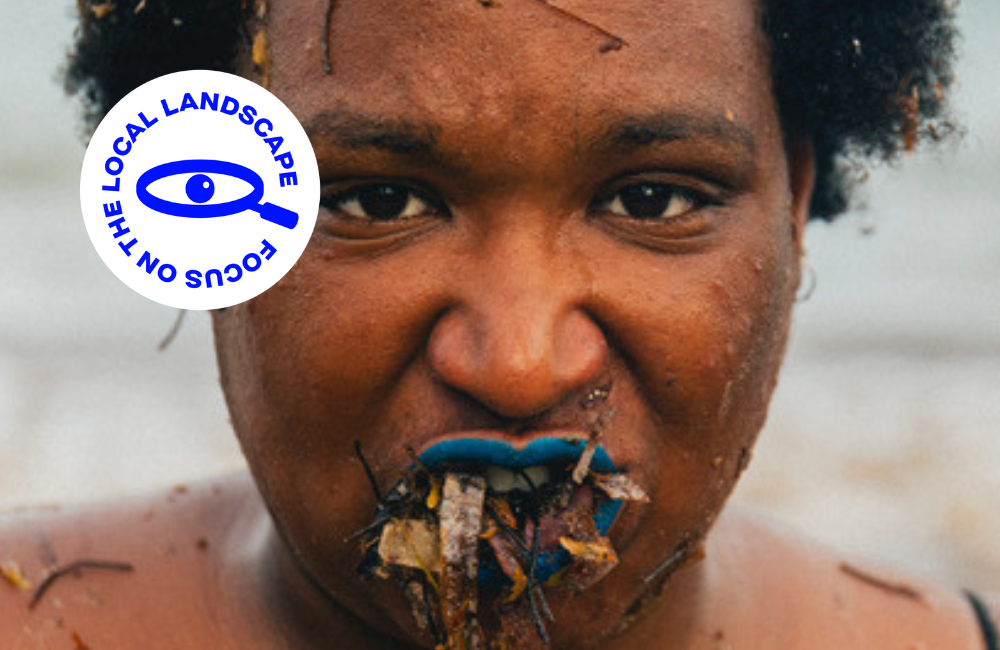
Full of pessimistic ambivalence and following the beat, two performers chew gum and invite the audience to join them in this everyday act. What comes out is messy, shape-shifting and unclear–much like performance art making in the current times.

DOWN BEAT revisits 1970s American artist Hannah Wilke’s artwork series S.O.S Starification where she also used chewing gum to criticize the instrumentalization of the female body, particularly in the male-dominated art world. Mean Time Between Failures deconstructs and reimagines this work, in which they look at both the metaphorical and material relationship between chewing gum and the body. As performance artists–one a transmasc non-EU immigrant, the other a Finnish female-identified artist­–Dash Che and Suvi Tuominen navigate the complexities of labour, identity, and consumption in a post-optimistic world. The ambiguity of the gum–its messiness, its refusal to be neatly controlled­–echoes the anxiety of living in an era where resistance feels both necessary and futile, offering no tidy resolutions, only the uncomfortable persistence of failure.

This performance is a part of the Focus on the Local Landscape within the frame of Moving in November.

Suvi Tuominen (she/her) is a performance artist, choreographer and dancer. Her artistic thinking intersects questions around body, digital cultures, fragmentation of time, space and presence. Suvi has created works for example for New Performance Turku Biennale, Pas Si Fragile festival in Brussels, Finnish National Museum, Tallinn City Museum and Santo Tirso Museum of Contemporary Sculpture. Together with Dash Che, Suvi forms an inquisitive performance art duo called Mean Time Between Failures who utilises humor as a means to address both societal and political matters through performance art.

Dash Che (they/them) is trans masc immigrant performance artist and a performance educator based in Helsinki. They practice as a solo artist as well as in the performance duo Mean Time Between Failures with Suvi Tuominen. In their solo performance they work with questions of immigration, belonging, queerness and absurdity of being a human in relation to other (than) humans, power structures and conflicting desires. Dash showed their works at New Performance Turku Biennale, Svenska Teatern and Myymälä2 gallery in Helsinki, TanzHaus in Zürich and MIR performance festival in Athens. With Mean Time Between Failures Dash and Suvi have created artistic works for Zodiak – Center for New Dance and Riga International Performance Festival.

Oula Rytkönen (they/them) is a sound designer whose practice is based on playful sampling that aims to create varying energy flows into the space through sound. Oula is especially interested in thinking of sound as a medium which can create responsiveness in audiences and places by being provocative, fragmented, rhythmic and sometimes even annoying, overwhelming or silent. Oula has worked with MTBF since 2022. In addition, they have made sound design for experimental children’s theater, site responsive performances and social choreography, and pop music inspired audio walk pieces. They have worked with dance, installation and contemporary performance works presented by Zodiak – Center for New Dance, Cultural Center Caisa, Reality Research Center and The Finnish Labour Museum Werstas.

Conversations with Ants evening

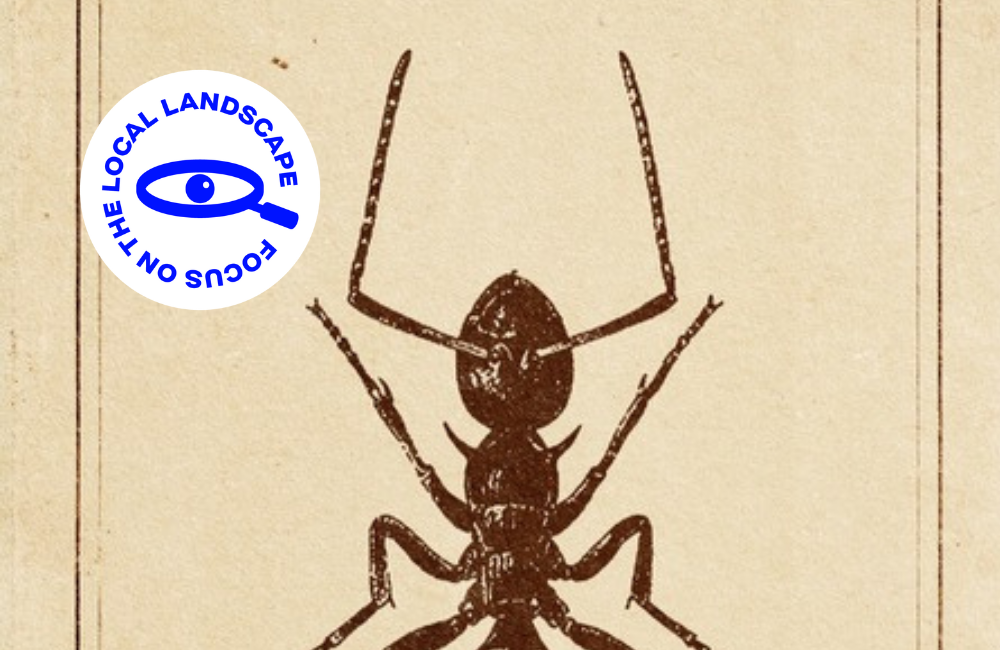
Conversations with Ants evening is a part of collaborative project led by choreographer Sanna Kekäläinen. The first stage of the project was realized in Portugal in September 2025. The concept of the work centers on the idea of visiting. Local performers will visit the work and continue the performance event with their own presentations. The evening in Helsinki begins with Conversations with Ants by Sanna Kekäläinen and continues to Ordinary Matters by the local project guest, choreographer Heli Keskikallio. Kekäläinen is working with author Kari Hukkila with the aim of linking the principles of ants’ activity to the theme of the Anthropocene.

Conversations with Ants is a long-term collaborative project with Kekäläinen&Company, Teatro Mosca and Lerena Teatro (Portugal) and Colectivo Glovo (Spain). With the underlying theme of ants, the project will be carried out in Portugal, Finland, and Spain. Kekäläinen works in each place with local invited guest artists who bring their own input to the project. In Helsinki the local guest invited is the Kekäläinen&Company residency artist Heli Keskikallio.

Sanna Kekäläinen: Conversations with Ants

Ants are a kind of biological and global double for humans: only ants and humans have spread all over the globe except for the Antarctic.

Speculative estimations have been presented that the common weight of all ants would be roughly equal to the common weight of all humans.

But there is also a difference of crucial importance: if all humans were to disappear from the earth, it would take a long time for the biosphere to recover from the damage humans have caused. If ants were to disappear from the biosphere, in a very short span of time, the whole biosphere would become uninhabitable.

The work consists of two parts:

  1. Encyclopedia of movement:

The starting point for working has been scientific knowledge about ants intertwined with our own images and memories of ants. The working method has been to transform the concepts of poetry and private memory into physical concepts. The work has also been furthered by some formal devices of art, such as the sestina developed in the 13th century poetry, in which the poetic movement (from line to line, from stanza to stanza) can be expressed in numbers continuing infinitely, and in this way suggests a comparison to the paths and movements of ants.

In conceptualization and physicalization, movement has been a crucial element alongside material elements, as well as factors creating meanings, such as a concentrated weight, steps, paths, locus, centripetal striving and decisions. The structure of the whole work consists of rules but requires new local decisions all the time.

  1. My dream is made of facts:

The aim for the text is to try to attain a “dialogue” with something that won’t hear us or respond to us, but which nonetheless is present and even necessary for our existence. Humans know next to nothing about ants. A common estimation is that about half of the ant species are still unfound, and of the taxonomized roughly 16 000 species of ants only some 50 are more or less researched.

However, the little we know about ants tells us things that go beyond our imagination — from cattle farming and fungi cultivation to remarkable architecture and the organization of work to mention a few.

Thus, the dialogue, as necessary as it is impossible, will rather be a dialogue with our own memory, with our own assumptions, with our own future and with the basic conditions of our existence, but referring to them through the ants.

Heli Keskikallio: Ordinary Matters

Choreographer Heli Keskikallio draws on everyday materialities in the performance Ordinary Matters on which she is working in the Kekäläinen&Company residency. The performance builds through a long process as a series of performance versions that will be presented in different places and occasions during 2025 and 2026. In her work Keskikallio approaches everyday experiences as some kinds of sensory and imaginary openings, perceiving the complex and often invisible relations that exist between us and our surroundings. As performers Keskikallio is joined by everyday objects she has brought from home and that she has a personal relationship to. Ordinary Matters brings about everyday poetics and the familiarity and estrangement inherent to everyday experiences. The performance asks: how do we become shaped through the constant interactions with the things and objects surrounding us?

This evening is a part of the Focus on the Local Landscape within the frame of Moving in November.

Choreographer Sanna Kekäläinen places the tension, the difference between the bodily and the abstract, on the gaze. This difference has echoed in her work by other, analogous differences: between public and private, spectacle and intimacy. In her work, she has also addressed the problem of the stage: in awareness of its paradoxical nature, she has formulated the methods ’Private stage’ and ’Open score’. Sanna Kekäläinen breaks viewing habits with her radical performances and passionately brings into focus our crucial existential questions. From the starting points of her thinking like feminist philosophy, gender politics and psychoanalysis to texts and writing with the body with highly original movement, Kekäläinen has created ways to intertwine the private experiences of the body with wider social connections.
Kekäläinen is known for her works which pointedly comment on current topics and have strong and solid content. The themes of her works have travelled through gender diversity, shame, global inequality, the community’s attitude to mental health problems and madness, she has delved into researching the alarming state of the earth and the undeniable main role of humans in driving the eco-catastrophe. The works have been characterized as bold, thought-provoking and uncompromisingly high quality, both in Finland and abroad.
“Kekäläinen’s stage is loaded with wounding intellectual dynamite. Its power of explosion is directed towards the cruelty of capitalism, the perversions of the society of spectacle, towards gender as a disciplinary action or relations to otherness and the other – particularly when that ‘other’ is oneself. Kekäläinen is guilty of cutting the mainstream’s spectacular images into pieces, of exploding them, so that the silent and innocent knowledge residing under the image – in the body itself – can be revealed.” Riikka Laakso: The Naked Stage of Sanna Kekäläinen

Heli Keskikallio is a Finnish choreographer, dancer and pedagogue based in Helsinki. She works with performance, dance and multimaterial bodily thinking making performances and performative events, facilitating artistic meeting places, curating and organising artistic happenings, teaching and writing texts on the body, dance and the artistic working structures in different contexts.
In her choreographic works Keskikallio is interested in the processes and different registers of bodily thinking. Making art is her way of practicing ecological sensitivity and speculative somatics that she approaches through sensuousness, flesh, and the extra linguistic expressivity and sensibility of bodily beings. She wants to cultivate sensuous ways of knowing and embodied thinking into this world that she feels is pierced through reason, making sense, and algorithms.

Kari Hukkila is a prolific dramatist, essayist and novelist. In his work personal history and the collective memory of Europe intertwine in a way that is exceptional in its erudition, accessible in its deep emotion. He began writing drama texts in the context of postdramatic theatre of the 1980s and has since written several dozen drama texts. His essays cover a wide spectrum of topics from different art forms to personal experiences, many of the latter are characterized by the connection of literary and philosophical themes to Algerian immigrants in France. His first novel One Thousand an One was published in 2016 by Teos. English translation came out in New York by Contra Mundum in 2023 and a German translation is forthcoming by Droschl in 2026. The novel is the first literary work impregnated by his long-term work with ants, in which he has tried to find literary and formal appropriations for his writing from the work of ants, from the path formation, the organization of the ant colony, communication, decision-making in task allocation and building activity. He has presented his ant poetics in Paris (La Maison de la Poésie) and New York (Contra Mundum). Currently he is working on a novel that will be published by Teos in 2026.


Performing Intimacy workshop by Rébecca Chaillon & Sandra Calderan

In Rébecca Chaillon and Sandra Calderan’s workshop, writing is approached through the personal. Participants work with listographies of oneself and with mapping one’s feelings and commitments. The workshop draws on the realities of participants’ own bodies and lives, using the intimate as a means to engage with the world. As a continuation of working together, participants write an individual or group play.

Listography of oneself, mapping our feelings and commitments.

Travelling together for a while to write an individual or group performance.

Starting from the intimate to talk about the world, using your body and your life as your field of work.

You shouldn’t be afraid of getting lost, you shouldn’t pay too much attention to the time, and we think you’ll have a good time.

The workshop is a part of the Focus on the Local Landscape and organized by Tanssille Ry, in collaboration with Moving in November and Eskus.

Rébecca Chaillon is a director, author, performer, member of the collective group RER Q and Scorpio, Ascendant Taurus. Activism, debates and performing naked on stage is a second nature. Her artistic work revolves around theatre, performance, poetry and explores the domination-based relationships and the struggle against discriminations. She loves to work around the desires and the violences that act on bodies, with a lot of love, humor and food.

Founded in 2006, her company Dans Le Ventre, seeks to be a platform for artistic exploring of minoritized identities in our society. With a highly personal approach to writing, whose themes are at once intimate and political, she has created works taking various forms, including: L’Estomac dans la peau (2011), a solo show about bulimia; Où la chèvre est attachée, il faut qu’elle broute (2018), an athletic and artistic piece that explores discrimination through women’s football; Carte noire nommée désir (2021), an a performative piece about the construction of desire in black women; Plutôt vomir que faillir (2022), a performance about adolescence to question a world made by and for adults. Chaillon’s powerful duet Whitewashing was presented in the frame of Moving in November in 2024.

Rébecca Chaillon is an associate artist at the TnBA, Théâtre national de Bordeaux en Aquitaine, at the TPM, Théâtre Public Montreuil and is a satellite artist of the Théâtre Sorano – Scène conventionnée in Toulouse.
She is represented by L’Arche, agence théâtrale where Boudin Biguine Best of Banane (2023), Décolonisons les Arts (2018) and Lettres aux jeunes poétesses (2021), collective collections, are published.

Sandra Calderan has been writing poetry for many years—poetry meant to be spoken, heard, and experienced. As an actor and director, she conceives her poetic writing as a physical gesture, a bodily commitment that must be transmitted live. It is on stage that her poems acquire all their strength.

In 2013, she founded La Compagnie des Hauts Parleurs. She created her first show, l’Envol (silent theater and classical music trio), followed by a second in 2021, Just Us (poetry, dance, performance) which premiered at the Scène Nationale d’Orléans. A lighter version, Just Us, Poèmes à Cracher (poetry/music duo) is still touring. Poetry is at the heart of her work, which is engaged, political, and tirelessly retraces the stories of forgotten, wounded and luminous lives. In 2023, she created a show for young audiences inspired by Jacques Prévert’s L’Opéra de la Lune: Défile!

Within the Compagnie des Hauts Parleurs, she is also involved in numerous cultural initiatives for schools, and in partnership with libraries and theaters.

Sandra Calderan has collaborated for several years with Cirque Queer as author and director, Compagnie Monstra and Lucía Soto, Compagnie Eranos and Flor Paichard, stand-up comedian Lou Trotignon and with Rébecca Chaillon and Compagnie Dans Le Ventre.

FRANK

“We are in an alien world. Only awkward movement is possible.”

–Bayo Akomolafe

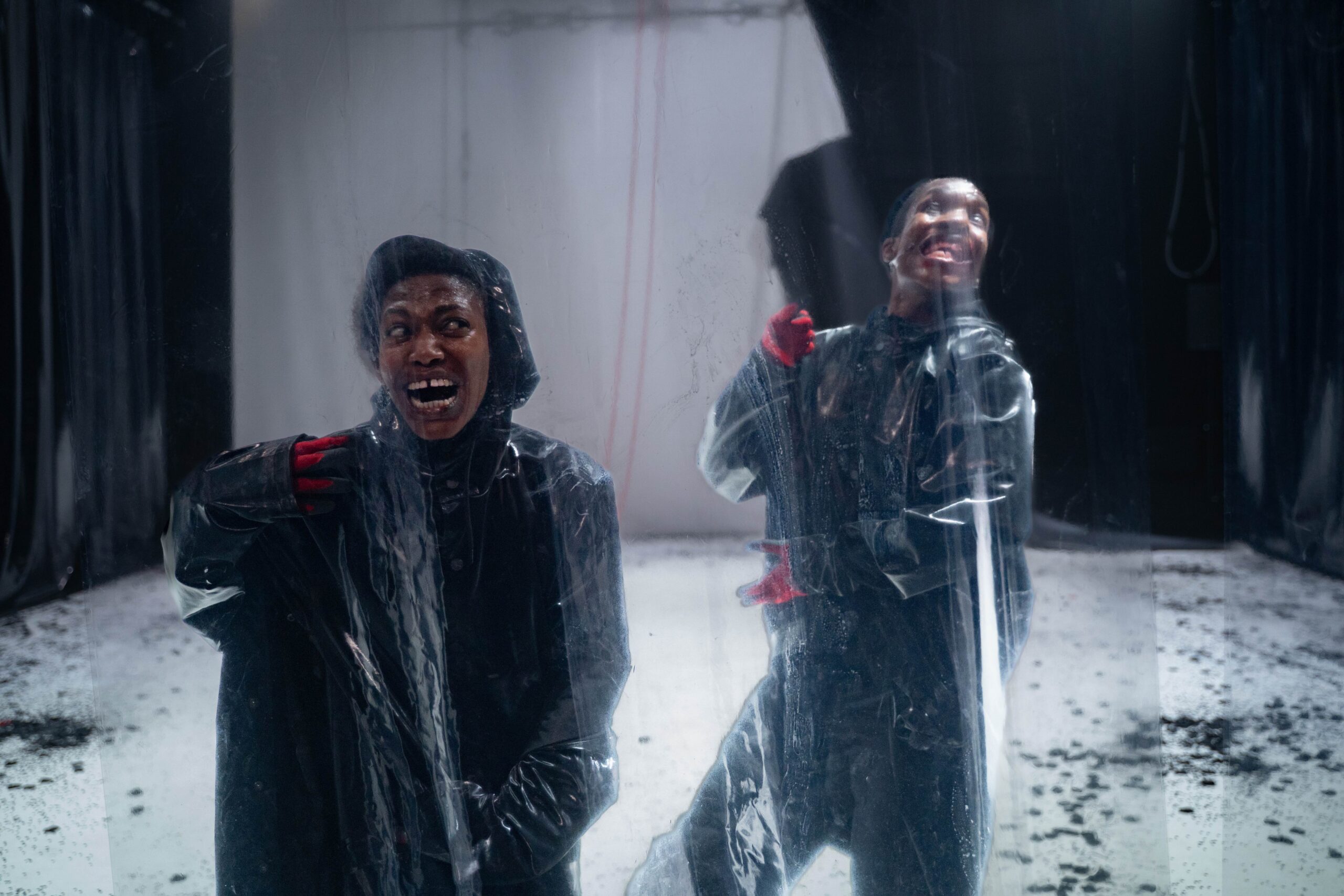
Choreographer Cherish Menzo examines the figure of the monster in FRANK – short for Frankenstein. More than (re)producing a physical or visual portrayal of the monster, she is researching the monstrous as an embodiment of beliefs and narratives that terrify and horrify, and yet also attract us. Distortion, as a choreographic leitmotif, is used to generate movement material and as a tool to devour the dance, to loosen its structure. Menzo investigates the action of decay; how something, gradually breaking down and becoming less or worse, can affect one’s gestures.

The performance space fabulates on the Baka Gorong, a place located at the back of the former plantations and in front of the wetlands, where enslaved people in Suriname secretly went to carry out Winti rituals–demonized under Dutch colonial rule–and to consider fleeing.

Menzo is joined by Omagbitse Omagbemi, Mulunesh, and Malick Cissé – performing artists from different generations – to construct a performance somewhere between the ritual, the apocalypse, and the carnival, where narrated identities are challenged, where flesh can deviate and be corrupted until it bursts and becomes unbearable. The dancers express their standing in the world with incoherent, broken-down movement in a scenery that collapses around them. In an increasingly unstable world of hiccups and unlikely events, often gruesome and violent, we are reminded of early horror movies and this eerie feeling, the flicker in the dark.

FRANK is the closing of a trilogy, adding to Menzo’s previous works JEZEBEL and DARKMATTER, which were shown at Moving in November in 2022 and 2023. These shows form a trilogy that does not consist of chronological storytelling or a series of events, but maybe more a trifold of spaces, universes, fictions, and conversations that regard Blackness, bringing the Black body to the centre and attempting to explore the African Diaspora’s multi-intersections in recognizable, metaphorical, and abstract ways.

Familiarise yourself with the world of FRANK here.

Cherish Menzo (°1988, The Netherlands) is a performing artist and choreographer based in Amsterdam and Brussels. For her artistic work, she is interested in the transformation of the body on stage and in the “embodiment” of different physical images. Implementing distortion, decay, and dissonance, Cherish attempts to detach bodies from forced perceptions and their daily corporeal realities, underlining the complexity and contradictory nature of images that seem recognizable at first glance. Glitching the ‘’common’’ lexical, she seeks the Uncanny, the Enigmatic, and the Monstrous to give shape to – and materialize speculative forms and fictions.

Cherish graduated in 2013 from The Urban Contemporary program (JMD) of the Hogeschool voor de Kunsten in Amsterdam and since danced in productions by choreographers such as Eszter Salamon, Akram Khan, Leo Lerus, Hanzel Nezza, Benjamin Kahn, Olivier Dubois, Ula Sickle, Lisbeth Gruwez, Jan Martens, and Nicole Beutler. She has been creating her own work since 2016: EFES (2016 – together with Nicole Geertruida), LIVE (2018 – with Müşfik Can Müftüoğlu), JEZEBEL (2019), DARKMATTER (2022) and KILLED AND EXTENDED DARLINGS: SUBTLE WHINE in the frame of the research program Welcome To Our Guesthouse (2023) (Productiehuis Theater Rotterdam).

She received the Amsterdam FRINGE and FRINGE International Bursary Awards 2019 with JEZEBEL. JEZEBEL was selected in 2020 for both the Dutch and Flemish Theaterfestival, which presented a jury selection of the best performances of the season and received the prestigious Charlotte Köhler award by the Prins Bernhard Foundation (Amsterdam) in 2022.

DARKMATTER was selected for both the Belgian Theater Festival and its Dutch counterpart. With DARKMATTER, Cherish received the BNG Bank Theater Prize (2023) and the Dutch Drama Jury prize for best direction (2023). In October 2024 she won the Gieskes-Strijbis Podium Prize 2024, the Netherlands’ largest stage prize, aimed at mid-career makers who contribute to the quality and diversity of the performing arts in the Netherlands.

Cherish Menzo is one of GRIP’s artistic leaders. GRIP is a dance organisation led by choreographers Femke Gyselinck, Jan Martens, Steven Michel and Cherish herself.

Mother Tongue

Mother Tongue is a solo about my language. A troubled language that mixes the need for survival and the fear of disappearing.

Mother Tongue is a duet of my voice and its echo. A sound that insists on resisting.

Mother Tongue is an in-between being. A fiction that defends multiplicity and transformation as a force of existence.

Lucía García Pullés starts with the idea that identity is a construction made up of stories about ourselves: intimate narratives nourished by our personal experiences, which are in turn overlaid by normativity’s precedence. Repetitive, saturated, and insistent, García Pullés works with vocal and physical gestures from her personal phantasmagorical, fictional, and sensitive archaeology while asking: “How can I give body to the heterogeneities that integrate me?” Understanding the body as a palimpsest, composed of dynamic and fluid narratives that question, distort, affirm, and destroy each other, Mother Tongue seeks to dig into the different temporal and geographical layers of the body. Thus, the body is seen as the territory of a living archive, an active and overflowing memory.

Mother Tongue stems from a memory of feminist protest, a present of immigration and the desire for a future that will allow us to inhabit the edges. As a performance that superimposes personal memory with the present and the desire for a future open to listening, Mother Tongue asks: Which forms and voices are listened to?

Lucía García Pullés lives in Paris, where she continues to develop her career as a dancer and choreographer. She sees her work with dance as a playground for proving the fictions and narratives that help us survive. In her work, there is a dialogue between elements of theater, sound art and poetry, where the body – dance – is always the territory of intersection. Her interest revolves around notions of identity, collective memory and the fictional narratives that construct imaginary identity. She works on a physicality that seeks to multiply these ways of being on stage. She understands the body as a living archive that overflows in layers of time, geography and imagination. She believes in the power of the sensibility of movement, and in its ability to transmute sensations into fiction to transform our relationship with the world. García Pullés holds a degree in choreographic composition from Universidad Nacional de las Artes, Buenos Aires (2013). She is the founder and co-director of the La Montón collective (2013-2018). As a performer she currently collaborates with choreographers Mathilde Monnier and Volmir Cordeiro, and as a teacher with Marcela Santander Corvalán. As a researcher and creator, she has received investigative grants for dance and performance experimentation programs in Europe, Uruguay, Argentina, and France. She has developed her research work Re.Verb, presented in the Festival Solos al Mediodía in Uruguay (2021) and in the Festival Artdanthé, at the Théâtre de Vanves (2022).

MANUAL

Adam Kinner and Christopher Willes have created a one-on-one performance that turns a public library into a space of sensory encounter and heightened awareness. MANUAL, staged covertly during the public hours of Itäkeskus Library, invites participants to arrive on site with instructions to meet a stranger in a particular place. From there they are silently led through a series of subtle events, following written notes and immersive audio in headphones. They walk through the space and listen together. They look at books and read to each other. Sounds and images found in the library combine and blur. And as the piece progresses the materials come to form a manual for slowing down.

Intermingling with the daily life of the library, MANUAL reflects on the act of listening and the intimacy of reading with another person in a public space. Through a carefully guided participatory experience, the piece invites viewers to engage with the library as a site of deep sensory awareness, and to reflect on the social and technological conditions of shared attention.

Adam Kinner and Christopher Willes will host a workshop on the 8th of November, organised by Tanssille ry as part of Focus on the Local Landscape. More information here.

Adam Kinner and Christopher Willes create performances that explore unusual states of sensory awareness. Their work is often staged in public spaces, and informed by an interest in immersive sound, listening, audience perspective, and the possibilities of participatory art. They created MANUAL in collaboration with Montreal-based dance artist Hanna Sybille Müller.