FIGURED

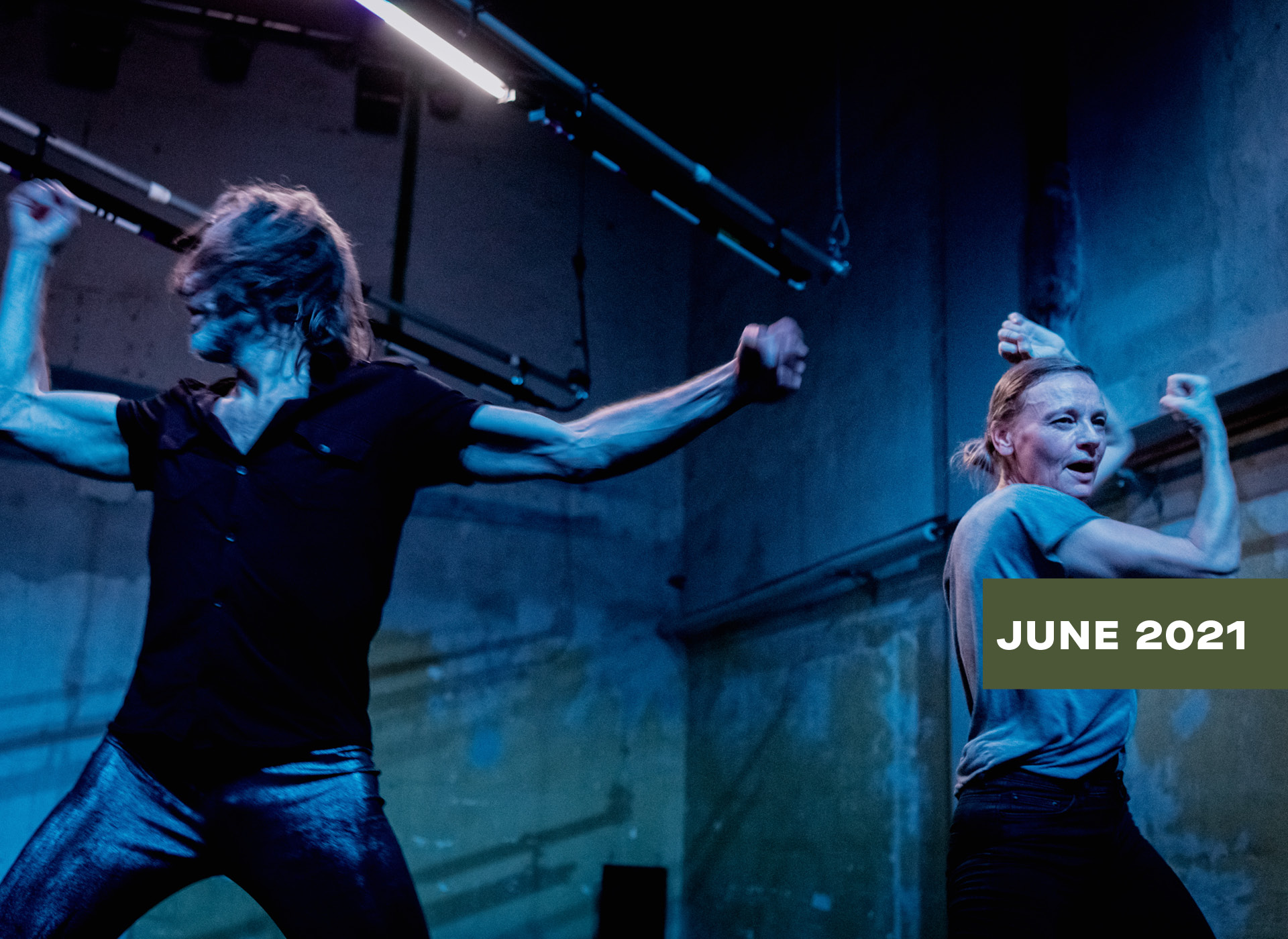
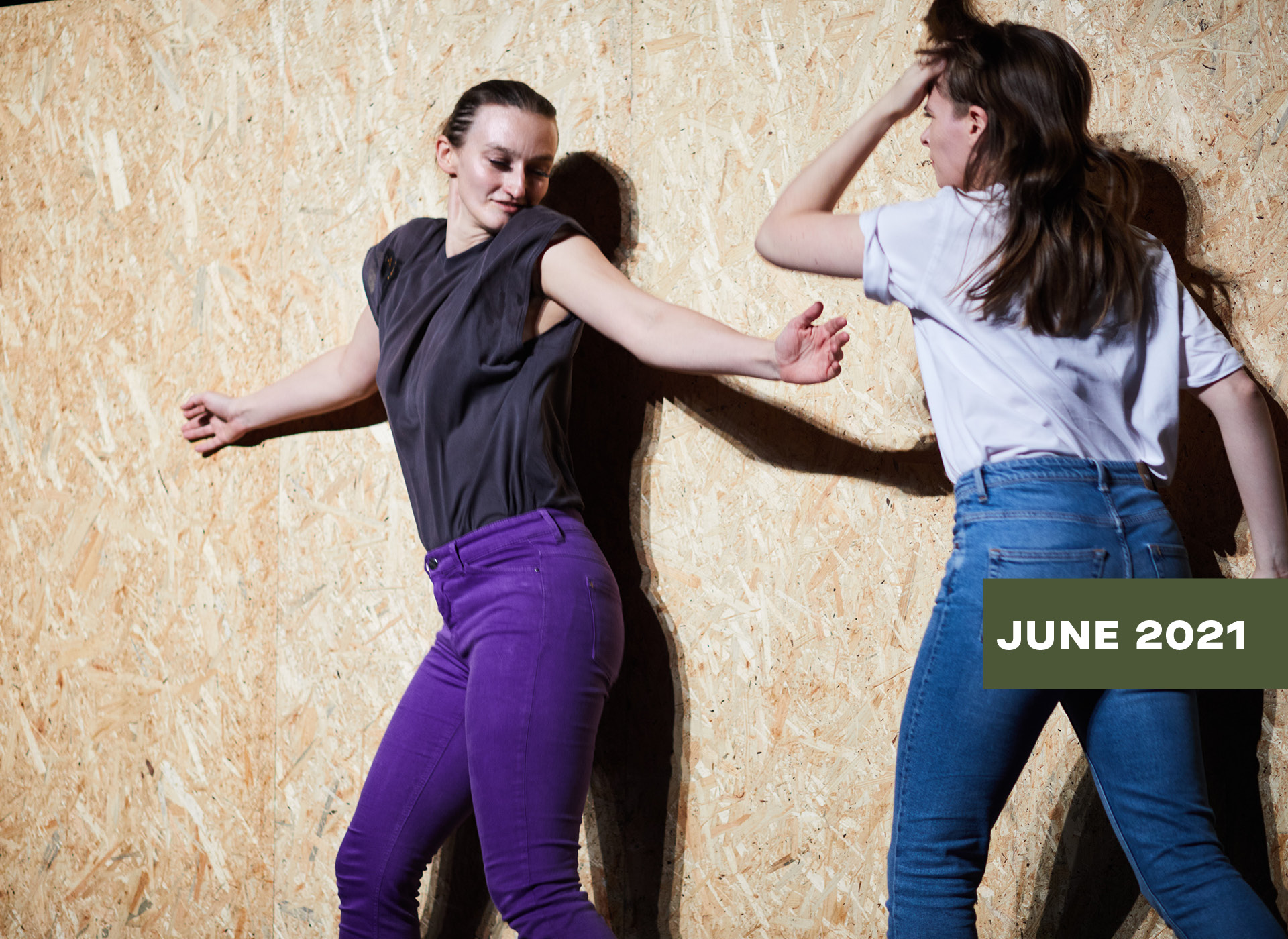
Two figures re-edit themselves across a wall, back and forth, cut, reverse, re-wind, a constant disruption performed on their bodies. In Sheena McGrandles’ FIGURED the main stage element, a wall that is a reoccurring element within her work, functions as a screen, a display, a backdrop, an object and a choreographic device. The live sound collection of field recordings from a fridge to a demonstration is similarly ruptured and cut up in time, creating a sonic scape that gives friction, drive and amplification to detail. The handling of time causes multiple narratives to appear and disappear. Illogical relations are made and remade. The series of emerging situations illicit a kind of cruising, but it is their insistence on detail that reads as perverse. FIGURED is based on a reduced trajectory of ten seconds that is hyper edited and hacked live over a time frame of forty minutes. It is a study into the mediated body that focuses on a complex composition and execution of the physical exposing the absurdity and artificiality of the everyday gesture. FIGURED gets stuck in the detail and insists in the seeing of it again and again.

Sheena McGrandles

Sheena McGrandles is a dancer and choreographer born in Northern Ireland. McGrandles completed her BA at the Laban Centre London and later studied at the HZT/UdK Berlin, Germany, where she finished her MA in Solo Dance Authorship with a scholarship from the Studienstiftung des deutschen Volkes. She works in different contexts such as theatre / stage, education and independent art and culture projects. McGrandles’ current group of works explores illogical intimacies and radical temporalities as a means of detailed exploration and exaggeration of movement. She has worked with several artists such as Eva Meyer-Keller, Isabelle Schad, Daniel Kok, Tove Sahlin, Zinzi Buchanan and Claire Sobottke. In addition to her work as an artist, she is one of the founding members of neuehäute, where she works on the development of new interdisciplinary platforms and formats for the independent scene in Berlin. She currently lives and works in Berlin, Germany.

O Samba do Crioulo Doido

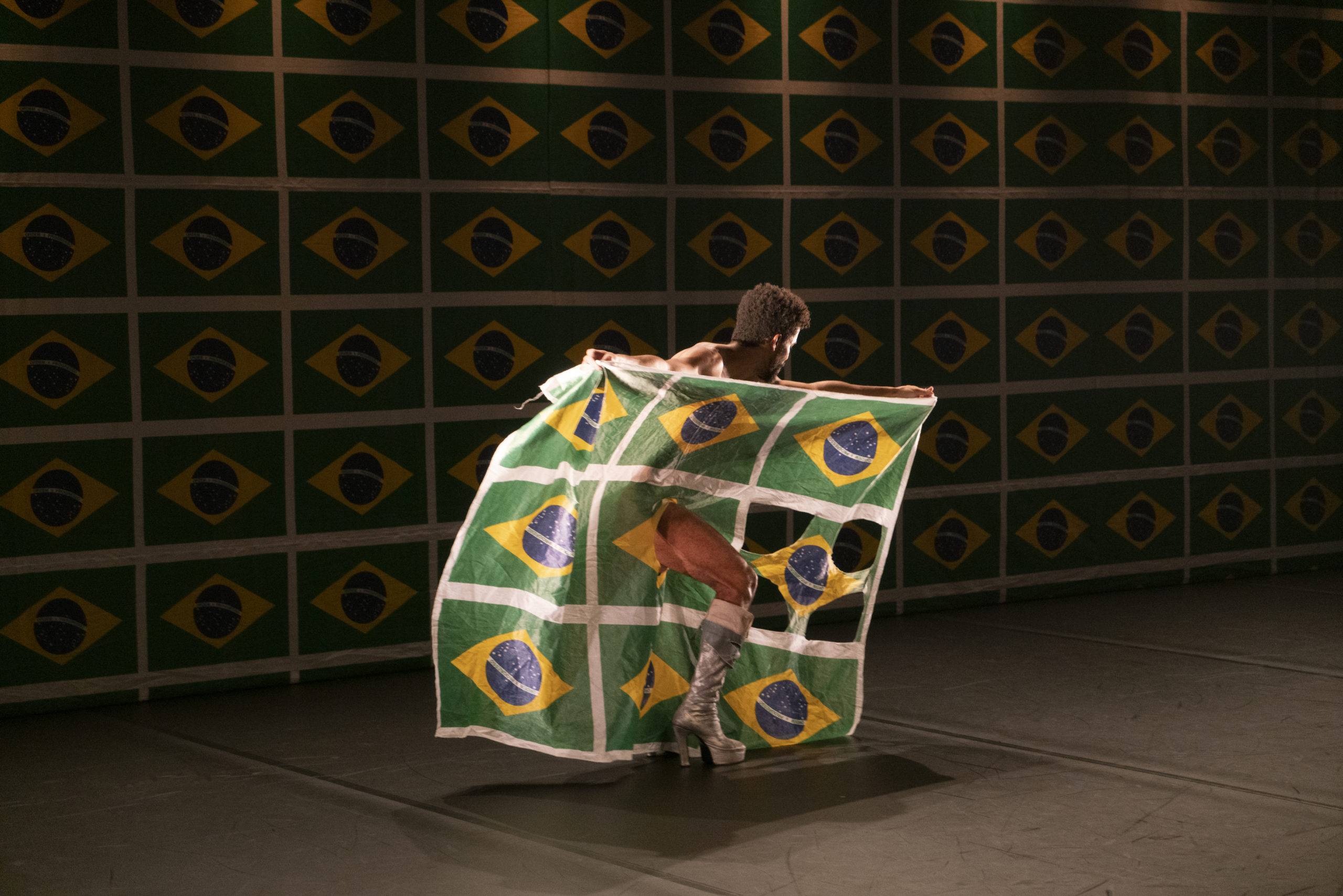
O Samba do Crioulo Doido by Luiz de Abreu was planned to open this year’s festival. The festival artistic director saw the piece first in 2004 and again in the beginning of 2020 in its reconstructed version. During that time, the piece had not lost its actuality but seems sadly as actual and crucial as before. In O Samba do Crioulo Doido Luiz de Abreu turns dance into the means to deconstruct racial identities. de Abreu deploys a singular choreographic language, through which he refocuses the question of identity of the body in this radical solo. The violence of his writing comes over as an urgent approach to the decolonial question, the heritage of slavery and the contemporary relations with domination. First the piece was performed by Luiz de Abreu himself, now this time by Calixto Neto. By having Neto replay stereotypes linked to the representation of the black body, in particular during the carnival where it is set between exoticism and eroticism, the choreographer turns this cliché back onto itself, the better to mock racist unawareness. Through the power of a performance, he looks to return to the body-object, the subject that has been stolen from it, with feelings, beliefs, and singularities. Buoyed up by a transgressive humour, the piece stands as a relentless criticism of the inferior condition of Blacks. From penile games to a misappropriation of the national flag, the point here is to see dance as an instrument for a physical liberation, a cry which organises the shift between body-object to body-subject.

Luiz de Abreu

Luiz de Abreu was born in Minas Gerais, Brazil. He discovered dance in the 1960s through the rituals of the Afro-Brazilian umbanda religion. The choreographer and performer is a graduate of the contemporary dance school Angel Vianna, Rio de Janeiro, Brazil, and holder of a master’s from the university of Uberlândia in Minas Gerais, Brazil. Mainly turned towards the exploration of stereotypes connected to the black body, his work has been shown in France, Germany, Portugal, Croatia, Cuba, Spain and Brazil, where he lives and works.

Calixto Neto

Calixto Neto is a Brazilian dance artist. He studied theatre at the Federal University of Pernambuco, Brazil, and dance with the Experimental Dance Group in Recife, Brazil. Later he took a master’s course at Exerce at the CCN of Montpellier, France. Between 2013 and 2015, he created there the solo petites explosionsas well as the duet Pipoca, in collaboration with Bruno Freire. He was a member of the Lia Rodrigues company from 2007 to 2013 and has danced for Mette Ingvartsen, Anne Collod, and Volmir Cordeiro. His last solo oh!rage was created in 2018.


Soup Talks (2020)

Soup Talks is a series of informal conversations with the artists presenting their work during the festival. The talks form a discursive line that goes through the festival and brings people together. We want to welcome the audience and the artists around a big table with a bowl of warm soup. Everybody is invited to join in, to listen, to pose questions and to take part in the discussions. Each of the talks will be hosted by an artist based in the Helsinki area.

08.11.2020
Guests: Maria Oiva & Kristina Junttila
Host: Lin Da

09.11.2020
Pie Kär & Kerstin Schroth

10.11.2020
Guests: Angela Schubot & Jared Gradinger
Host: Liisa Pentti

11.11.2020
Guest: Calixto Neto
Host: Sanna Myllylahti

12.11.2020
Guest: Maria Matinmikko
Host: Eeva Muilu

13.11.2020
Guest: Sonja Jokiniemi
Host: Jana Unmüßig

14.11.2020
Guest: Frédéric Gies
Host: Mikko Niemistö

15.11.2020
Guests: Antonia Baehr
Host: Veli Lehtovaara & Matilda Aaltonen

Hosts

Matilda Aaltonen

Matilda Aaltonen is a Helsinki-based performer and choreographer who is active in various dance and performance art groups. In her work, the sensory and the aesthetic, the ethical and the political are combined seamlessly. Exploring bodily knowledge and a perception encompassing all species, she is fascinated by the potential in dance to re-discover and re-define the human body. Aaltonen graduated from Uniarts Helsinki’s Theatre Academy in spring 2020, and holds a Master’s Degree in Arts (Dance). Her latest works are Voyeur (2020, Reality Research Center), olento / olio / otus / eläin / eläjä (2019, Uniarts Helsinki’s Theatre Academy) and Their Limbs Their Lungs Their Legs (2019, TADaC Theatre Academy Dance Company, choreography by Lea Moro). Currently Aaltonen is working as a part of multidisciplinary project Can we disclose other animals? The challenges of conceptualising animals in sciences and arts led by philosopher Elisa Aaltola.

Lin Da

Linda Martikainen (they/them, hän, hen), artist name Lin Da, is a Helsinki-based choreographer and dancer whose work focuses on ecology, feminist values and being in relation to unreadiness. Lin Da explores relationships between people and their vicinity in dialogue between non-human and human bodies. The spaces, places, and other entities that are present (non-human and human) suggest directions, rhythms, and qualities for research. They also suggest diverse socio-cultural meanings. During the past years Lin Da has collaborated especially with choreographers and professionals of the music field. These encounters have given rise to artistic works, discussions about artistic processes as well as the open sharing of artistic practices.

Veli Lehtovaara

Veli Lehtovaara is a Finnish choreographer and performer working internationally in the field of dance and experimental theater. He lived and worked in Belgium for the years 2008–2018. His works have been presented in central venues and festivals in Europe as well as in South and North America. Lehtovaara often works in a highly collaborative manner and combines elements from multiple disciplines in his choreographic practice. His creations vary from stage work to film and performance-installations. From 2015 onwards his work has been focused on interfaces of ecological thinking, choreographic practice and corporealities. Currently Lehtovaara is working on a new creation Ikimetäs, which focuses attention on temporality and diversity in old growth forests. The creation is a combination of choreographic work and radio play to be performed in the shopping centres as well as online. (Lehtovaara also performs the work Ontto harmaa tanssi (2020) together with choreographer Anna Mustonen and poet Olli-Pekka Tennilä. In 2020-21 Lehtovaara is taking part in a research project by Elisa AaltolaOutimaija HakalaSalla Tuomivaara and Matilda AaltonenVoiko eläintä kertoa?) Years 2018–2020 Lehtovaara has been working as a mentor, teacher, assessor and adviser for the bachelor and master programs in dance art at Helsinki Theater Academy.

Eeva Muilu

Eeva Muilu is currently working as Professor of Dance at the Theater Academy of Uniarts Helsinki. She has graduated as Master’s in Dance from the program of Choreography in Theater Academy in 2007 and since then, worked actively as a choreographer and a dancer in Finland and internationally. Besides her artistic work she has been part of the curatorial team of Side Step festival in 2010–2017. Since 2014 she has been a member of the board of Dance Arena ry, the organization behind Moving in November festival.

Sanna Myllylahti

Sanna Myllylahti (1972) is an internationally recognized Finnish dancer, choreographer and teacher. She studied in Danshögskolan in Stockholm and in Amsterdamse Hogeschool voor Kunsten (MTD) where she graduated in 1996 with the BA in Dance. She has been engaged as a choreographer since 1994. Her choreographic work has been mainly concentrated in the Netherlands, where she stayed living for nearly 20 years until returning back to Finland in 2011. Her various creations have been touring internationally. As a dancer she has collaborated with following artists (among others): Itzik Galili, Keren Levi and Saskia Boddeke / Peter Greenaway. Parallel to her work as an artist, Myllylahti has been working as an educator in several universities, dance academies, festivals and professional studios around the world. Currently Myllylahti holds a position as a Senior Lecturer in Contemporary Dance at the Theater Academy, The University of the Arts Helsinki. She teaches contemporary dance technique, movement research, choreography and composition.

Mikko Niemistö

Mikko Niemistö on koreografi, esitystaiteilija ja kuraattori, joka työskentelee Helsingissä ja ulkomailla. Hän on toteuttanut sekä sooloteoksia että monialaisia kokonaisuuksia, joissa eri taiteenlajit käyvät vuoropuhelua. Mikko on koulutukseltaan Master of Fine Arts in Choreography (Dans och circushögskolan / New Performative Practices -maisteriohjelma, Tukholma, 2017). Teoksissaan Mikko tutkii ihmiskehon suhdetta ympäristöönsä: tiedostamattomia ja tiedostettuja ruumiillisia yhteyksiä yhteiskunnan rakenteisiin. Häntä kiinnostavat erityisesti hiljainen kehollinen tieto, ruumiin ja mielen taustakohina sekä kehomuistojen kasaumat. Tällä hetkellä hänen työskentelynsä keskittyy asioihin, jotka sijoittuvat arkitodellisuuden katvealueille, kuten unen, protestin ja digitaalisen maailman tiloihin.

Liisa Pentti

Liisa Pentti (MA, BScS) is a choreographer, dancer and the artistic director of her experimental dance company Liisa Pentti +Co. Her works have been presented throughout the Scandinavia, Russia and in many European countries. She has a long teaching carrier both as a freelancer and in the Theatre Academy of Helsinki. She has been working with autistic young people since 2015. Through her company she also curates seminars, events and workshops related to the role of the art in the society, like the After Contemporary project 2011–2017. Liisa Pentti is one of the co-creators of Zodiak – Center for New Dance and and she was part of the artistic board 1987–2012. She is one of the founders and curators of the Sidestep festival 1996–2009. She has also curated Per Forma-event in 2011 and was the artistic director of the Full Moon –festival 2013. In her work Liisa Pentti is exploring the specificity of dance and questions related to the non-narrative logic of the visual-kinesthetic experience. She is also concerned with the psycho-energetic dimensions and the relationships of visible and non- visible spaces as choreographic questions.

Jana Unmüßig

Jana Unmüßig is an artist with a background in choreography. Her choreographic works have been presented internationally (e.g. HAU Berlin, Kampnagel Hamburg, ImPulsTanz Vienna, Springdance Utrecht). She was artist-in-residence at e.g. Movement Research, New York; HIAP – Helsinki International Artist Programme and K3 – Zentrum für Choreographie, Hamburg. Since 2015 she has engaged in a process of wondering that has resulted in paintings, videos, writings, dramaturgy (for Zina Vaessen), performing durational collaboratively made pieces for artistic research conferences (with Tina Jonsbu), hosting walks (with Francisco Trento). 2020/2021 she is a fellow of the Artistic Research Program Berlin. She shares the fellowship with choreographer and performer Miriam Jakob. Unmüßig did theater studies at the Sorbonne, Paris, trained dance at SEAD (Salzburg Experimental Academy of Dance) and holds a MA in choreography from the HZT Berlin. 2018, she received a D.A. from Uniarts Helsinki.
Tribute – the outdoor version

In Tributethe library version, made especially for Moving in November festival 2020, you had the chance to see the choreographer Frédéric Gies himself dancing the piece originally conceived for a group of nine dancers, as a solo. Now we have the big pleasure to present the piece as Tribute – the outdoor version in Tapiola Amphitheatre, with all nine dancers.

Frédéric Gies & Weld Company: Tribute

In Tribute, Frédéric Gies has opened up his library of dances to the dancers of Weld Company. Making dances that summon up the poetic, delicate and raw textures of past dances, utterly present as the promise of dances to come. In the fall of 2018, the company invited Gies to create a choreography for them. The result of this invitation is Tribute; a full evening choreography for nine dancers, accompanied by a techno set by DJ Fiedel. Weld Company works with choreographers and dancers representing different generations, working methods and expressions and was initiated in 2013 by dance and art platform Weld in Stockholm, Sweden. Weld Company is furthering the idea of a dance company and what it can be today, creating an enabling structure where new constellations and ideas come into being. The main focus of the company is in creating a free space to practice the art form. To become the dancing body, the dancing community and through this, to pose questions about dance and choreography today.

Frédéric Gies

Frédéric Gies is an artist in the field of experimental dance. His work originates from rigorous movement research processes, which are informed by his experience in the field of somatic practices as well as in specific forms of contemporary dance, his former training in ballet, and his participation in techno clubs and raves. The dances he creates collapse in various ways the hierarchies and distinctions between different dance forms. He is currently based in Sweden.

DJ Fiedel

Fiedel’s first DJ gigs in Berlin can be traced back to the early 90’s when he started spinning records at Subversiv’s weekly Monday events. MMM, a collaboration with his friend Errorsmith, was initiated shortly after he moved to Berlin. Fiedel’s residency at OstGut began in 2000 and was carried on to his current home base – Berghain. Further projects include an ongoing collaboration with choreographer Frédéric Gies.

Movie: O Samba do Crioulo Doido: Ruler and Compass

The film tells about a powerful meeting between two generations of dance artists that took place in the city of Salvador, Bahia, around the transmission of O Samba do Crioulo Doido. A dance piece, originally created by Luiz de Abreu in Brasil in 2004, that became an iconic symbol to a community, to many communities. At that time, the country was at the dawn of a utopian madness, of a democratic dream, that lasted a little over a decade. After this the world took a turn, things have changed, some steps have been taken forward, many others backwards. O Samba remains current, here re-enacted by another black artist, with a different background, a different bodily history, yet heir to the same violent colonial past, contemporary to the same violent post-colonial present. And more, it is also about the invisible time of learning, about transmission of knowledge between two black bodies and the creation of a means of communication to do it, about legacy and the necessity of creating historical marks for a community that has its history constantly erased.

The name of the movie comes from the song Aquele Abraçoby great Brazilian singer and composer Gilberto Gil. In the song he says that the state of Bahia gave him the ruler and the compass (A Bahia já me deu régua e compasso), meaning that this place thought him how to live and be in this world, considering how magical and special this place is and how it can affect a human being. The process the transmission of O Samba and of making the film brought together a beautiful team of artists committed to the creation of their (our) own narratives, escaping from the common sense of a predetermined history. In Bahia, Jackeline Elesbão and Pedro Ivo Santos, amazing artists and close friends to Luiz de Abreu, joined the team. They had been in the cast of the group version of the piece back in 2005, and Pedro Ivo Santoshad been even in a solo version in 2017. Assisting the transmission process of the piece, they were the eyes of de Abreu, adding their own experiences to this work.

Forecasting

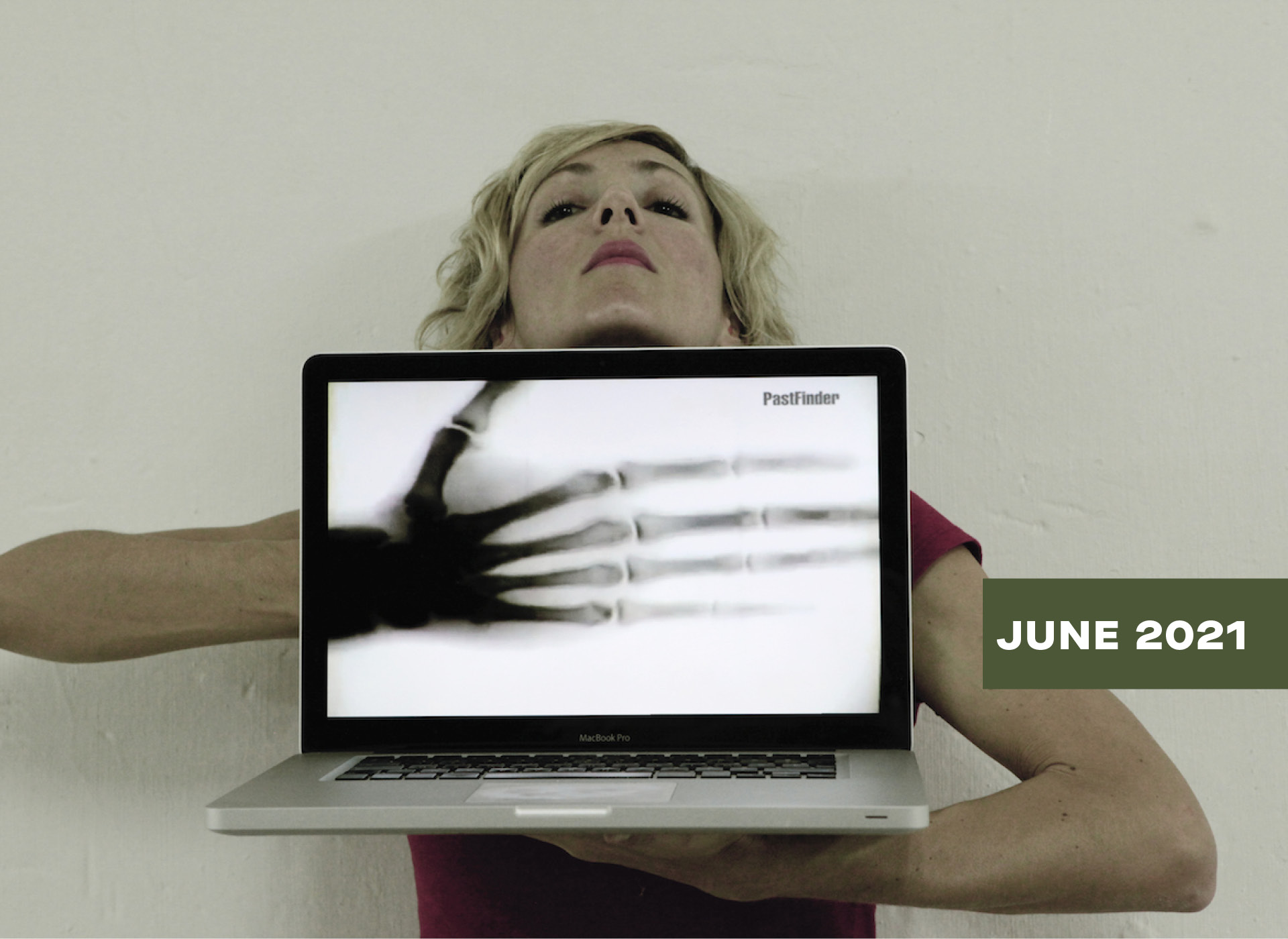
A dizzying hybrid experience of reality and virtuality unfolds in front of our eyes. Moving alone on stage with a laptop, Barbara Matijević shapes her body as a seamless extension of the two-dimensional world of videos, made by anonymous users of YouTube. In Forecasting Giuseppe Chico & Barbara Matijević establish a space-time suspended between two parallel systems of perception: that of physical reality and that of the screen. An intriguing and humorous dialogue, challenging the way in which technology affects our senses, our relationship with objects, movement and our understanding of presence. The work of Chico and Matijević explores what theatre and performance can mean in contemporary life that is being so profoundly transformed by the “new tools of the mind” such as the Internet. In Forecasting, they point to the ever-increasing influence of digital tools in the construction of the Self and the collective imaginary. The piece received the Special Jury Prize at the 56th MESS Theater International Festival in Sarajevo, Bosnia and Herzegovina, in 2016.

Barbara Matijević

Barbara Matijević was born in Nasice, Croatia in 1978. She studied literature at Faculty of Arts in Zagreb, Croatia, and dance at the Hypaxis Dance Centre (N.H./U.S.A.) and the International Centre for Contemporary Dance and Performance Art – ATHENA, Greece, under the artistic direction of Kilina Cremona in Zagreb. Matijević has worked with Bojan Jablanovec, Bruno Marin, David Hernandez, TRAFIK, and Joris Lacoste. She also collaborated with Boris Charmatz in the project Bocal. She taught dance at the National Conservatory of Dramatic Art in Osijek, Croatia. She has been collaborating with Giuseppe Chico since 2008. Matijević lives in Zagreb, Croatia.

Giuseppe Chico

Giuseppe Chico was born in Bari, Italy, in 1974. He studied ancient languages and started working in theatre at an early age with the Abeliano Company under the direction of Tina Tempesta and later with Kismet Theatre, under Robert McNeer. He also worked as a set designer for Paolo Baroni. After studying theatre in Rome and Milan, he moved to Paris in 2000 and began to train in contemporary dance with Joao Fiadeiro, Vera Montero, Julyen Hamilton, Mark Tompkins, Vera Orlock, Pooh Kaye, K. J. Holmes, Olivier Besson. He was a performer for several years for the company Mille Plateaux Associés. He has also worked with George Appaix and Joris Lacoste. Chico lives in Paris, France.

Conversation in a bowl. Take a soup and discuss with us. A festival. Moving in November.

Alice glanced nervously along the table, as she walked up the large hall, and noticed that there were about fifty guests, of all kinds: some were animals, some birds,
 and there were even a few flowers among them.

From the book Through the looking-glass, by Lewis Carroll

A warm end-of-the-summer-hello, combined with some more insights about this year’s Moving in November festival (about to happen between November 5th – 15th).

How does one plan an international contemporary dance festival in times when countries all over the world simply close their boarders to protect their citizens from a circulating virus? A situation that has thrown us back to the local, to everything in our closer and closest surroundings. An enclosure, that brought forth how small our world can become while at the same time we can stay zoomed out and be virtually in contact with almost everybody around the globe. A situation that added to my ongoing reflection about the role of the local artist scene within Moving in November. How can the festival engage in a stronger way with artists living and working in the Helsinki area while building bridges to traveling artists coming to town? Under my term as artistic director, I would like to engage with this question, creating various frames that further connect the festival with the visiting artist, the local artists scene and you, our audience. Apart from the pieces the artists bring with in their luggage and that are presented in the festival.

This year we establish a discursive line that stretches over the whole period of the festival. The Soup Talks are a series of informal conversations with the artists presenting their work during Moving in November. We welcome you around a big table with a bowl of warm soup and bread. We invite you to join in, to listen, to pose questions and to discuss. Each of the talks will be hosted by an artist based in the Helsinki area. The Soup Talks are the first attempt to connect the presenting artists in a stronger way with the festivals’ audience and the local artist scene. Enhancing discussions and encounters in a casual manner, providing a platform to join in and share. The talks are expected to take place every day between November 6th and 15th at lunch time. The details and the whole festival program will be announced in September.

Coming back to the initial question: how does one plan a festival in these times. In our case, we plan it with a lot of conviction, curiosity and hope. That the richness of our daily interaction with one another can be allowed back. That we are curious to explore together an alternative that hopefully lies between the ban of physical closeness and installing it as the new norm and our old way of interacting with one another. That it will be possible to invite you, our public and the invited artist back into the theater spaces in November. (Especially also, as the artistic communities all over the world have been heavily affected by the global lockdown.) We will of course invent new forms of presenting art works and we are well prepared to receive you as an audience in a different way under a special safety protocol, but in the end we have to be highly flexible while planning and acknowledge that the situation can change overnight.

Stay well and hopefully see you in November!

Kerstin Schroth & Moving in November festival team

Moving in November Festival Seeking for Production Interns for Autumn 2020

The festival is seeking for 1-2 production interns to join the festival team in autumn 2020. The internship offers a chance to get to know the production of an international performing arts festival and an opportunity to develop the intern’s own know-how of event organising. Fluent speaking skills in Finnish and English as well as interest and curiosity towards contemporary art are required for the position. Inquiries and applications can be sent to Executive Producer Isabel Gonzalez / isabel(at)liikkeellamarraskuussa.fi latest on August 30th, 2020. The position(s) are filled once the suitable applicants are found.

See for more information in Finnish here.

ÖH (PREMIERE)

Sensuality, hybrids and the uncanny create an artistic world of discovery, divergence and liberation from binaries. In her group performance ÖH , Sonja Jokiniemi creates a multisensorial textile environment using handmade rugs as well as knotting and sewing techniques to bind together a sensorial logic as a choreographic proposition. This long duration haptic performance invites the audience to a non-linear logic of weaving meaning and contact. A catalogue of drawn images creates the subconsciousness of the work, where drawings sculpt the performers’ embodiment and weave into textile. Here colours narrate and textures dialogue. In ÖH , Jokiniemi searches between human and non-human beings for a space where the naive, intimate, surreal and unknown touch each other, a space for beauty that stands alone alongside mainstream aesthetics, while gearing towards a powerful metaphor for resistance and escape from categorization and limiting forms. The piece is this year’s co-production between Zodiak– Center for new dance and Moving in November. Sonja Jokiniemi presented her work BLAB in Moving in November 2017.

Sonja Jokiniemi

Sonja Jokiniemi was born in 1983. She is a choreographer, performer and self-taught visual artist. Jokiniemi graduated from DAS Theatre (previously DasArts) MA Degree programme in Performing Arts in Amsterdam 2013. Prior to this she has completed BA degree on Contemporary Dance at Laban Centre in London 2006 and taken part at Daghdha Mentoring programme in Limerick, Ireland. Jokiniemi’s works deal with creation of alternative and multi-textural languages, narrations and logics. She combines textile, drawing and live performance in her works that reach towards a mesh of human and non-human relationships, thinking images and speaking textures. Tactility and hapticity are important aspects in proposing ways of knowledge production. Besides her own artistic practice Jokiniemi co-curates the Bad House festival that is part of Mad House Helsinki, and works artisitically with a variety of different groups. Currently, she works and lives in Helsinki, Finland and Lausanne, Switzerland.