Conversation between Anna Kozonina and Kerstin Schroth about Audience Club

Could you tell us about the background and starting point of this project?

This year I am happy to collaborate with Moving in November through an art mediation format called Audience Club. Audience Club is a participatory format that invites festival’s visitors to get deeper understanding of dance art in relation to pressing issues of our contemporary world. It allows participants to learn more about the language of dance and performance, gain confidence in articulating their questions and opinions, find a community for discussions and immerse deeper into this year’s festival’s program.

Most importantly, it’s open for both art lovers and professionals and even wishes to have them in the same space of discussion, since artists and cultural workers don’t often meet with the viewers who don’t belong to their professional community in an open and safe conversation.

Audience Club is one of the mediation formats I am exploring as part of my longer artistic research project (Re)inventing the audiences: love, irritation, misunderstanding and joy. Having lived and studied in Finland for four years and worked as an independent dance researcher, artist, dramaturg, critic and educator, I have repeatedly found myself in a weird place in between the professional communities and so-called “wider audiences”. As an artist, I’ve always liked to challenge the limits of professional art-bubbles, placing my works outside the secured theatre stages in the spaces where normalised social segregation can collapse. As a dramaturg, I have helped choreographers craft their works so that they could speak to multiple individuals as well as social groups in a layered manner. But as a professional writer and educator, as well as a person seeking connections with others, I have always sensed a large gap between the professional lingo we are thinking in, and the ways we create spaces for spectators of dance to come in touch with our pieces and give feedback or even influence the ways we do our job.

Does the audience even matter? This question is not as simple as it sounds, when we try to marry our desire to connect with others with our wish for artistic freedom, with institutional practical and financial needs, with the desire of theoretical research to stay away from simplification, with the effects of social media on the quality of our connections. And if it does matter, what kind of impact can “audiences” have on performance making beyond the power of figures — the so-called “audience love” measured in the amount of sold tickets?

(Re)inventing the audiences is an artistic and research experiment (supported by Kone Foundation) which inspires artists and festival curators to get curious about the role and the agency of the audiences in dance and performance production. It is concerned with a possibility of art mediation that wouldn’t take root in a didactic, explanatory-driven project originating in the enlightenment, but would instead research the potential of artist—artwork—audience—place—institution relationships as nodes of layered and curious encounters of different intention and desires.

The idea of the project stems from my 7-year long experience of combining different mediating roles in contemporary dance production: being an artist as a mediator of new possible worlds and meanings; a dramaturg as a mediator of someone else’s artistic vision; a writer juggling theoretical concepts with the needs of broader audiences; an educator talking about dance and theatre with people of various backgrounds.

How do you situate your artistic work within the Finish performing arts landscape

That’s a very interesting question that has been stimulating this project from the very beginning, as I am a foreigner in Finland, with a career of a freelancer working in different European countries with various venues and choreographers. Audience Club is a mediation project that grows from a desperate need for discussion, communication, translation in the professional communities (in Finland as well as other Nordic countries) as well as from a desire to understand the bigger impact our work can have on the wider audiences that don’t necessarily belong to “art bubbles.” For an expat, trying to grow roots in a foreign professional context means to always deal with various procedures of translation: not only literally between languages, but also between different systems of values and meanings that always intertwine, collapse but also just stay opaque and unclear when it comes to an “international dimension.” The same happens with the translation between the language of peers and funders and that the broader audiences can potentially speak. And here I am not interested in the didactic approach of “explaining the art to the audiences.” But rather I wonder what particular points of connection, questions, painful misunderstandings are in place when performance meets its audiences.

So the attempt of this project is not to take a particular place or niche in the local context but rather to create spaces and practices that could host boiling conversations around the art we are making. I feel that in the Nordics discussions around the meaning and quality of the produced art is either not very well developed or just stay very private and way too “polite.” Although such social protocol keeps artists safe and free in their creative self-expression, it also has its drastic downsides: we can’t be honest and constructively critical and can’t have a grasp of the wider needs of professional communities as well as people we are working for. Maybe the Club is just an attempt to make things a bit more fiery, honest, disputive and open as well as invite the recipients of the art in the picture, with their feelings and opinions on what and why is happening on stages. I’ve heard from many colleagues that people secretly crave it, as it can enhance mutual understanding and the feeling of care and belonging.
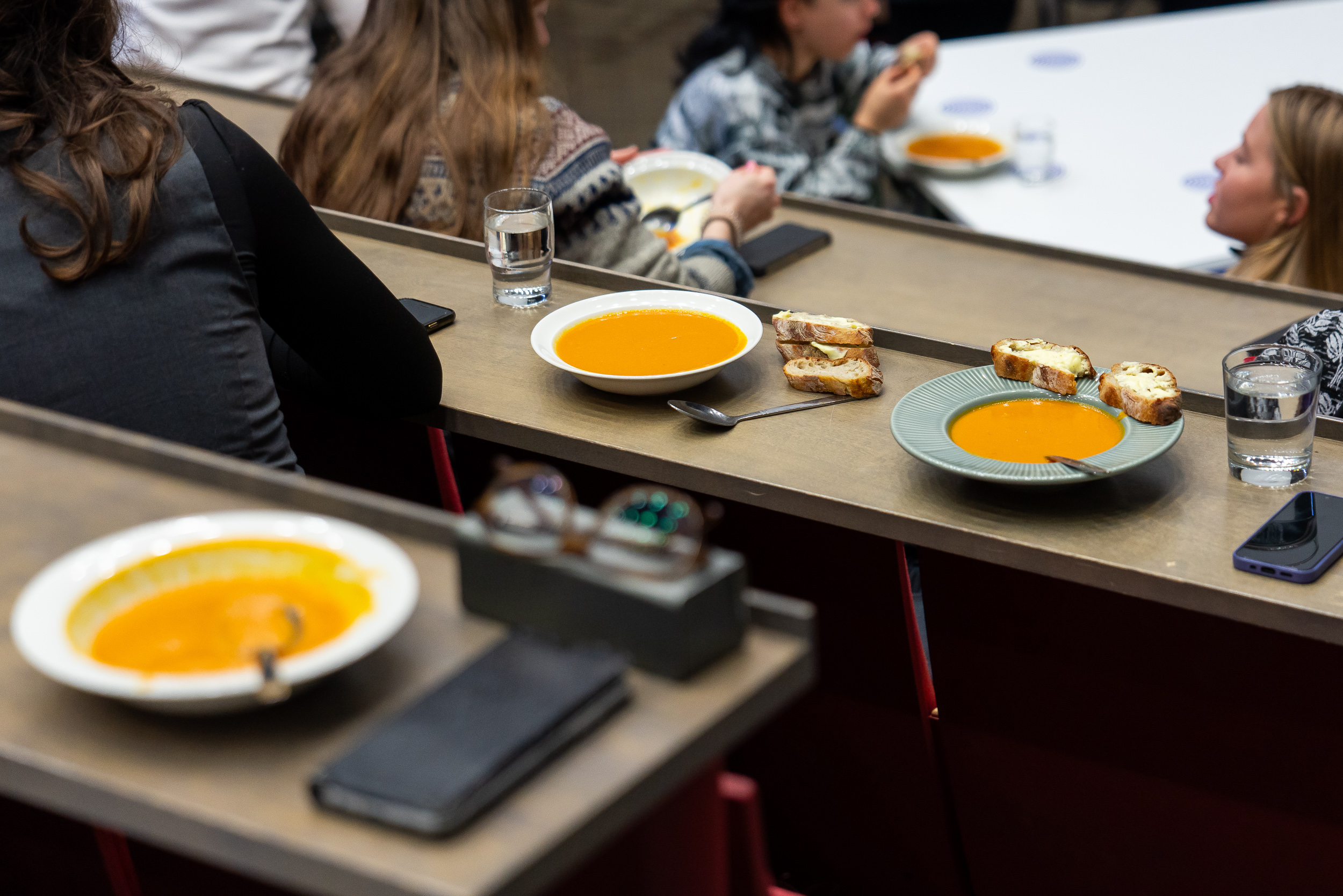
Soup Talks – Conversation series 2024

Counting down to the festival opening, a reminder and a warm welcome to sign up for Moving in November’s discursive series Soup Talks.

Soup Talks are an invitation to come together and discuss. We invite you for a bowl of soup and to engage in informal discussions with the artists presenting their works in this year’s festival. You are also more than welcome to lean back and just listen in.

The talks are taking place each day during the festival between 12-1:30 pm @ Caisa and are hosted by an artist from the Helsinki area. The Soup Talks are organized together in collaboration with Caisa.

With one exception: we are extremely happy about this year’s collaboration with Goethe-Institute Finland. Inviting us for the Soup Talk with Ligia Lewis & working group on November 8th to their facilities.

7.11.2024
Performance Pancor Poetics
Guest: Pontus Pettersson
Host: Maija Hirvanen

8.11.2024 @ Goethe-Institut Finnland
Performance A Plot / A Scandal
Guest: Ligia Lewis and the working group
Host: Gesa Piper

9.11.2024
Performance LIVRE D’IMAGES SANS IMAGES
Guest: Mette Edvardsen & Iben Edvarsen
Host: Laura Cemin

10.11.2024
Performance The Second Body
Guest: Ola Maciejewska and the working group
Host: Tuuli Vahtola

11.11.2024
Performance Soliloquio (I woke up and hit my head against the wall)
Guest: Tiziano Cruz
Host: Eurídice Hernandes
Translation to English: Daniela Pascual Esparza

12.11.2024
Performance Skvallret (The Gossip)
Guest: Stina Nyberg
Host: Chen Nadler & Tim Winter

13.11.2024
Performance Whitewashing
Guest: Rébecca Chaillon
Host: Kadence Neill & Pierre Piton

14.11.2024
Performance The Making of Pinocchio
Guest: The team behind The Making of Pinocchio
Host: Even Minn

15.11.2024
Soup Talk Panel
Guest: Rahalël Beau, Sara Grotenfelt, Milla Koistinen, Anne Naukkarinen, Lydia Touliatou
Host: Simo Kellokumpu

16.11.2024
Performance blackmilk
Guest: Tiran Willemse
Host: Geoffrey Erista

17.11.2024
Performance IL FAUX
Guest: Calixto Neto
Host: Esete Sutinen

Photo: Petri Summanen

Soup Talks are organized by Moving in November within the frame of European Network Project Life Long Burning – Futures Lost and Found, funded by Creative Europe 2023-2026.

Focus on the Local Landscape

Focus on the Local Landscape meanders with a large variety of works through the ten days of Moving in November.

Focus on the Local Landscape is both an artistic program and the starting point of a discussion, addressing the local culture-political situation that is becoming increasingly complicated and hostile for the performing arts scene in Finland. There are insufficient resources to research, rehearse, produce and present performances, but also to curate a festival. Yet there is a university that highly educates dancers and choreographers and releases them into a world that seems to hold less and less space for them.

With Focus on the Local Landscape, Moving in November embrace artistic proposals from the local performing arts scene that came towards us by chance. Choreographers who, for example, received funding to produce but lacked venues, or a frame and visibility to present their works. We decided to include these proposals into this year’s program. Examining what happens when different resources are brought together to create a program.

Artists and companies, institutions and Moving in November joining forces and gathering resources (communication tools, funding, production skills, spaces, staff, technical equipment, time, visibility etc.), is a response and a political statement.

Focus on the Local Landscape begins with Turn Turtle Turn – the lecture performance. Annika Tudeer, the founder and artistic director of Oblivia celebrates her 60th birthday with this solo on life, death and dodos.

In GRIT (for what it’s worth), choreographer Milla Koistinen examines the ability to persevere through hardships, fatigue and obstacles, embodying the spirit of endurance in its most personal form.

Mycoscores / Choreospores by Maija Hirvanen is presented in two forms: a 1:1 card reading and the launch and presentation of a publication. This work explores the connections between fungal and human ways of being, particularly through movement and dance.

On Friday, November 15, we invite you to a Soup Talk Panel. Artists Raphaël Beau, Sara Grotenfelt, Milla Koistinen, Anne Naukkarinen and Lydia Touliatou will have a conversation together with the host Simo Kellokumpu about the culture-political situation in Finland, based on their personal working experiences.

The Teak Open Studio invites to witness the artistic process behind the final artistic work of the artists-students in the MA in Dance Performance program. This year choreographer and dancer Renan Martins will choreograph a piece with them.

Dance company Liisa Penttii +Co hosts a whole day dedicated to dance and music improvisation in Oodi’s Maijansali hall. Feel welcome to join to Dance Improooo!

With A cloud and its shadow, Reality Research Center explores the relation between performance, documentation, reality and memory. Artists Emma Fält and Alina Sakko take you on a three-stop journey to uncover the memories of past Moving in November performances.

Audience Club by Anna Kozonina is a participatory format that invites festival’s visitors to get deeper understanding of dance art in relation to pressing issues of our contemporary world. It allows to learn more about the language of dance and performance, gain confidence in articulating questions and opinions, finding a community for discussions and immersing deeper into this year’s festival’s program. Unfortunately there are no spaces left, but you can reach out to the group when you meet them and ask about their findings.

Welcome to Focus on the Local Landscape a collaboration between Anna Kozonina, Maija Hirvanen, Milla Koistinen, Liisa Pentti +Co, Oblivia, Reality Research Center, Caisa, Madhouse Helsinki, Kiasma, Stoa, Taideyliopisto and Moving in November !

Kerstin Schroth & the Moving in November team

Logo: Jaakko Pietiläinen

Become a Friend of Moving in November

Why become a friend?
What does it mean to become a friend?
How to become a friend?

After careful reflections and several discussions within the team and with our board members, we decided to create the Friends of Moving in November.

The festival has been growing in size and outreach over the past five years, as much as in the diversity of the invited performances. We bridge the international artists coming to Helsinki and the local scene through workshops, conversations, encounters, and presentations. We have a hard time though to find the adequate resources to include works of the local choreographers in the festival program. That’s where the idea for Friends of Moving in November originates.

Becoming a Friend means that your support reinforces Moving in November’s general mission to bring international performing art to Helsinki and to organize a festival. As a Friend, you directly support the presentation of one performance by a Helsinki-based choreographer in the festival program each year.

Regardless of the amount, your support will make a valued contribution to the festival’s development, its program, and its artistic and social initiatives in the Helsinki area.

Friends of Moving in November brings together individuals, foundations, and companies who accompany and support the festival. Joining this colorful community is also an opportunity to look behind the scenes, exclusively encounter artists, and meet our curator.

If you would like to become a friend, you can sign up and find more information through this link, including whom to contact if you have any questions.

Warm wishes,
Kerstin Schroth & the Moving in November team

Pre-show Information – The Making of Pinocchio

Access information

  • The performance is 90 minutes long
  • There is no interval
  • All performances are Relaxed this means you can move or make noise if you need to and can go in and out of the performance space
  • Early entry will be permitted for audience members with access needs
  • All performances are captioned, including descriptions of the sound and music
  • Latecomers will be permitted
  • Ear defenders are available for anyone who might find these useful
  • There is an accessible toilet in the building
  • There is a chill out space outside the performance space
  • If you find that you have an overwhelming emotional response, be it positive or negative, and would like to check in with somebody, there will be a wellbeing practitioner available during and after the performances. Please ask a member of our staff and they will take you to them.
Photo: Christa Holka

Taking over Taidehalli, in collaboration

It’s already my 5th edition, we have spent five years together…

Upon arriving in Helsinki, when starting to think about Moving in November, Taidehalli was one of the first places that reached out for a meeting. Since then, we’ve had various conversations and developed a precious collaboration that has grown substantially over time.

Thinking back to the first year–Consul and Meshi by Antonia Baehr and Latifa Laâbissi–sneaking into Taidehalli by night, lingering on the floor for almost three hours while watching two half-chimpanzee, half-human figures on their inflatable limousine-like sofa-bed—I still recall the feeling of being a nighttime intruder into their world and the museum.

Or the second year, stepping into an exhibition yet to be built, with wrapped paintings leaning against each wall, to see Un Bolero by Dominique Brun & François Chaignaud at the opening of Moving in November.

Or the third year of our collaboration—finally giving a frame to present Time has fallen asleep in the afternoon sunshine, an ongoing project by Mette Edvardsen that I had dreamed of realizing in Helsinki, with the opportunity to add books in Finnish and Swedish. As a visitor, one could take a living book for a stroll through an exhibition that mostly displayed roofs hanging from the ceiling, like shelter.

And then last year, Alessandro Sciarroni’s virtuosic Save the Last Dance for Me, placed in the middle of an exhibition of Finnish design items, with the hope that the spinning dancers wouldn’t knock the items off the shelves.

These have been beautiful and unique experiences over the past years!

Listening, trust, commitment, and a profound enthusiasm characterize the collaboration between Moving in November and Taidehalli. In our first meeting, I was asked what performance I could imagine for this wonderful space. This question has recurred each year, indicating that what I envisioned for the space resonated with them. Each time, it was accompanied by vivid descriptions of the exhibition plans for the following November, adding another layer to nourish my imagination, along with interesting restrictions and contexts to work with.

Last year, however, the conversation took a different form. As a result of the past years’ collaboration, Moving in November was invited to take over Taidehalli completely for several days. We were asked to make a proposal for the entire exhibition space during regular opening hours—to slip out of the night and into the day.

And that’s exactly what we’re doing this year. We’re taking over, in collaboration.

During the day, Pancor Poetics, a performative installation by Pontus Pettersson, invites us into a green landscape where catty humanoids roam freely. Upon entering this miniature golf course myself for the first time, I was captivated not only by my own perception of time slipping away, but also by the poetic and humorous Cat Practice, which captures the essence of being a cat rather than attempting to portray one. We invite you to stay as long as you wish.

At the same time, we still take you to Taidehalli during unusual hours—when the catty humanoids rest—to see Mette Edvardsen’s LIVRE D’IMAGE SANS IMAGES, a performance and conversation together with her daughter Iben Edvardsen.

We also have the great pleasure of hosting the launch of Anne Naukkarinen’s new book A Book of Dances, with all contributing choreographers present at the event.

By granting me such freedom to think, imagine, and make proposals, Moving in November and Taidehalli are together harvesting the fruits of the past years’ close conversations and collaborations. In a year when politicians are asking the Finnish performing arts scene to work in collaboration, it’s a practice that has always been part of Moving in November. From the start, we have emphasized the importance of collaboration, exploring what it means and what it takes to work in this way—driven by shared beliefs and interests, not merely due to government funding cuts or lack of resources.

Last but not least, I would like to warmly thank the entire Taidehalli team (especially Birgitta Orava and Nina Toppila and Eeva Holkeri) for their trust and enthusiasm, and for this year’s invitation and challenge to keep imagining!

See you in November!

Yours,

Kerstin Schroth

Moving in November 7th to 17th of November. Festival program release.

Moving in November’s festival program is published! We warmly invite you to discover this year’s edition! In case you have not yet read the pre-note in relation to the program, you find it here.

We open the festival with both A Plot / A Scandal by Ligia Lewis and Pancor Poetics by Pontus Petterson.

Pancor Poetics is a choreographic installation and performance, transforming Kunsthalle’s exhibition space into a miniature golf course, inviting you to stay as long as you wish. Don’t be surprised if a cat is strolling around your legs!

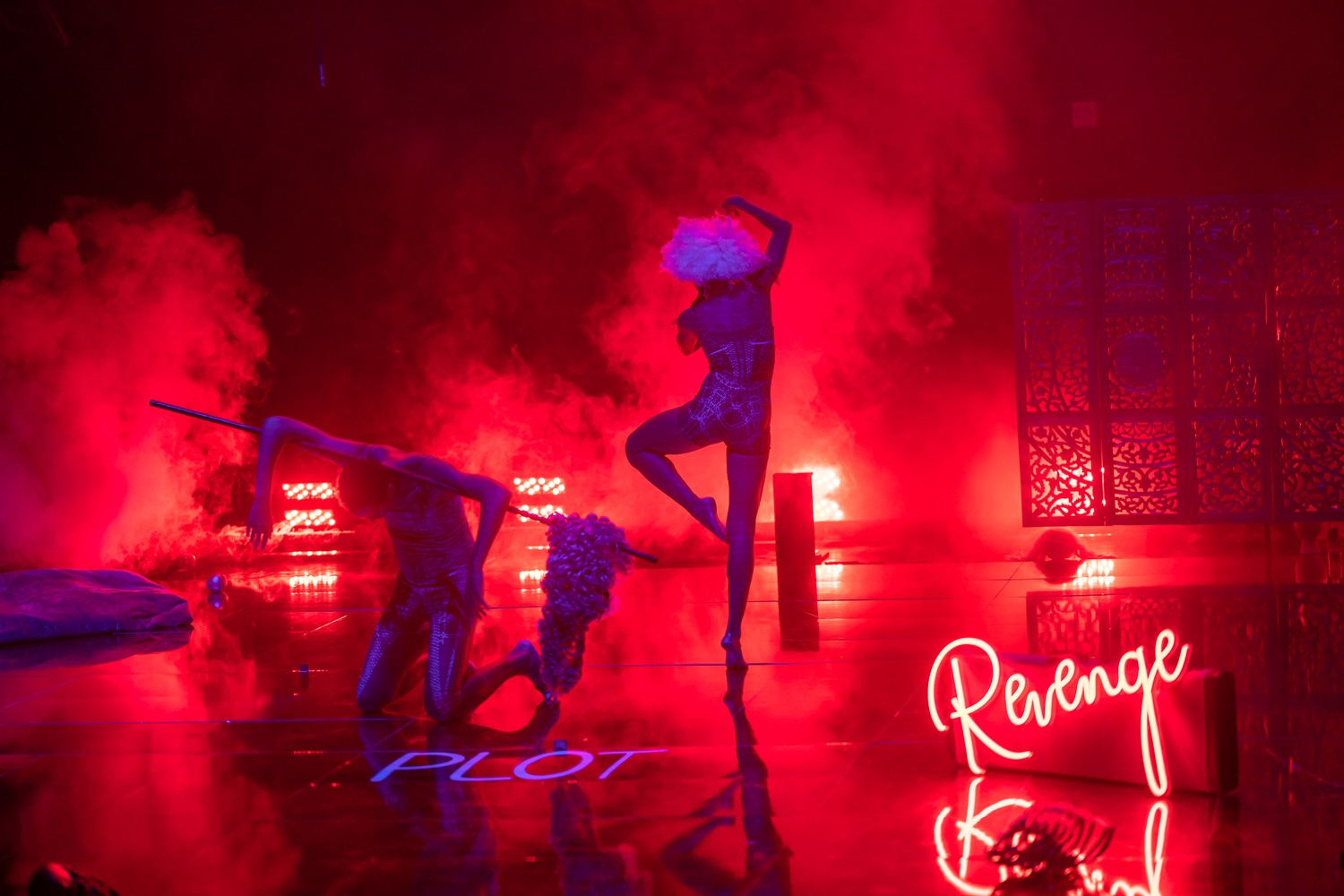
In A Plot / A Scandal, Ligia Lewis is weaving together a series of historical events, political laws, and mythical narratives, the piece operates as a site of visibility and concealment, inviting the scandal of rebellion at the edges of representation.

What does it mean to be a foreigner in your own country? Soliloquio (I woke up and hit my head against the wall) a powerful manifesto and parade with local Latin American communities, in which Tiziano Cruz brings forth and examines which place indigenous people, their voices and bodies have in a system in which they still suffer from discrimination and exotification.

Also in Whitewashing, Rébecca Chaillon addresses discrimination and invisibilized bodies. You will closely witness a body that society tries to render invisible becoming increasingly visible and undamaged.

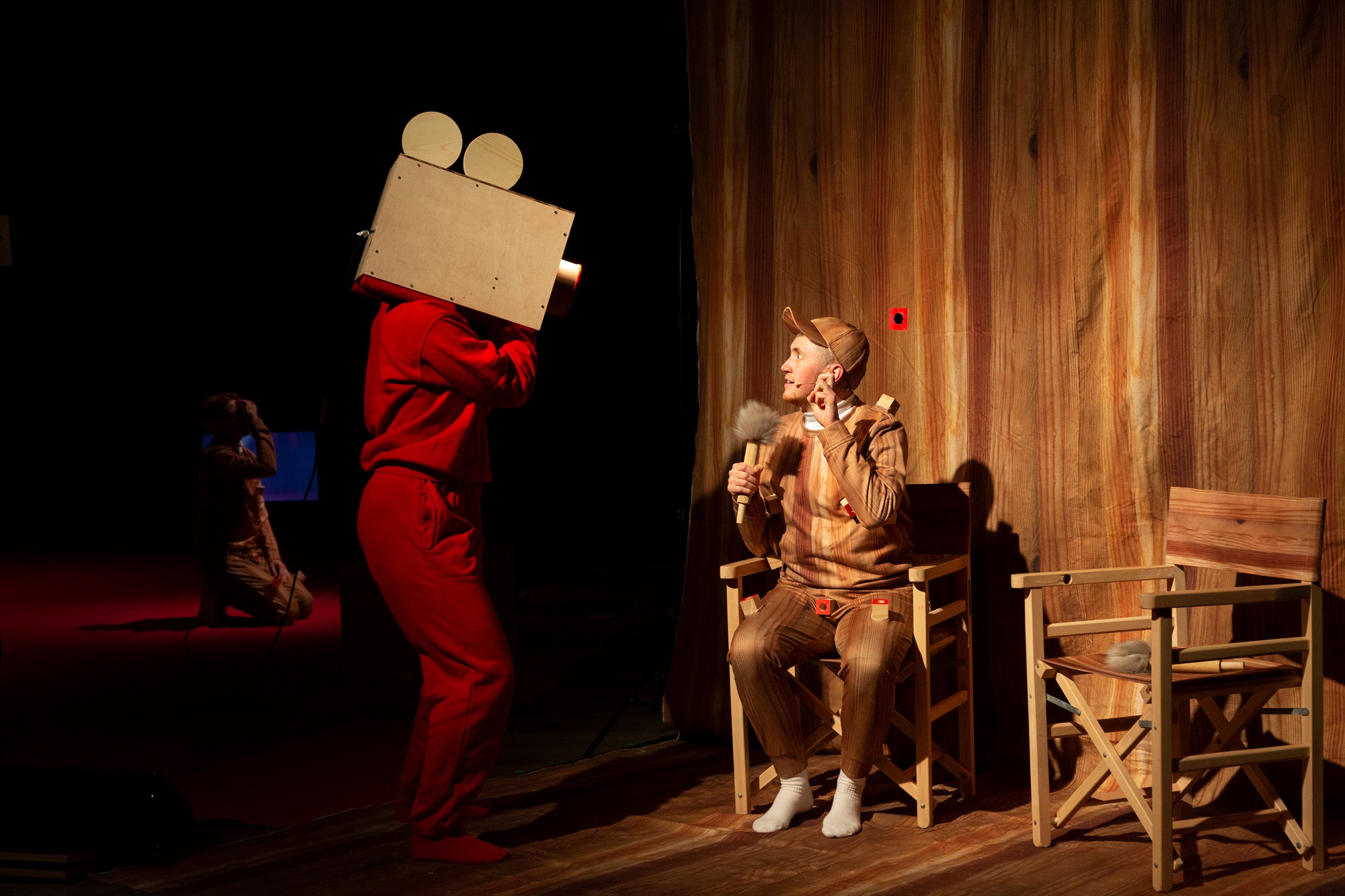
With The Making of Pinocchio, Rosana Cade & Ivor MacAskill created a truly exceptional performance. A deeply personal narrative—a true tale of love and transition exploring the boundless realms of queer imagination and joy through the story of Pinocchio.

Sawing between virtuosity and desperation, Tiran Willemse creates with blackmilk an intense solo performance that diffuses melancholia and loneliness and leaves us with a physical sensation of being excluded, being expelled.

Also The Second Body by Ola Maciejewska is slipping under our skin, into our bones. On stage a human body sharing the stage with a block of ice—inviting us to witness the permeability of these two bodies of water in constant transformation and seemingly having an effect on one another.

Outside of the regular exhibition opening hours of Kunsthalle, Mette Edvardsen presents LIVRE D’IMAGES SANS IMAGES together with her daughter Iben Edvardsen. A poetic work and choreographic journey, based on conversations, borrowing its title from a book by HC Andersen, in which a painter has a conversation with the moon.

Thinking of language and choreography, we are pleased to launch A Book of Dances by Anne Naukkarinen, a collection of written choreographies by seven artists based in Finland and Sweden, bringing attention to the contradictions, translations, and intimate relationships between dance and language.

Skvallret (The Gossip) by Stina Nyberg is a special choreographic work, a choreographed city tour from the perspective of a dog, following soft paw prints through Pihlajamäki’s history and area.

We are closing the festival with a familiar and dear guest, with the latest work of Calixto Neto. IL FAUX is inspired by Ta-Nehisi Coates’ book Between the World and Me, an assemblage of written letters to his son to warn him of the dangers the world holds for his Black body. Delving into the transmission of fear and the conditioning of the body in the language of survival, the performance examinates the potential subversion of societal roles assigned to Black bodies.

Last but not least our Focus on the Local Landscape meanders with a large variety of works through the ten days of the festival. Focus on the Local Landscape is both an artistic program and the starting point of a discussion, addressing the local culture-political situation that is becoming increasingly complicated and hostile for the performing arts scene. With this program, we embrace artistic proposals from the local performing arts scene that came towards us by chance.

You can experience and partake in works and proposals by: Anna Kozonina, Liisa Pentti +Co, Maija Hirvanen, Milla Koistinen, Oblivia, Reality Research Center with artists Emma Fält & Alina Sakko and TEAK Open Studio with the artist-students of the MA in Dance Performance Program.

We are aware that these are only a few artists from the local scene, a small window to a far bigger picture. We are more than curious to discover them all!

There will also be a Soup Talk especially addressing the actual culture-political situation in Finland.

We are more than thrilled and proud to present and introduce to you all these different artists with their works and perspectives.


Welcome to Moving in November !

Kerstin Schroth & the Moving in November team

Photo: Elon Schoenholz