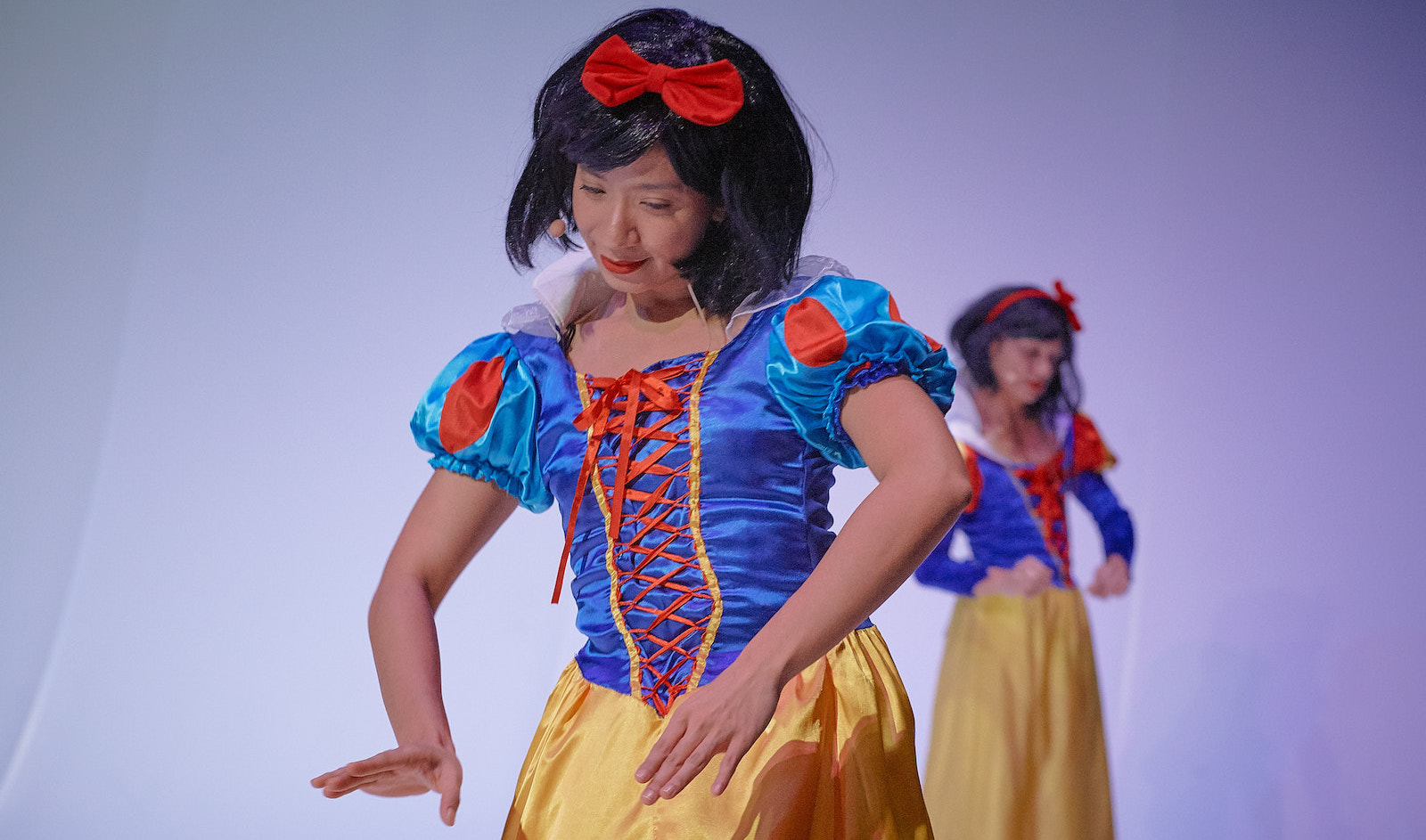
Princess

The Disney imperium made Snow White the epitome of the happy girl in films and leisure parks. Audiences from Los Angeles to Hong Kong are enchanted by their waving and smiling princess actresses. Choreographer Eisa Jocson observes this apparently universal performance of happiness from a particular perspective: Disneyland Hong Kong is one of the most important employers of Philippine dancers in the region but, because of their skin colour, they are only cast in nameless supporting roles.

Together with performance artist Russ Ligtas, Eisa Jocson hijacks Snow White’s physicality and speech and creates a playing field of identities. By means of mimicry and reproduction they overwrite the entertainment system’s pre-programed narratives and corrupt a closed world with their foreign bodies.

In keeping with her previous solo works, Jocson continues in Princess to examine the interrelations of emotional labour, embodiment and the construction of racial and gender identities.

Eisa Jocson

Eisa Jocson is a contemporary choreographer and dancer from the Philippines. Trained as a visual artist, with a background in ballet, she won the title of 2010 Pole Art Champion in Manila.

In her work, she deals with the interconnections of ‘sex’, ‘affective work’, ‘migration’ and ‘corporeality’, for instance, by exploring the economics of pole dancing. She has also acquired the technique of macho dancing, a form of hyper masculine, erotic dance primarily practiced in Philippine gay bars, and engaged herself in the roles of Philippine hostesses, who, dressed as geishas, serve as projection surfaces for femininity and sexual desire in Japanese night clubs.

Princess, her first duo, is part one of the series HAPPYLAND, a performance trilogy that examines the labour and performance of happiness in the overall production of fantasy within the context of a globalized entertainment industry.
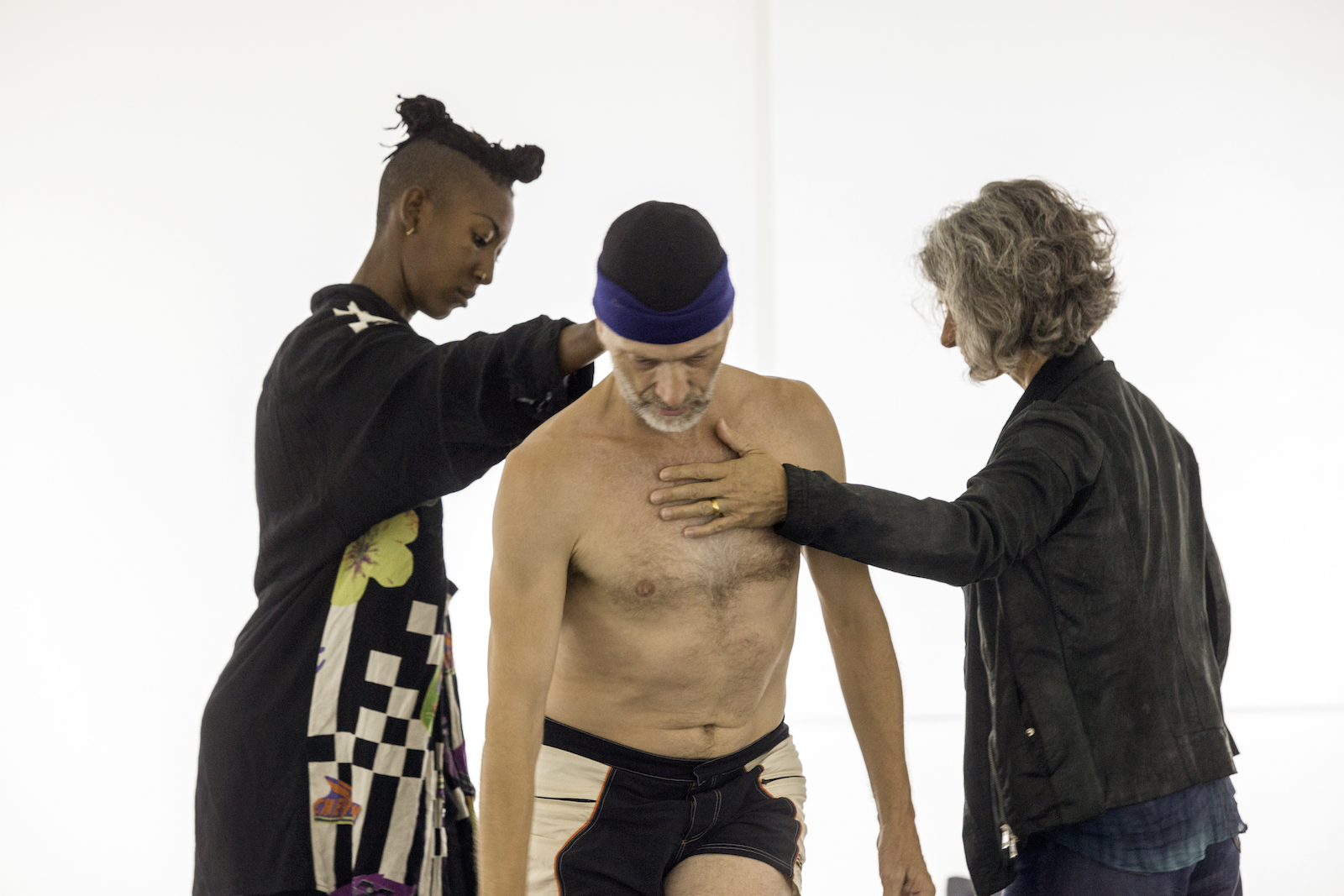
Lifeguard

Benoît Lachambre’s Lifeguard is an intimate stroll of a piece, the first of a triptych to examine our notions of presence and the resonance of movement. A piece that will work to build a very intimate atmosphere, Lifeguard allows for a minute examination of movement, and questions our projections of relationships.

With a syncopated choreographic vocabulary and undulating movements, Lachambre offers a new register for the body’s expression, bringing us along on a search for sensory co-habitation. A subtle connection develops, between the audience and the performer, a mixture of playful trance and vulnerability, and on the stage the body will flow with tangible dexterity.

While examining the role of the artist, the passivity of the spectator and the subtlety of our affect, Lifeguard is an uninhibited discussion about so many aspects of existence.

Benoît Lachambre

Active in the dance community since the 1970s, Benoît Lachambre first learned about Releasing in 1985. This kinesthetic approach to movement and its use of improvisation became an important influence on his choreographic work. He decided to immerse himself in an exploratory approach to movement and its sources, to seek out the authenticity of movement. His work, both as a choreographer and a performer, has at its centre the hyper-awareness of the senses, and the connection between the somatic and the artistic is central to his practice.

He founded his own company in Montréal in 1996, christening it Par B.L.eux, ‘B.L.’ for his own initials and ‘eux’ for the artists he chooses to collaborate with, and who have become central to his artistic process.

Benoît Lachambre is one of the foremost artist-choreographer-performers of his generation. He has created 17 works for his own company since Par B.L.eux was founded and participated in more than 20 productions by other companies, in addition to some 25 commissioned works.

Media

Once Dance Rediscovers the Body: Interview with Benoît Lachambre (Art Circulation, 11.6.2018)

Over Your Fucking Body (Work-in-progress)

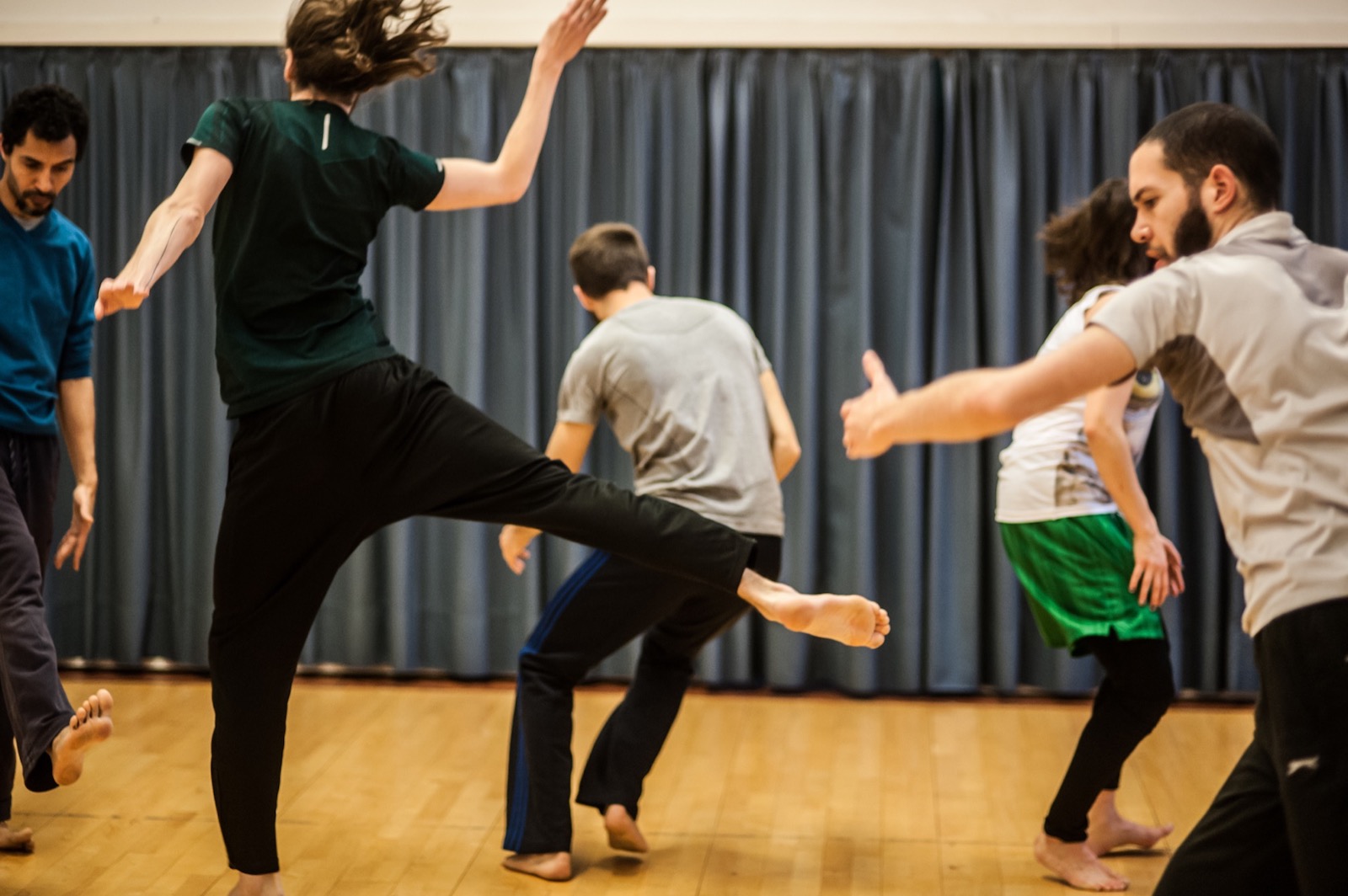
At the end of their first three days of Over Your Fucking Body rehearsals Janina Rajakangas and Neil Callaghan will organise an event open to audience at Kunsthalle Helsinki.

Rajakangas and Callaghan want to make Over Your Fucking Body with the audience present from the start. Instead of a duet, they are making a trio, where audience takes the place of the third performer. The artists will reveal how they approach the piece and share exercises and research methods with anyone wanting to take part.

“Together, we will be looking into the problems proposed by the piece: How understand the audience as one part of a trio and still respect the audience as a diverse presence of individuals? How do individuals form a collective called an audience?”

“We are using the triangle of us and the audience to create possibilities of sharing intimate reactions. The sharing of the opening of the rehearsal period will be uncomfortable and brave, it will be a generous gesture and an ask for a helping hand.”

Before the event open to audience, the artists start the piece with workshop participants at a workshop at Zodiak Centre for New Dance 3.-5.11.2018. Over Your Fucking Body will be premiered at Moving in November Festival 2019.

More information about the workshop and signing up here.

Neil Callaghan and Janina Rajakangas

Neil Callaghan has been making work with various constellations of people since 2002 in the fields of dance, theatre and visual arts. He works alone and in collaboration with Lea Anderson, Doris Uhlich, Nicola Coniber, Dan Canham, Requardt & Rosenberg, Simone Kenyon, Janina Rajakangas and Vlatka Horvat. At present he tours with Until Our Hearts Stop by Meg Stuart/Damaged Goods.

Janina Rajakangas works mainly as a choreographer, with a practice including performing, teaching and public reflection. Her latest directed works are Dinosaur (2015),  Teen (2017) and Canary (2018). As a performer she works for Frauke Requardt, Requardt & Rosenberg and Robert Clark in London. In 2018 Janina works on an Artist Grant from Arts Promotion Centre, Finland.

Radical Light

For Radical Light, choreographer Salva Sanchis enters into dialogue with the music of Senjan Jansen and Joris Vermeiren. Under the name Discodesafinado, these two sound designers fuse minimal techno with experimental electronics, creating a wonderful pointillist palette of microsounds, both rhythmic and contemplative, incomprehensible and infectious.

Radical Light is a choreography built entirely around the musical concept of ‘pulse’. It is a straightforward dance, multilayered and unadulterated. In Radical Light dance and music flirt with each other while revolving around a common pulse. One hour of uncompromising sound and movement at 120 beats per minute.

Salva Sanchis

Salva Sanchis was born in Manresa, a town near Barcelona. He followed theatre studies at the Institut del Teatre de Barcelona. In 1995 he moved to Belgium to study at P.A.R.T.S., where he graduated among the first generation of students of the school.

He has created several own performances as well as worked as a guest choreographer for the Rosas company. From 2009 until 2017 Salva Sanchis was part of the artistic leading team of Kunst/Werk, together with choreographer Marc Vanrunxt. Meanwhile Salva left this structure to study psychology.

Hominal / Öhrn

In her new creation, Marie-Caroline Hominal, choreographer, dancer and performer, inverts the relationship between the choreographer and the interpreter. The person she has chosen to direct her is Markus Öhrn, a visionary figure within the European arts scene, whose shows vehemently denounce the control that Western patriarchy has over beings and bodies. As the author of the production, Hominal voluntarily places herself under the authority of the director, Öhrn.

Indeed, the relationship where a man decides what will happen to a woman is one that is familiar to Markus Öhrn. It made a mark on the life of his grandmother, who died a few years ago. She lived in a village in the north of Sweden and was under the total control of the grandfather, a strict and uncompromising patriarchal figure. She was a good mother, a good wife and a good Christian, following social customs and her husband’s orders. Not long before her death, Markus Öhrn asked her what she would do if she could live her life over again, and she replied, quite unexpectedly, that she would be more destructive and would follow her own wishes more often.

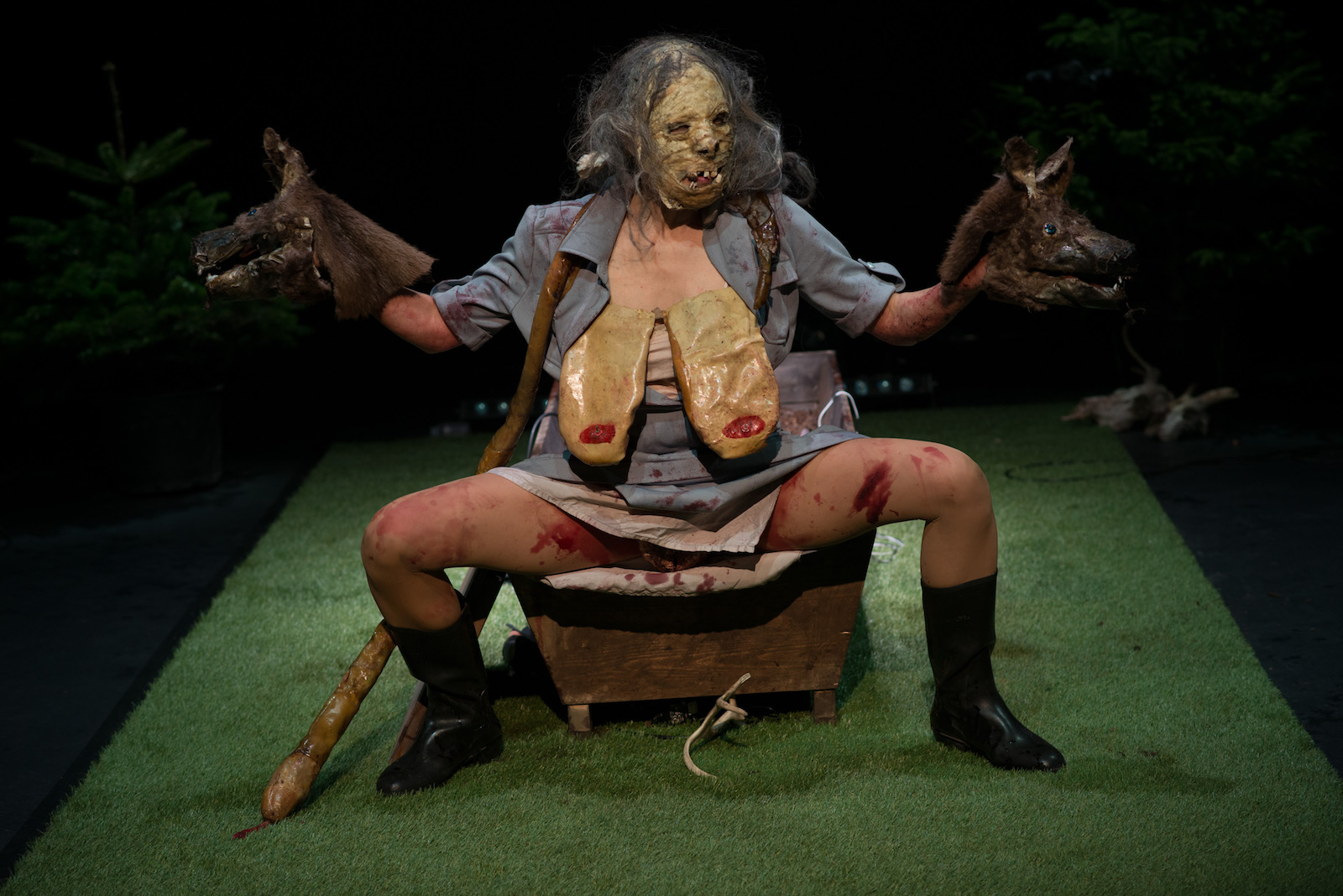
Markus Öhrn has transformed Marie-Caroline Hominal into the Lazarus-like reincarnation of his grandmother, appearing on stage thanks to the masks of theatre and with a transgressive vitality. Here, theatre is the means by which order is renounced to liberate desire and vitality.

Marie-Caroline Hominal and Markus Öhrn

For Marie-Caroline Hominal, dance is space for transformation; she is interested in how the body’s metamorphosis drives a change in the audience’s gaze. She presents nocturnal beings that evolve in the interval between nights that never end, partway between intimacy and artifice, manipulation and letting-go. Here, dance is the other name for the identity that floats between interiority and fantasy.

For their part, Markus Öhrn’s productions call on a cruel grotesqueness that forcibly exaggerates the oppression inherent to perverse family situations. The acting and scenography, as well as the music, are subjected to a brutal, almost nightmarish deformation, yet all the while making the structures and logic of domination explicit.

52 Portraits

52 Portraits is a digital project by choreographer Jonathan Burrows, composer Matteo Fargion and video maker Hugo Glendinning. A short gestural portrait of a dancer or performer was released every Monday throughout 2016.

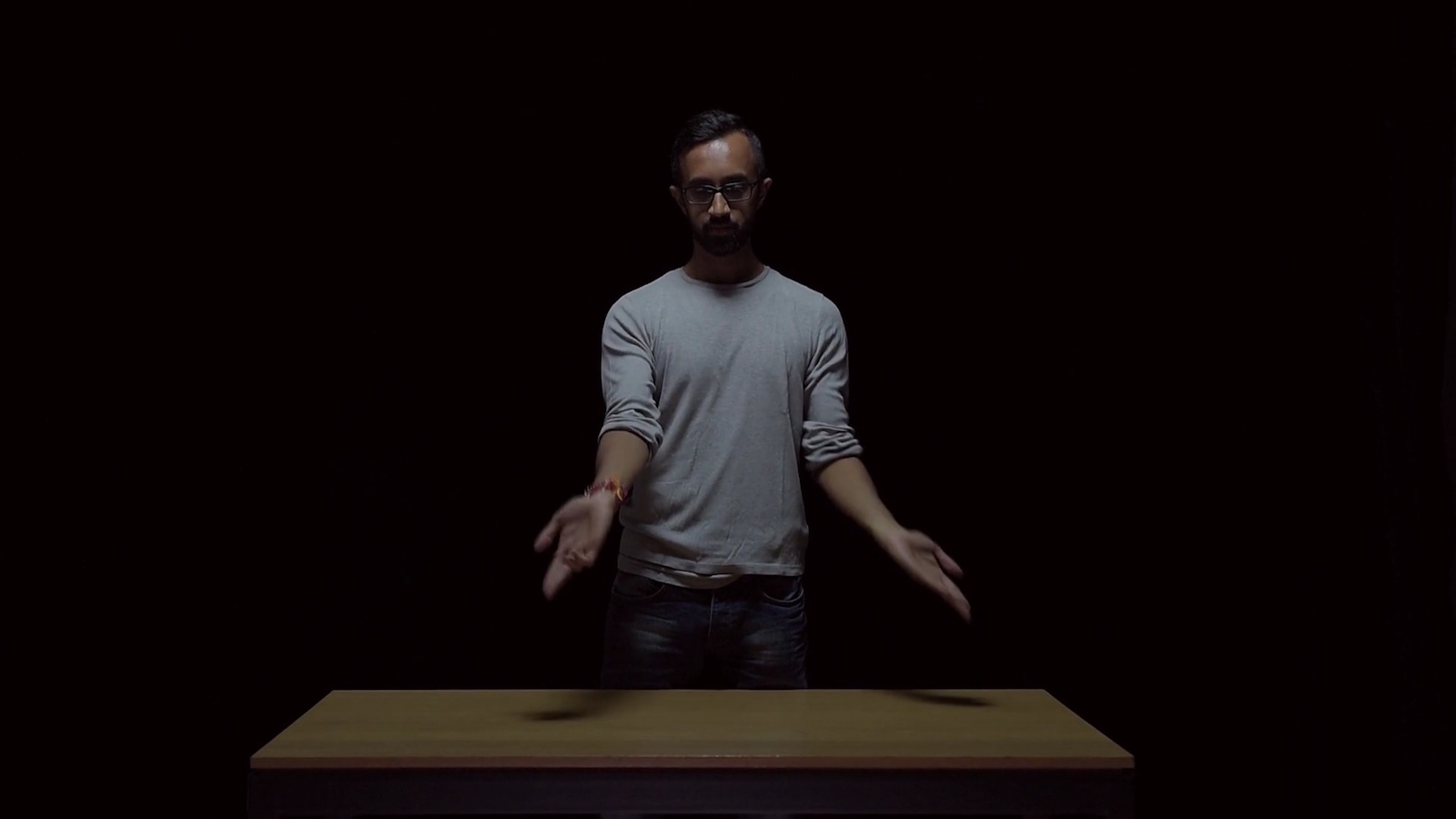
The 52 subjects were drawn from the vibrant London scene, as well as from companies passing through Sadler’s Wells during the course of the year. Each portrait is a very personal dance, filmed sitting at a table and accompanied by Matteo singing their autobiography based on a tune of their choice. Participants are of all ages, disciplines and cultural backgrounds, including both well-known performers and makers and younger artists.

52 Portraits builds on the success of the Olivier Award nominated The Elders Project, made by Burrows and Fargion in 2014 for Elixir Festival at Sadler’s Wells. Like The Elders Project, this will be an epic love song written to an art form. Reactions to the portraits made so far have testified to the profound, funny and surprising power of the project, which reveals the stories, thoughts and struggles of dancers in an unprecedented way.

Jonathan Burrows, Matteo Fargion, Hugo Glendinning

Choreographer Jonathan Burrows has worked with composer Matteo Fargion for twenty-five years, building an ongoing body of work that continues to tour widely internationally. The two men are co-produced by Kaaitheater Brussels, PACT Zollverein Essen, Sadler’s Wells Theatre London and BIT Teatergarasjen Bergen, and are currently in-house artists at the Nightingale Brighton. Burrows is a visiting member of faculty at P.A.R.T.S Brussels and has also been Guest Professor at universities in Berlin, Gent, Giessen, Hamburg and London.

Matteo Fargion is a composer, performer and teacher. He studied with Kevin Volans and Howard Skempton, and his music has been performed by leading players worldwide. Matteo has worked in dance and theatre for many years, collaborating with choreographers and directors here and abroad, including his ongoing work with Jonathan Burrows, as well as several collaborations as composer and performer with Siobhan Davies, and with Thomas Ostermeier at the Schaubühne Berlin.

Hugo Glendinning has been working as a photographer and film maker for twenty-nine years, with an output stretching across the cultural industries from art collaborations, through production and performance documentation to portrait work. He has worked with most leading British theatre and dance companies and has collaborated in particular for many years with Tim Etchells and Forced Entertainment Theatre Company.

See more on the 52 Portraits website.

Media

52 Portraits: a year of solos capturing dancers’ fears and freedom (The Guardian, 9.8.2016)
At 52 Portraits, the Stories Behind the Dancers (The New York Times, 24.8.2016)
Jonathan Burrows, Matteo Fargion & Hugo Glendinning – 52 Portraits (DanceTabs, 30.1.2017)

Brume de Mer

”Soils and trees with no snails and leaves
Snails and leaves with no past dreams

Shores, Meadows, Mountains, Flood.
Spleens, Lungs, Livers, Glow.”

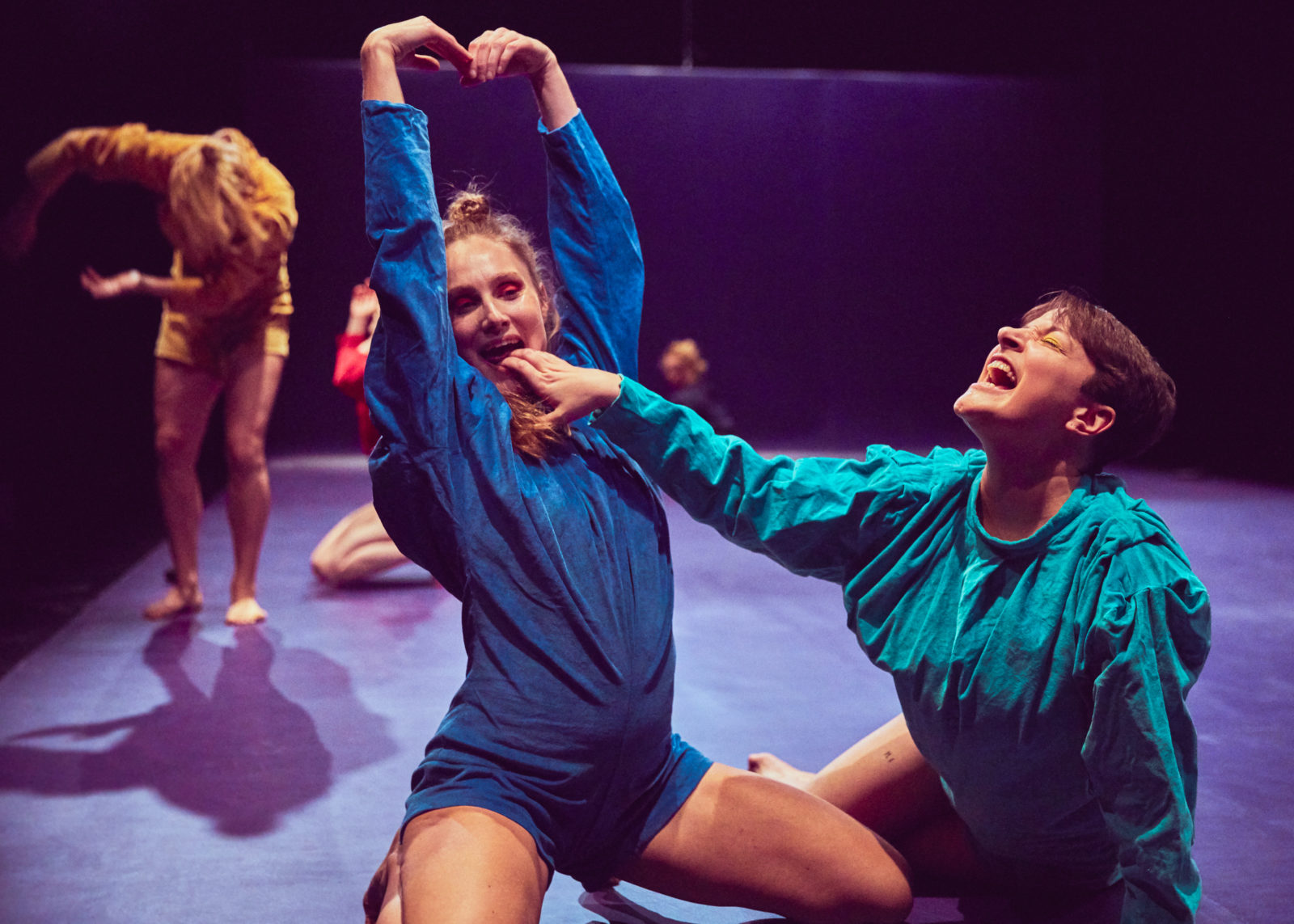
Brume de Mer is a corporal and vocal sonata painted by Elina Pirinen and her workgroup. It consists of the sheer volume produced by the combined abstraction of psycho-neurologically rich ring dance, lyrical field sung with peculiar beauty, scents, intoxicating colors and organ music that accumulates in the soul.

Brume de Mer fumbles for, deforms and reforms ancient and new expressions for desire, obsession, mutism, killing and intuition in an extremely physical way. The body comes out from the body and shares its power with you.

The sonant stage consist of a tremendous original organ composition made by Ville Kabrell, which has eaten alive the original idea of using Sonata no. 2 for Organ by Russian modernist composer Viktor Suslin.

The performance is a self-standing instalment of Pirinen’s series of works based on Russian compositions. For the artists of the workgroup, Brume de Mer is a delightful and novel comeback.

Elina Pirinen

Elina Pirinen is Helsinki-based choreographer, dancer, singer-songwriter-musician, curator, artistic director and pedagogue.

She works closely with timeless feministic psychodynamical, intimate and emansipatoric subjective body, language and visuality as shared thinking, experiencing and politics.

She has been collaborating regularly with Zodiak – Center for New Dance, Kiasma Theater of Kiasma Museum of Contemporary Art, performance art venue Mad House and Performance Art Society. She is responsable for the dance art education in the Degree Programme in Acting in Swedish in Theatre Academy of University of the Arts Helsinki.

She also works with domestic animals in need and makes romantically experimental baroque-rockmusic with her orchestra.

Read more

Interview with Elina Pirinen by Zodiak – Center for New Dance (in Finnish)