The Second Body

Ola Maciejewska draws inspiration from Daisy Hildyard’s book The Second Body, diving into the urgent dialogue on human impact on the climate and ecology. Hildyard’s narrative proposes that humans possess two bodies: the tangible flesh and bone, and an abstract form intertwined with the environment. 

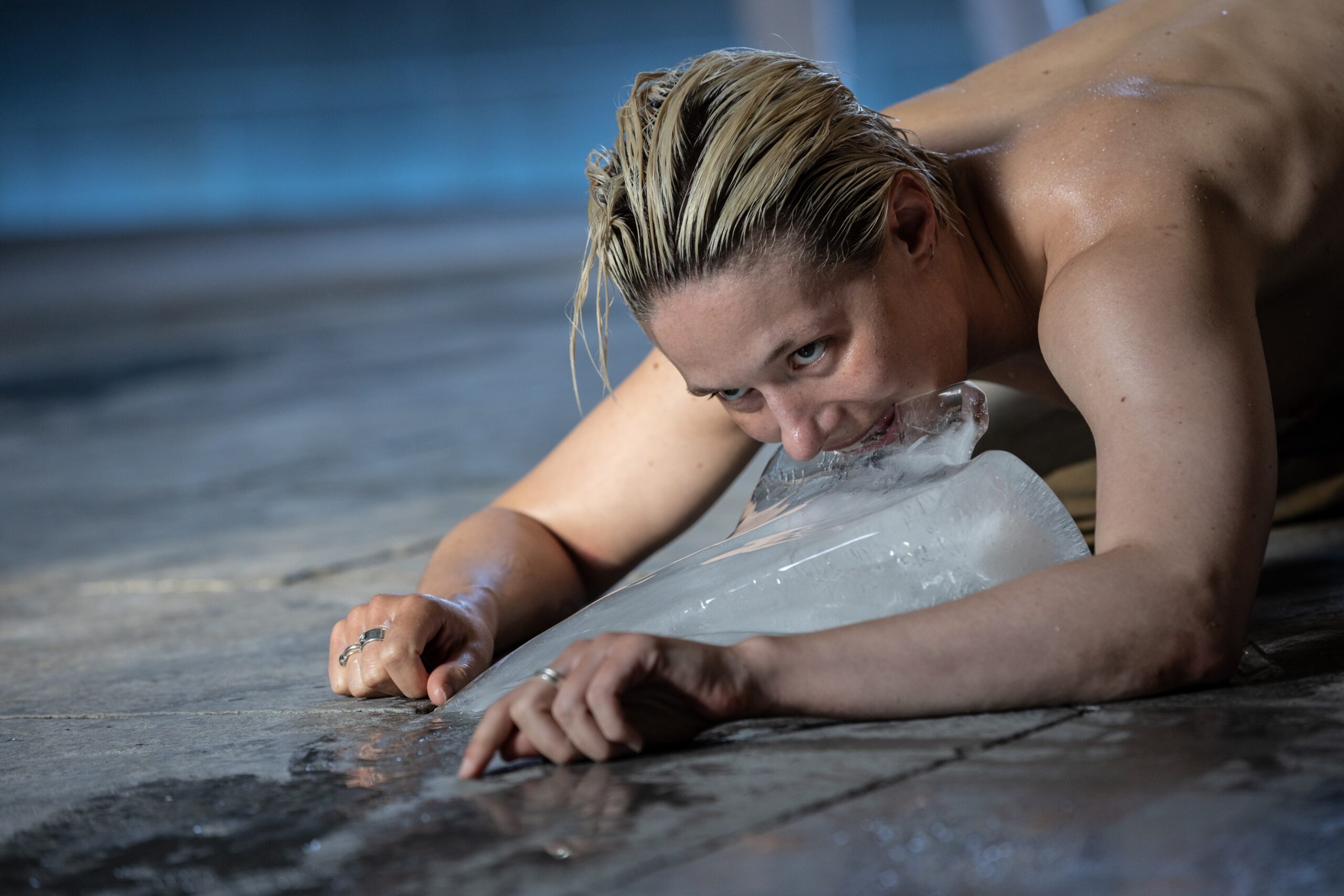
Intrigued by this ambivalence, Maciejewska explores the dissolving of the boundaries between object and subject, animate and inanimate, to the point where we can observe the choreographic process of matter and bodies becoming interrelated and co-dependent. On stage, a human body and a block of ice—one, a complex organism made of muscles, bones and veins, 80% of which is liquid; the other, made of frozen tap water. Neither a duet nor a solo, The Second Body invites to witness the permeability of these two bodies of water in constant transformation. A manifesto on interdependence, scale, and radical exteriority, celebrating the immediacy and richness of sensory experience. 

Ola Maciejewska, born in Poland and based in France, is a dancer, artist, and choreographer. Her work explores the intersections between materiality and ephemerality, and movement and its conditions of appearance, offering critical insights into the history of dance. 

Maciejewska’s series on serpentine dances, inspired by Loie Fuller, merges dance and visual art, reflecting on themes of metamorphosis, synesthesia, and hybrid embodiment. Her works have been presented at venues such as the Centre Pompidou Paris, Guggenheim Museum Bilbao, London Royal Opera House, Musée d’Orsay, and various international festivals. 

Maciejewska’s notable projects include Dance Concert and Bombyx Mori, which was presented at Moving in November in 2017. She has taught at institutions like HEAD Geneva and the Centre National de la Danse Pantin. 

In 2022, she received a grant from the Watermill Center and was an associate artist for the Mondes Nouveaux project by the French Ministry of Culture. Her piece FIGURY (przestrzenne) won the Gallery Prize from the Nadežda Petrović gallery. In 2023, she premiered The Second Body and is currently working on a new project set to debut in 2025 at CNDC Angers. 

A Book of Dances

A Book of Dances is a collection of written choreographies by Finnish-based artists Anne Naukkarinen, Laura Cemin, Mikko Niemistö, and Marika Peura, and Swedish-based artists BamBam Frost, Ofelia Jarl Ortega, and Pontus Pettersson.   The book is initiated and edited by choreographer, performer, and visual artist Anne Naukkarinen, and compiles some of the current thinking amongst their peers within expanded choreography.  

A Book of Dances brings attention to the contradictions, translations, and intimate relationships between dance and language, as well as drawing lines between the etymological roots of the word ‘choreography’: khoreia, which refers to “dancing together”, and graphia, which signifies “writing”.  A Book of Dances explores language as a writing-based approach to choreographic practice. The languages often used in choreographic processes are instructions, scores, reflections, casual conversations, and collective and subjective fantasies. These tools become ways to create a common ground that is never fully graspable, guiding our understanding, interpretation, and expression of internal and external realities. The resulting performed choreographies might not use language in their enactment, but the common ground of multiple languages lingers, affecting the performing bodies.  

In  A Book of Dances, multiple languages are intertwined with the situated knowledge and histories of the participating artists, each embedded within specific social contexts. The book’s aim is not to define choreographic practices as such, but to create a space for writing that engages with and embodies diverse perspectives on world-making. Thus, the process of meaning-making becomes situated, relational, and unstable—it shifts constantly. 

The book launch takes place at Moving in November, where the artist-contributors will gather for a discussion hosted by choreographer and dancer Emmi Venna.

Anne Naukkarinen (b.1987) is a Helsinki-based choreographer, performer, and visual artist. In her practice she focuses on intimate and messy human experiences: affects, emotions, sensations, and thoughts that are in motion in relation to situations. She uses methods from dance and somatic practices, as well as experimental writing—such as note-making—to delve into these elements. Her works mediate and are attentive to the poetic, social, and ecological aspects and structures of making art, and locate themselves in the intersections of contemporary dance, visual art, and the expanded field of choreography. Her recent works have been presented at Titanik Gallery, MAA-Tila Project Space, Kunsthalle Seinäjoki, Mad House Helsinki, Kunsthalle Helsinki, and Contemporary Art Space Kutomo. Naukkarinen is also a curator at the Performance art venue Mad House Helsinki.  

Laura Cemin (b. 1992) is an Italian visual artist and choreographer based in Helsinki. Her work delves into the choreographic power of language, examining how language influences movement and physical interactions. In addition to her artistic practice as an author, Laura works as a dance dramaturg and guest lecturer at various international institutions.  

BamBam Frost (b 1987) is a performer, choreographer and visual artist based in Stockholm. She moves through different contexts and artistic materials, but often returns to playing with the thought of bodies as carriers of historical, contemporary and speculative future events that she through fictional ideas can manipulate. Her recent work has been shown at Dansens Hus Stockholm, MDT Stockholm, Dansens Hus Oslo, Dansehallerne Copenhagen, Arsenic Lausanne, Festival Parallelle Marseille, Inkonst Malmö, Kaaitheatre Brussels, Tanzquartier Vienna, the Modern Museum in Stockholm and others. 

Ofelia Jarl Ortega (b. 1990) is a Chilean-Swedish choreographer and performer based in Stockholm. Her work centres around vulnerability and femininity, often with a suggestive erotic aesthetic. Questions around power and group dynamics are at the core of her investigations. Her work has been presented both nationally and internationally since 2015, at venues such as ImPulsTanz, Vienna; MDT, Stockholm; Arsenic – Lausanne and Moving in November, Helsinki.  

Pontus Pettersson (b. 1983) is a visual artist, dancer, curator, and choreographer based in Stockholm, who works at the intersections of contemporary dance, the expanded field of choreography, and visual art. His practice spans installation, poetry, and fountains, to object-making, festivals, cat practicing, and dancing. He is a choreographer deeply invested in material things, and a painter of fleeting moments.  

Mikko Niemistö (b. 1984) is a choreographer from Helsinki whose work explores the formulation of the self through silent knowledge and the accumulation of bodily memories. Niemistö’s interests lie in the shattered realities of contemporary culture, and the things that linger in the background, like noise and the flow of consciousness. He currently focuses on the shadow zones of everyday reality, like dreams, psychedelia, and the supernatural. His works have been shown recently at Moving in November, Helsinki, ImPulsTanz, Vienna, Zodiak – The Center for New Dance, Helsinkiand Inkonst, Malmö.  

Marika Peura (b. 1987) is a choreographer, dancer, and performer based in Helsinki. She works in multidisciplinary ways in the fields of dance and performance. Peura is interested in the emotional, poetic, and political nature that unfolds from the experientiality of the body. Her ongoing practice is centred around the intimacy of the dancing body; it dwells in emotional, sensual, and social energies at the intersections of club/rave dance and culture, and contemporary choreography. 

A Book of Dances is published by Moving in November and Teatterin Uusi Alku kirjasto T/U/A (Theater’s New Base Library).  

T/U/A is a publishing company that publishes performance texts, plays seeking new forms, choreography annotations, essays focusing on performing arts, and other kinds of texts related to and from the stage in Finland and abroad. T/U/A is based on the desire to create an actor in the Finnish publishing industry that increases the reading of performing arts’ texts, and generates (performing arts) discussions.

GRIT (for what it’s worth)

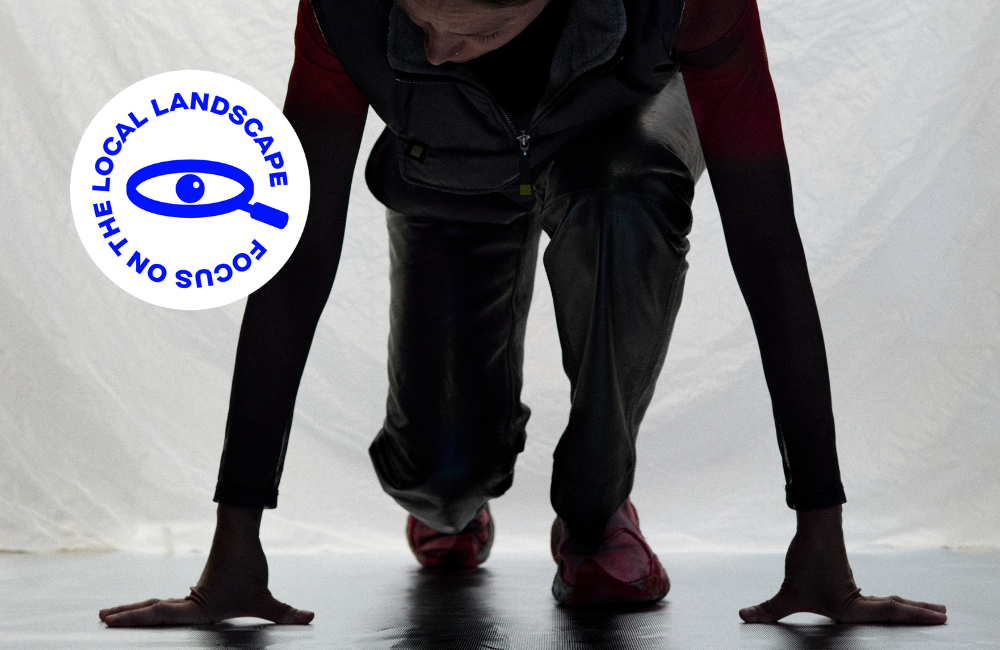
GRIT (for what it’s worth) by Milla Koistinen is an opening for her upcoming performance series, reflecting personal endurance in physical and mental stamina, a requirement to push boundaries and transcend limitations. The performance captures the essence of resilience, duration, persistence and hardiness. GRIT (for what it’s worth) examines the ability to persevere through hardships, fatigue and obstacles, embodying the spirit of endurance in its most personal form. 

Endurance is the central theme of the upcoming performance series, which delves into the realms of physical labour, determination, commitment and perseverance, especially as recognised within sports but also reflected in culture and society. The work investigates the way that sports and performing arts can create a shared social space and act as a cultural and political force, influencing our collective identity and societal dynamics. 

This performance is a part of the Focus on the Local Landscape within the frame of Moving in November.  

Milla Koistinen is a Helsinki-Berlin-based Finnish choreographer. She graduated from the Theatre Academy in Helsinki with an MA in Dance and holds an MA in Choreography from HZT Berlin. She has collaborated with artists such as Kristian Smeds, Hiroaki Umeda and Christine Gaigg, and her work has been featured in venues like Radialsystem Berlin, Dance House Helsinki and Tanzhaus NRW. She received a danceWEB scholarship at Impulstanz Vienna in 2010. As a guest teacher, she has taught at institutions including SEAD Salzburg, Tanzhaus NRW, Sasha Waltz & Guests, the Theatre Academy of Helsinki and HZT Berlin. In 2019, she was a lecturer at the Academy of Fine Arts in Helsinki. From 2020 to 2024, her work is supported by apap – FEMINIST FUTURES, co-funded by the Creative Europe Programme of the European Union. 

Whitewashing

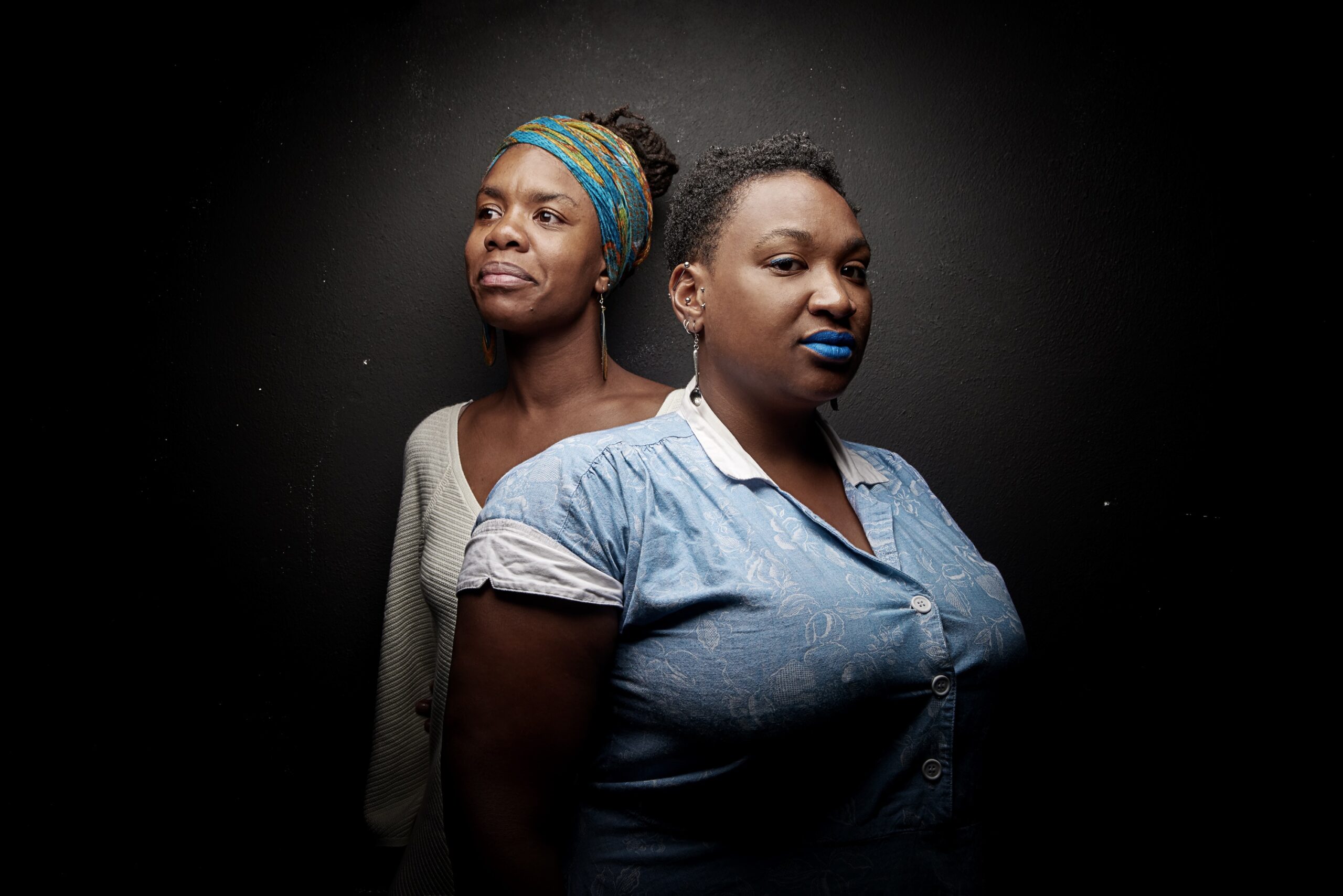
The term “Whitewashing” often refers to white actors portraying racialized characters. In this performance, Rébecca Chaillon redefines and reclaims the term to address skin lightening. She reveals how the pressures of racism diminish the self-esteem of Black women, weaving her way out of mainstream beauty standards. On stage she explores the tension of being a Black cleaning woman in a white society by scrubbing bleach on the floor, then on her own skin. She creates a ritual of skin and hair care that affirms their distinct existence against the alienating force of discrimination. The audience is invited to watch closely, as a body that society tries to render invisible becomes increasingly visible and undamaged.  

Whitewashing is the smaller sister of Chaillon’s epic work: Carte noire nommée désire. With seven performers of African descent coming from various artistic backgrounds, she creates a community on stage that embarks on a poetic journey of initiation into a country whose imagination hasn’t gone through decolonization. 

In her work, Chaillon crafts a profound disarray that spills words, inverts images, and elevates bodies. How can one cultivate desire in a society where machismo and colonialism continue to taint imaginations? This sharing of revolt and wounds comes with a price for everyone involved—performers and spectators alike. 

Rébecca Chaillon, an author, director, and performer, draws inspiration from her multiple identities to create bold and transgressive performances that incorporate her practice of artistic self-makeup and her fascination with food. Born in Martinique and raised in Picardy, she began her artistic journey in Paris, studying performing arts at the Conservatoire of the 20th arrondissement. She has worked with theatre companies like Entrées de jeu and she founded her own company: Dans le Ventre, in 2006. 

She has created a solo performance, L’Estomac dans la peau (winner of the CNT/ARCENA award in the Plural Dramaturgies category in 2012), as well as short performance pieces, featured in numerous festivals and venues such as La Ferme du Buisson and the Scène Nationale d’Orléans. Her next creation, Monstres d’amour (je vais te donner une bonne raison de crier), is a duo with her main collaborator Elisa Monteil, centered around amorous cannibalism and Issei Sagawa.  

Chaillons artistic pursuits extend beyond traditional theatre to screen acting and documentary involvement, focusing on performance art and societal issues. Recognized for her inventive approach, she was appointed as an associated artist at Théâtre de la Manufacture – CDN de Nancy.  

Mycoscores / Choreospores

Mycoscores / Choreospores by Maija Hirvanen is a network of artistic scores for exploring the connections between fungal and human ways of being, particularly through movement and dance. The scores propose starting points for dancing, weaving together social connections, composing and exploring performativity. Mycoscores / Choreospores work with ecological models for dance making and dramaturgy. Alongside her artistic work, Maija has had a practice of foraging forest fungi since her childhood.

The printed publication of Mycoscores / Choreospores consists of 31 cards, each presenting a single score and an accompanying booklet. (Publisher Friends of Physical Contemporary Art, in collaboration with DAS Research/Academy of Theatre and Dance, Amsterdam)

13.11. Publication launch & presentation @Kiasma seminar space

At the Mycoscores / Choreospores Helsinki publication launch and presentation hosted by Moving in November, Maija activates the scores by an introduction, a discussion around interconnections of fungal and artistic practice and lightheartedly presenting some of the scores. There’s a possibility to buy a copy of the publication at the site.

16-16:30 lingering, chatting, possibility to buy Mycoscores / Choreospores

16:30-18:00 presentation

11.-15.11. 1-1 card readings @Kiasma seminar space & Caisa

During the festival, Maija will do playful card readings for one person at the time with and through the Mycoscores / Choreospores cards. For these sessions, please book a ticket to reserve your time – the ticket includes a copy of the publication and a 1-1 reading with Maija.

This event is a part of the Focus on the Local Landscape program within the frame of Moving in November.

Maija Hirvanen is a choreographer and performance maker. Her interests range from the relationship between art and different belief systems and ways of re-learning to questions of embodiment and the more-than-human approach in performance and choreography. She makes performances on stages and in places, writes, researches, and teaches. Hirvanen’s work has been presented at festivals and venues e.g. Tanz im August/Hebbel am Ufer/Berlin, ImpulsTanz/Vienna, Sadler’s Wells/London, SPRING Festival/Utrecht, Seoul Performing Arts Festival, Rencontres chorégraphiques internationales de Seine-Saint-Denis, SAAL Biennaal/Tallinn and Dansens Hus/Stockholm, Zodiak, Kiasma, Baltic Circle Festival and Helsinki Festival. Maija is the Artistic Professor in Dance 2024–2028, granted by the Arts Promotion Centre Finland.

The Making of Pinocchio

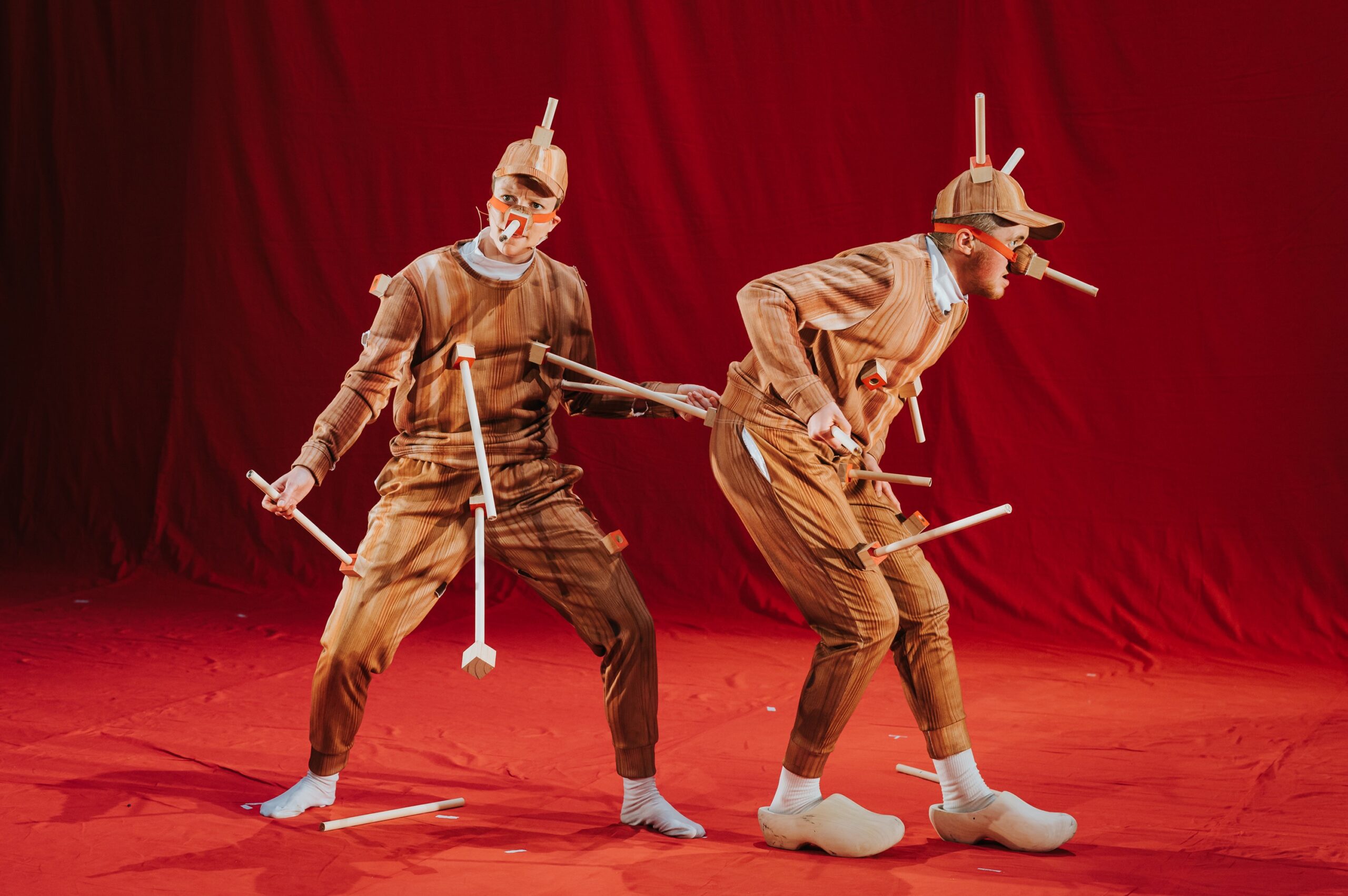
A true tale of love and transition told through the story of Pinocchio. Set in a fictional film studio, you are invited to go behind the scenes of Cade & MacAskill’s creative process and their relationship, and question what it takes to tell your truth. Artists and lovers Rosana Cade and Ivor MacAskill have been creating The Making of Pinocchio since 2018, alongside and in response to Ivor’s gender transition.  

From this simulated film-set staging emerges a deeply personal narrative—a true tale of love exploring the boundless realms of queer imagination and joy. With the central focus on a puppet who wants to be a real boy, The Making of Pinocchio encourages us to question what we mean by real: Does it mean moulding yourself into existing categories in order to be seen as real, is it an act of creating new categories and demands to be recognized as legitimate, or is the queer approach to deconstruct the very notion of real versus not real entirely? Within a couple, when one partner sheds their assigned gender identity to become a ‘real boy’, undertaking a series of social, physical and administrative changes in the process, the other person might find their own psyche and identity changing too. The Making of Pinocchio seamlessly navigates the realms of fantasy and authenticity, blending humour with intimacy both on stage and on screen. 

Rosana Cade (they/them) and Ivor MacAskill (he/him) are pioneering queer artists based in Glasgow, Scotland, renowned for their innovative approach to experimental theatre, live art, and queer cabaret. Their collaborative work spans film, children’s performance, site-specific installations, and socially engaged practices. 

They are passionate advocates for LGBTQIA+ rights and culture, infusing their creations with playful theatricality and unique sonic elements. Their project Moot Moot (2018), commissioned by Fierce-Birmingham, The Marlborough-Brighton, and The Yard-London, premiered at the Edinburgh Festival Fringe and toured across Europe. Beyond their artistic endeavours, they mentor LGBTQIA+ youth in Glasgow and are spearheading a cooperative for a new community space and second-hand shop. 

Skvallret (The Gossip)

Historically, Pihlajamäki has served as a testing ground for warlords, smugglers, and visionary architects. This area has seen trenches dug, liquor hidden, and fortifications built, until families eventually settled into the newly constructed concrete blocks. But set all that aside. Lower your gaze to about knee height, and you will find where the true drama unfolds. 

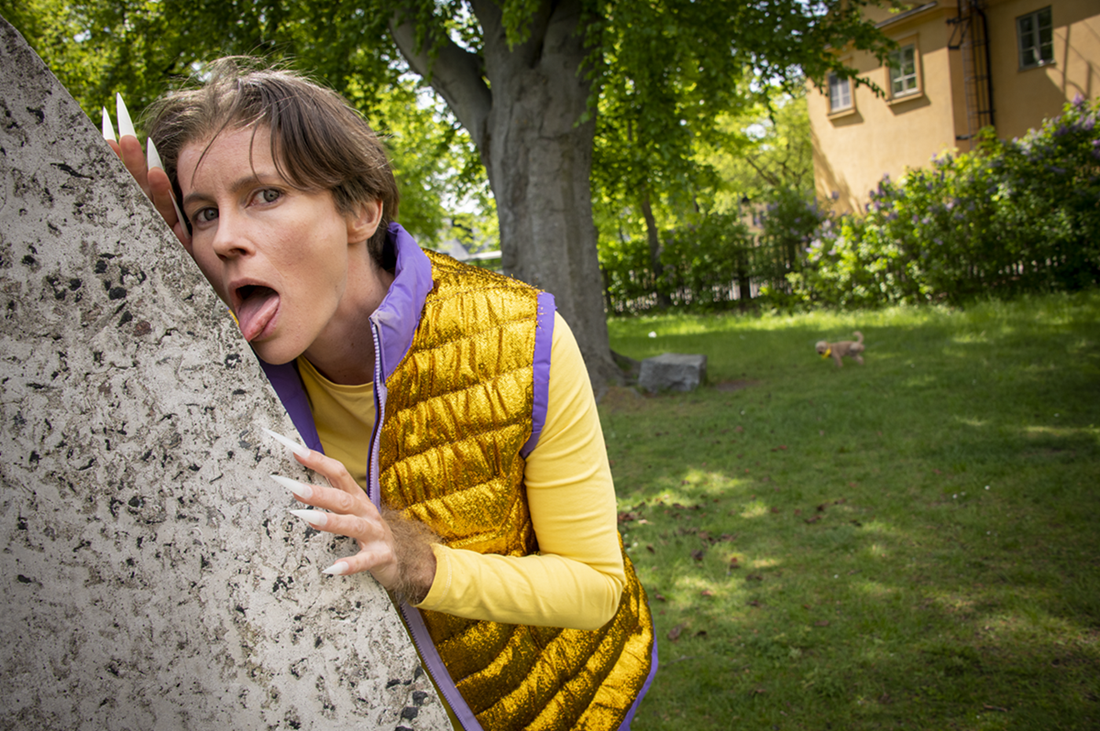
Skvallret (The Gossip) offers a choreographed city tour from the perspective of a dog, following soft paw prints through Pihlajamäki’s history. By focusing on seemingly insignificant details like trash heaps and pee spots, it shifts attention from the grand to the intimate. After all, most things in the world are lickable if you give them a chance. 

First developed for Sundsvall, Sweden, in 2020, Moving in November invited Stina Nyberg to create a Helsinki version of Skvallret (The Gossip) specifically for the festival and the area of Pihlajamäki. 

The walk is performed by Stina Nyberg with the support of Gebsi the dog, Seppo Luusalo and Bella Riihikallio. It takes approximately 1 hour and dogs are welcome to join. 

Stina Nyberg is a Swedish dancer and choreographer who uses choreography to explore new passions, from doom and electricity to mindreading and ecology. Her recent works include The Dawn Chorus (Norrdans 2022), Sweet (2022), and Chest (2024). Stina’s work has been performed at festivals such as Tanz im August Berlin, Block Universe, and the Iceland Dance Festival. She has created commissioned pieces for Cullberg, Norrdans, and Riksteatern. She also collaborates on feminist dance history with Samlingen and on symposiums about collective thinking with urban planner Sofia Wiberg. From 2024, Stina will be part of Rose Choreographic School. 

Soup Talk Panel

This year, Moving in November festival dives into a dialogue about the relationship between the local dance scene in Helsinki, its entanglements with the international sphere, and the higher education of dance artists in Finland. Artistic Director Kerstin Schroth and choreographer Simo Kellokumpu, lecturer from the MA in Dance Performance program at the Theatre Academy, University of the Arts Helsinki, have been engaging in continuous discussions on this topic over the past few months. They now invite the audience to join this dialogue in the form of a Soup Talk panel discussion on November 15th, from 12:00 to 13:30, at the Caisa Cultural Centre. 

Simo: Hello Kerstin, I’m glad that we have been having the discussion going on around the relations between higher education of dance artists, local scenes and international events such as Moving in November. Thank you for finding the time to share your thoughts with me. Let me start by asking, how do you understand something we might call ‘the local scene’? From my perspective as an artist and an educator in the MA in Dance performance -program, one of the ever-evolving core questions is, where do the highly-educated dance artists go when it comes to the ‘local’ and/or ‘international’? What do we need to include into the curriculums to offer them the best possible conditions to understand, process, step into, and contribute to the professional fields? I use plural intentionally to acknowledge the simultaneity of diverse local-international scenes. Also, we can question here the binary ‘local-international’ and recognize realities and perspectives of hybridization. What do you think? Why is it important for you to reach out as an artistic director of an international festival in Helsinki?  

Kerstin: Hello Simo, it is great to discuss and think along with you, and to highlight these shared thoughts and concerns in this year’s festival.  

When I speak about ‘the local scene’, I am referring to locally working artists, more precisely artists from the performing arts scene, who are working independently or have formed a company. These artists are not embedded in the structure and payroll system of a bigger venue, but have to apply for project funding, if they want to realize their own artistic projects. Often, they also work as collaborators with various other artists on their performances and may also work as teachers or in other jobs to maintain a living. Thinking of hybridization, aren’t artists always responding to and are mostly entangled in the locally operating logics of cultural politics, and are dependent on them?  

I like to think of the local scene as the local landscape–a landscape that shapes and nourishes artistic development and thoughts, and potentially raises questions within a society.  

I can’t imagine an international festival situated within a city context detached from this local landscape. Although it’s not my obligation to present performances from locally working artists in my program, I am naturally interested in the artistic discourse of that scene–what artists are working on and discussing, and what they are wishing and hoping for. It’s also important to understand what is missing and what I can add to this landscape, the different discourse through my program and initiatives. After all, the artists are also forming a big part of the Moving in November audience. Specifically, in Helsinki/Finland, I am looking at a performing arts landscape situated at the European periphery. One does not easily pass by Helsinki and being up North; one does not easily jump on a train to another country to see performances and meet fellow colleagues. In my opinion, an international festival has the ability to shine light on the local working artists and to build bridges between an international and a local scene. For me, it’s important to create space for these connections and encounters, and initiate conversations within the festival context, to nourish both sides. This is one strategy to bring the local landscape into focus and create visibility and opportunities for a scene.  

Simo, I am curious–when you think about designing a curriculum for the university, what are your strategies for preparing the students to step out of the university and be prepared for a professional local and/or international landscape? 

Simo: Yes, I understand, good points indeed. When it comes to the MA program, many students have already worked in the professional field when entering the program. In that sense, they already carry with themselves local and international experiences. The program offers a structured place to deepen one’s views and thinking through a curriculum in which local and international guests are in an important artistic-pedagogical role. As part of focusing on the studies and simultaneously to get in touch with manifold methodologies, this is a way to get new connections of course. The program tries to sustain a possibility for the cohort to visit one international platform somewhere else than in Finland during the studies. This year the cohort will participate to Oktoberdans -festival in Bergen. The initiative with Moving in November is an important one for the program in sustaining and developing such connections in Helsinki. There’re also good connections with other programs in the Uniarts, e.g with MA in Choreography, and the teams are in active dialogue with each other.  Working together institutionally is necessary in supporting artist-students futures, I think. 

The other thing that I wanted to address here as kind of a warm-up for the Soup Talk Panel is that in this MA-program, our team aims to offer for the young professionals educational support, tools and orientation for sustainable artistic career in the current challenging times. One might even talk about the survival kit nowadays in Finland’s cultural-economical and political settings. My personal motivation to support young professionals’ processes deepening their artistic thinking and practices in the program, stems from believing that focused and dialogic learning processes with peers can introduce the artist-students the art-making orientation which couples them to the society durationally more than momentarily, kind of as long-distance runners instead of sprinters, if I may playfully here describe the career choice or mode of making art like that. Once you focus on your artistic interests in supportive and connected learning environment with invited guest-artists and experts, the working – and maybe also future funding – possibilities beyond local can be opened. Does this make sense to you? From the perspective of curating an international program in Finland, what is your experience on this?     

Kerstin: This makes absolutely sense to me and links very much to my thoughts on connections I like to foster between the international traveling artists who come to Moving in November and the local artistic scene. I believe in encounters, conversations, and in shared interests. I also believe in the small seeds we can plant and small changes we can make that make a difference, helping to grow and inspire an artistic career or flourish an entire scene. We learn from others, and the more we think together and gather in the actual cultural-political landscape and economic situation, the better.  

For this year’s festival, we very much considered this approach: what happens when we (local working artists, collaborating institutions and Moving in November) gather resources (spaces, time, communication resources, funding) and bring together all that we have to create a program called: Focus on the Local Landscape. It will be a bit like a picnic – when everybody contributes something else, we get a whole complete meal.  

I really resonate with the idea of the long-distance runner versus the sprinter, especially from my experience in the performing arts scene and as a manager of a choreographer for 13 years. It’s a good metaphor. I have learned that many things don’t happen immediately; they need time and development. When advising students, I always emphasize not reaching for the stars immediately, such as aiming for an international tour right away. Instead, I encourage them to look around at what they have and to build slowly from there. It’s crucial not to let artistic ideas being eaten up by overly high and short-term expectations, but indeed, to rather learn to be a long-distance runner. Working in this field demands a lot of patience, stamina and ultimately strong, solid collaborations that develop over time. 

What do you think about that? 

Simo: I do agree, also from my own experience. There’s no rush anywhere. From one viewpoint I see art-making as sustaining and shaping cultural sediments and spheres on/in which one lives or will live. But I also understand that it’s easy to say such thing and in diverse life-situations to face the economic situation for arts is another. Bringing this back to the MA program, it takes time to recognize and clarify the elements that constitute one’s practice. Time to explore those not-yet-seen elements, or starting points for them, is also one aspect that the MA program can offer for already working artists. This means to introduce the research-orientation towards the making as well, and the collective invention of alternative ecosystems and commons that respond to constant societal changes and recurrent patterns of exclusion. That can be one way to support the durational orientation towards the relations between art and life.  

This all is very interesting and I’m looking forward to sharing more soon in our Soup Talk Panel. Should we now invite the audience to continue thinking together in the festival and talk about this further in the panel discussion, here in Helsinki?  

Kerstin: Yes, let’s do that! I am very much looking forward to this Soup Talk panel and to closely discuss and think about a “What Now?”: how do we continue from here? How to imagine new strategies for our performing arts landscape to continue working, researching and presenting under the given cultural-political circumstances?  

Last but not least, I am especially glad about the panelists who will share their perspectives with us. 

Simo & Kerstin: Welcome everyone, see you in the festival and the Soup Talk -series! 

Raphaël Beau (he/they) is a white man, curious for more fluidity in the expression of their gender, able bodied based in Helsinki, originally from France. They mostly work as a performer and movement workshops facilitator. Their performances start from the contexts and places where they take place. Raphaël figures out with the audience what they could attempt and play with together during the performance. They experiences performing as a way of being and meeting with others. They facilitates a weekly open practice “play and act from is here” in Helsinki, inviting people to move and think from their own practices and friction their practices with other participants’ practices. They strives to challenge social norms that are also deep within them, no wonder. They looks for places in the margins, attempts to be as good a friend as possible and cherishes their friends. They feels that there is no other way to be body out, on the streets, being part of social movements advocating for more social justice. They goes as much as they can. How to do otherwise? They also works as a live model, have been working for 10 years as a community facilitator in villages and neighborhoods in the south of France, and wish they can meet you in person to tell you a bit more about who they are, or just be with you. 

Sara Grotenfelt is a choreographer, performance-maker and performer based in Helsinki, Finland. In her artistic practise Sara investigates the movement and placement of emotion and affect in the choreographic event. Her works play with the associative potential of objects and actions and take the absurd seriously. Lately Sara’s work has focused on tweaking the social and aesthetic conventions of the performance situation. Her work has been shown at e.g. Zodiak Stage, Hangö teaterträff, Helsinki City Theatre, Taidehalli and Stockholm Fringe Festival. Sara has performed in works by WAUHAUS (FI), Sari Palmgren (FI), Anna-Sofia Nylund (FI) and Blaue Frau (FI) amongst others. She holds a Master’s degree in choreography from the Theatre Academy of Helsinki (Teak) and a Bachelor’s degree equivalent from The Danish National School of Performing Arts, Copenhagen, Denmark. 

Milla Koistinen is a Helsinki-Berlin-based Finnish choreographer. She graduated from the Theatre Academy in Helsinki with an MA in Dance and holds an MA in Choreography from HZT Berlin. She has collaborated with artists such as Kristian Smeds, Hiroaki Umeda and Christine Gaigg, and her work has been featured in venues like Radialsystem Berlin, Dance House Helsinki and Tanzhaus NRW. She received a danceWEB scholarship at Impulstanz Vienna in 2010. As a guest teacher, she has taught at institutions including SEAD Salzburg, Tanzhaus NRW, Sasha Waltz & Guests, the Theatre Academy of Helsinki and HZT Berlin. In 2019, she was a lecturer at the Academy of Fine Arts in Helsinki. From 2020 to 2024, her work is supported by apap – FEMINIST FUTURES, co-funded by the Creative Europe Programme of the European Union.

Anne Naukkarinen (b.1987) is a Helsinki-based choreographer, performer, and visual artist. In her practice she focuses on intimate and messy human experiences: affects, emotions, sensations, and thoughts that are in motion in relation to situations. She uses methods from dance and somatic practices, as well as experimental writing—such as note-making—to delve into these elements. Her works mediate and are attentive to the poetic, social, and ecological aspects and structures of making art, and locate themselves in the intersections of contemporary dance, visual art, and the expanded field of choreography. Her recent works have been presented at Titanik Gallery, MAA-Tila Project Space, Kunsthalle Seinäjoki, Mad House Helsinki, Kunsthalle Helsinki, and Contemporary Art Space Kutomo. Naukkarinen is also a curator at the Performance art venue Mad House Helsinki.

Lydia Touliatou is a Helsinki-based choreographer and researcher. Lydia’s main bodily practice is classical Indian dance from Bharatanatyam, whose narrative tools of mudras (hand gestures) and abhinaya (facial expressions) comprise the core concepts of her choreographic experimentation. She is interested in the discourse of decolonising western contemporary dance stages, which she actively addresses through the frame of western spectatorship of eastern-originated movement languages in her works. Lydia’s research focus is the intersection of technology and choreography, and the new potential and areas of choreographic thinking in the digital era. She completed her undergraduate studies in contemporary dance at Trinity Laban (London) and Masters in choreography at the Theatre Academy in Helsinki. Currently, she is part of “Terra-Performing” research project at the Fine Arts Academy, and works on the production of her next piece presented at Zodiak in autumn 2025. 

Simo Kellokumpu is a choreographer and researcher based in Helsinki, working in the fields of choreography and contemporary art. In his work, Kellokumpu explores the transdisciplinary interplay of bodies, choreography, movement, and space/place, influenced by post-internet hyper-reading practices, queer speculative fiction, and site-responsiveness/ability. In addition to his solo work, Kellokumpu collaborates with other artists, and his latest works have been presented at the Toaster Festival in Copenhagen, Tokyo Arts and Space, Kohta Gallery in Helsinki, and Konstmuseet i Norr in Kiruna. After completing a Doctor of Arts degree in 2019 at the Performing Arts Research Centre (TUTKE), Theatre Academy, University of the Arts Helsinki, based on his artistic research project Choreography as Reading Practice, Kellokumpu has worked as a visiting researcher at TUTKE with his postdoctoral artistic research project titled xeno/exo/astro-choreoreadings. In addition to his artistic work, Kellokumpu currently works as a lecturer in the MA in Dance Performance program in the Theatre Academy, Uniarts Helsinki, and as a curator-facilitator at Pengerkatu 7 – Työhuone art space in Helsinki. 
Teak Open Studio

This Open Studio event invites the audience to witness the artistic process behind the final artistic work of the artists-students in the MA in Dance Performance program, by the Theatre Academy Dance Collective (TADaC) in the Theatre Academy, University of the Arts Helsinki. In the curriculum of the MA -studies, TADaC provides an artistic learning environment where artists-students can collaborate with choreographers and makers from various cultural backgrounds and locations, including Finland. The study unit of this artistic work is not only a collective learning process about artistic production, but also offers artists-students the opportunity to tour their work across various venues. By doing so, they can share the work with diverse audiences, and familiarize themselves with professional platforms for potential future collaborations. The Open Studio, realized in collaboration with the Moving in November, marks a meaningful step towards opening this kind of possibilities for dance artists in this MA-program. 

This year, Brazilian choreographer and dancer Renan Martins will choreograph a piece with TADaC. The Moving in November audience is invited to visit the Open Studio, where the working group will share their artistic process. Martins’ work, immersed in practices that celebrate togetherness and resonate with musicality, aims to craft a performance born from genuine collaboration. The choreographer strives to cultivate “an environment where dancers can passionately explore their personal interests and embark on a journey of self-discovery within a cohesive group.” 

„I believe the Open Studio offers a meaningful opportunity to not only meet the MA -cohort but also to think together what it means to pursue a higher-education degree in the arts today. We warmly welcome everyone to join us and experience the open exploration of dance and collaboration.“ (Simo Kellokumpu, Lecturer, MA in Dance Performance program, Theatre Academy, University of the Arts Helsinki) 

This event is a part of the Focus on the Local Landscape program within the frame of Moving in November. 

Renan Martins is a Brazilian choreographer and performer based in Barcelona. He started his artistic path as a young actor in Rio de Janeiro and at the age of 17 moved to Europe to study contemporary dance. He graduated from both SEAD (Salzburg Experimental Academy of Dance) and P.A.R.T.S (Performing Arts Research and Training Studios) where he started developing his choreographic work. His very first full evening piece “Let Me Die In My Footsteps” was chosen by Aerowaves as one of the top works of 2016. Since then he has been making work, performing and touring in various cities in Europe and Brazil. He is a member of Sekoia Artes Performativas, a Portuguese platform that has produced his work since 2018.

Parallel to his choreographic practice, he has been a dancer for Iztok Kovac, Marysia Stoklosa, Anne Teresa de Keersmaeker, Alexandra Waierstall, Ceren Oran, Daniel Linehan and Peter Savel. Since 2013 he has been a member of Damaged Goods/Meg Stuart performing in “Violet”, “Atelier III”, “Projecting [Space[“ and most recently “CASCADE”.

Renan Martins is an active teacher sharing his work in various dance schools, festivals and companies around Europe and Brazil such as Impulstanz, Ballet National de Marseille, Norwegian Theatre Academy, Theater Bremen, B12, Danish National School of Performing Arts, Dance Theatre Heidelberg, SKH, Danscentrum Stockholm, Tictac Art Center, Antwerp Royal Conservatory, Centro de Artes da Maré/Lia Rodrigues and P.A.R.T.S., to name a few. He is also a founding member of DDE, a research project on diversity and inclusion together with the faculty of P.A.R.T.S. (BE), Manufacture (CH) and SKH (SK) from 2021 to 2024. As choreographer he has presented his independent work around Europe and Brasil and has choreographed for companies such as ME-SA (CZ), BOD.Y (SK), Dance Theatre Heidelberg (DE), Unusual Symptoms/Theater Bremen (DE) and Danish Dance Theatre (DK). This season he premieres “GUERRILLA”, his newest work in collaboration with Cullberg (SE) and music producer Olof Dreijer (The Knife).


Students from the MA in Dance Performance -programme in the Theatre Academy, University of the Arts Helsinki:

Inka Auvinen (they/she, b. 2000) is an international dance artist and performer who is infinitely curious about the subtleties of performership. They graduated from Trinity Laban (London) with a BA in Contemporary Dance and followed on to complete the DSP-programme in Dart (Berlin). They have worked with choreographers such as Anton Lachký and Fabio Liberti, performed in Sadler’s Wells Theatre with Dart Dance Company and enjoyed the beautiful encounters on and off stage. Inka is currently doing their MA in Dance Performance at the Theatre Academy.

Altınay Kapsız (she/her, b. 1999) is a dance artist/maker and performer originally from Istanbul, currently based in Helsinki. She completed her bachelor’s degree in Performing Arts at Istanbul Bilgi University and is now pursuing her master’s degree in Dance Performance at the University of the Arts Helsinki. Her background includes various physical practices such as contemporary dance, somatics, Ballroom-Latin American dance sport, as well as experimental and physical theater. Her artistic practice focuses on generating performative materials through experimentation, blending dance and theatrical elements.

Mathilda Muk (| Vesa) is a Helsinki based dancer | performer | dance teacher (BA) | dance artist. At the moment Mathilda is doing | being in her Dance Performance master’s studies in Theatre Academy, Helsinki. Before Teak Mathilda did her bachelor’s degree in Dance Education (2019) at Turku University of Applied Sciences (Arts Academy). Mathilda considers herself as multipassionate and has varying interest towards different disciplines and practices in the field of art. At the moment Mathilda is especially interested in viewing (| tarkastella) ways of working. Learning, unlearning and relearning are some of the keywords that have stayed with her for a longer period of time.

Saila Pönkä (b.1996) is a Helsinki based dance artist and who now doing their MA in Dance Performance at TeaK. They have a BA in dance from the Theatre Academy of the Uniarts Helsinki. Apart from art education they have done studies also in philosophy at the University of Helsinki and in engineering physics at the Aalto University. These other disciplines inform them also in the context of dance making. Lately one particular interest for them has been all those landscapes from where the feel of dance can emerge for a person and how those moments of movement are experienced.

Joma Richter she/ they (b.1994) is a transdisciplinary artist, rooted in performance and visual art practices. They studied dance and choreography at HZT Berlin and in Helsinki at the Theatre Academy, as well as Textile Design at the Kunstschule Weißensee. Furthermore they have completed a professional training as a seamstress, engaging in the craft of clothes making. Through their education and personal interests, their artistic practices have been constantly oscillating between fine art, handwork and performance. At the moment they are doing their MA in Dance Performance at Teak.

Sointu Saraste is a dance artist and performer. She has studied her BA of Contemporary dance at Trinity Laban in London. She has as well trained in AFI program in Bologna, Italy, as well as acted and choreographed at Ylioppilasteatteri theatre. Sointu’s artistic interests lay in working with emotions, exhaustion, and cuteness. She’s also trying to get to know monsters, robots, mushrooms, and other interesting beings.

Marjukka Savolainen is a Helsinki-based dance artist – after graduating with a BA (Hons) Dance from England (2013), she has been working with choreographers/directors in productions of contemporary dance and performance arts in Finland and abroad. For Marjukka, dance is a way to dive into unknown, to encounter inexplicable. Where does potential of dance lie?

Anette Toiviainen (she/her) is a dancer/dance artist currently based in Helsinki, Finland. She got her education at Stockholm University of the Arts, Music and Arts University of the City of Vienna and Copenhagen Contemporary Dance School. Anette has worked with Skånes Dansteater (internship), Tero Saarinen Company, Thomas Bentin, Emrecan Tanis and Susanna Leinonen Company amongst others. Her solo ’adulthood.’ participated to 26. International solo-tanz-theater festival Stuttgart. Another solo work ’Duetto’ got its premiere as part of the Generation 2023 exhibition at the contemporary art museum Amos Rex.